

Agency highlights 10 emerging technologies to watch
- Thailand's NSTDA identifies 10 emerging technologies, including AI, biotechnology, and clean energy, to address climate change and economic challenges.
- Key innovations include neuromorphic AI for efficient processing, quantum sensors for agriculture, and photonics for improved data transmission.
- Biotechnology advancements like biological fertilizers and anti-ageing therapies aim to reduce healthcare costs and enhance Thailand's longevity industry. Read more
Thailand could leverage emerging technologies in artificial intelligence (AI), biotechnology, advanced materials and clean energy to tackle mounting challenges from climate change, PM2.5 pollution and an ageing population, while creating new economic opportunities, according to the National Science and Technology Development Agency (NSTDA).
The agency has identified 10 technologies to watch in 2026–2027, ranging from energy-efficient AI chips and quantum sensors to anti-ageing biotechnology, carbon-absorbing concrete and small modular nuclear reactors (SMRs).
Sukit Limpijumnong, president of NSTDA, said the technologies could help Thailand address pressing economic, environmental and healthcare challenges while strengthening its position in emerging industries.
Some are approaching commercial deployment, while others remain experimental but offer significant long-term potential.
ADVANCING COMPUTING
Three digital technologies were highlighted, led by neuromorphic AI, which mimics the human brain's neural structure to process information more efficiently and with lower power consumption.
NSTDA said that this type of AI can work 10–100 times faster than conventional AI, enabling real-time processing in robotics, autonomous vehicles and smart cities.
Commercial applications are expected to expand over the next 1-5 years.
Quantum sensing, meanwhile, offers highly sensitive measurements for detecting underground water, monitoring soil conditions and identifying plant stress, potentially improving agricultural productivity and resource management.
Thailand could combine quantum sensors with agricultural analytics, supported by its research capabilities and NSTDA's LANTA supercomputer.
The third technology, photonics, uses light to transmit and process information.
NSTDA estimates that the silicon photonics market is growing by 25% annually, while co-packaged optics could cut energy consumption in data interconnections by 50–60%.
Thailand could capitalise on its electronics manufacturing base to develop photonic chip packaging and high-speed optical modules.
BIOTECHNOLOGY
Four biotechnology innovations could address rising healthcare and agricultural costs.
The so-called Boost biological fertiliser technology uses beneficial microorganisms to improve soil fertility and reduce dependence on imported chemical fertilisers.
Thailand imports more than 94 billion baht worth of chemical fertilisers annually. NSTDA estimates that replacing 10% with biological alternatives could save approximately 10 billion baht.
Another innovation, biological nasal masks, uses selected microorganisms delivered through nasal sprays to create protective mucus that could trap PM2.5 particles and heavy metals while reducing inflammation.
Cross-species cell bioenergetic therapy explores using photosynthetic mechanisms in plants to restore energy in degenerated cells in the human body, potentially supporting treatments for degenerative diseases and tissue repair.
Meanwhile, partial cellular reprogramming aims to reverse certain biological signs of ageing while preserving cell functions.
The NSTDA sees opportunities for Thailand to develop a longevity biotechnology industry within five years, leveraging expertise in nanotechnology, gene delivery and medicinal plants.
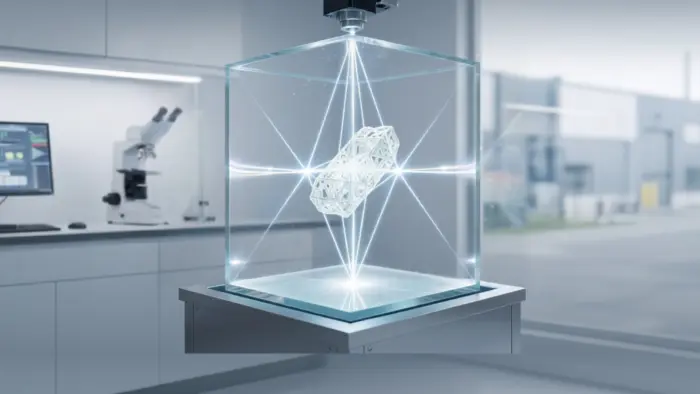
In materials science, volumetric additive manufacturing uses light to produce three-dimensional objects within seconds or minutes, compared with conventional layer-by-layer 3D printing.
The technology could accelerate the production of personalised medical devices, dental equipment and precision components, helping Thailand develop higher-value medical manufacturing capabilities.
NSTDA expects broader global adoption during 2026–2028.
For decarbonisation, CO2-mineralised concrete incorporates captured carbon dioxide into construction materials, potentially reducing their carbon footprint by 20–50%, depending on the process.
The technology could benefit Thailand's cement industry, which NSTDA said accounts for 51% of manufacturing-sector CO2 emissions.
Finally, SMRs offer a potential source of reliable, low-carbon electricity for energy-intensive industries.