
Editorial: 136,000 CTA scofflaws a day! Time to stop the free rides
- The CTA faces significant fare evasion, with over 136,000 daily instances of unpaid rides, leading to millions in lost revenue annually.
- Inspired by New York's success, the CTA plans to implement advanced fare gates to reduce evasion and enhance security on public transit.
- Despite low fares, the CTA must address fare evasion comprehensively, balancing security measures with strategies to collect fares effectively. Read more
Gone are the days when “L” riders had to swipe a physical fare card, let alone a token, to reach the platform. Today, contactless payment options make getting aboard CTA buses and trains easier than ever.
There are, however, those among us who forgo fares altogether, choosing instead to bypass gates and fees and hop aboard their chosen chariot with nary a care that they’re hitching a free ride.
How many? Millions each year. More than 6 million train rides, to be more precise, in unpaid or underpaid fares last year, according to CTA data. That doesn’t include unpaid or underpaid fares on city buses, which tally in the tens of millions.
On an average weekday in 2025, the CTA recorded more than 136,000 instances of passengers skipping or failing to pay the full fare on the bus or train. The problem is especially pronounced on certain rail lines, as recent WGN reporting revealed, including an estimated 2.4 million unpaid or underpaid rides last year on the Red Line, 1.1 million on the Green Line and 300,000 on the Blue Line.
As anyone who visits New York and rides the subway with any regularity knows, that city took sensible steps to address fare evasion: installing better gates. New York’s pilot program tackled 20 stations, installing gates featuring glass, saloon-style doors that use sensors to determine whether someone has paid their fare. Fare evasion dropped by more than 70% at some stations as a result.
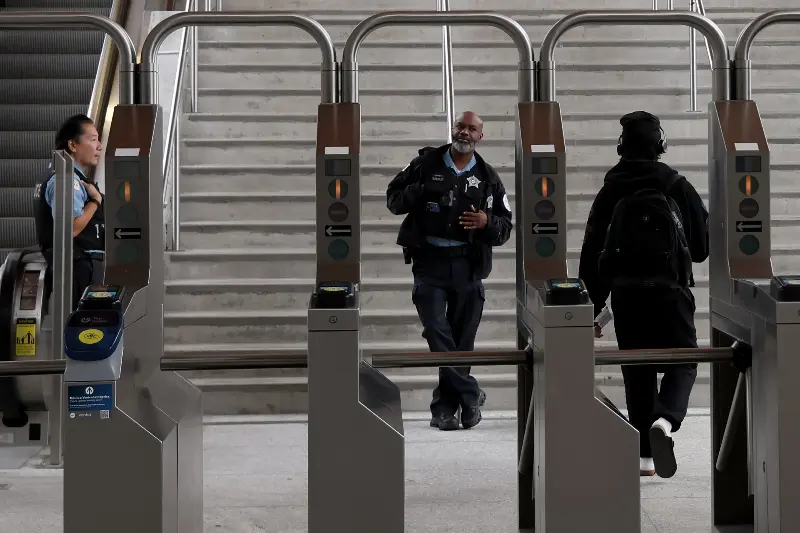
Following New York’s lead on gates as a frontline defense should be simple common sense for the CTA; when jumping (or scooting under) a turnstile is so easy, it encourages the spontaneous theft of a ride with little likelihood of getting a ticket. To its credit, the flush-with-cash Northern Illinois Transit Authority has earmarked $8 million for a CTA pilot program called “Faregates of the Future,” aimed at making it harder for riders to enter stations without paying. Good. But with the CTA estimating tens of millions of underpaid bus rides annually, the agency also needs a strategy for actually collecting the fares on buses, one that does not put employees at risk.
Our city has witnessed horrific crimes on transit, including a young woman set on fire last November on the Blue Line and a CTA worker stabbed to death last month at the Damen Green Line station (by someone who allegedly had entered the station without paying).
The CTA has stepped up its security efforts, including an increased police presence, and this is certainly a helpful component of fare evasion deterrence. To be sure, by no means do all fare-evaders go on to commit further crimes on transit. Still, gates that make it harder for people who haven’t paid to catch the train will make folks feel safer, if nothing else, helping to reestablish a sense of order on our beleaguered transit system.
It’s unfortunate we have to invest so heavily on such measures, of course. CTA standard rides, after all, remain just $2.25 for buses and $2.50 for trains, far cheaper than most peer cities. It’s especially egregious that so many people are dodging these incredibly low fares.