

How military air transport was allegedly used in drug smuggling
- Checks at Subang Air Base found five bags and a box of suspected drugs on Nov. 17, triggering arrests of 11 people, including five RMAF officers.
- Police say 21 shipments since August 2024 moved three tonnes of meth through Labuan and Tawau, before distribution in Sabah and overseas markets.
- Three officers and three civilians face trafficking charges over 96.2kg seized at Subang; police seek an alleged leader amid calls for security oversight. Read more
SHAH ALAM - A drug trafficking syndicate is believed to have exploited Royal Malaysian Air Force (RMAF) facilities to smuggle drugs from Peninsular Malaysia to Sabah before distributing them to overseas markets, including the Philippines and Indonesia.
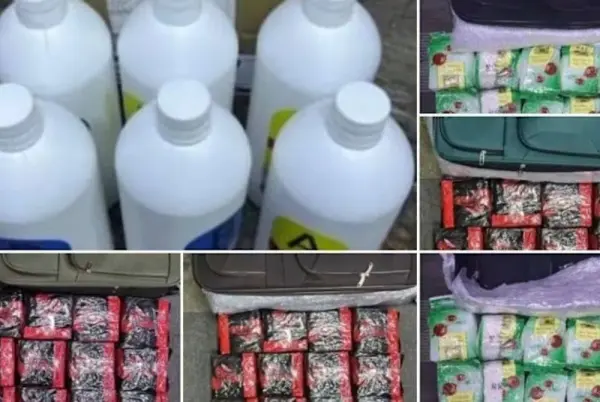
The alleged operation was uncovered on Nov 17 after RMAF personnel discovered five bags and a box containing suspected drugs during a routine inspection at Subang Air Base.
The discovery led to the arrest of 11 people, including five RMAF officers and six civilians, during police operations in the Klang Valley and Labuan.
The three officers were Captain Muhammad Amirul Faisall Rosdin, 34; Lieutenant Amir Ariffudin Aminullah, 33; and Lieutenant Muhammad Arief Fauzan Mohd Ali, 27.
The other three accused were civilians Tan Sui Seng, 48; Nur Hanis Syafiqah Muhammed Amin, 28; and Afifah Amdas, 34.
Bukit Aman Narcotics Criminal Investigation Department (NCID) director Datuk Hussein Omar Khan said the operations also led to the seizure of 96.64 kilogrammes (kg) of suspected methamphetamine worth RM4.83 million, as well as 6.98kg of chemical substances in liquid form.
Subsequent investigations revealed that the case could be part of a much larger smuggling operation involving military air transport facilities.
How was the syndicate uncovered?
Hussein said police first received intelligence about the possible use of military assets in drug smuggling following a major drug seizure in January 2026 involving six containers at Port Klang bound for Teluk Sepanggar, Sabah.
Police obtained more concrete information in July before opening an investigation paper and conducting further intelligence gathering and surveillance.
The breakthrough came on Nov 17 when personnel at the Air Movement Section building at Subang Air Base found the suspicious luggage during routine checks.
Defence Minister Datuk Seri Mohamed Khaled Nordin said the discovery was immediately reported to the RMAF Central Zone Investigation Branch, which contacted the police.
A police team arrived at about 5.20 pm and confirmed that the substances were dangerous drugs before seizing them as evidence.
How did the syndicate allegedly operate?
Investigations found that the syndicate had allegedly used RMAF air transport facilities to move drugs from the Klang Valley to Sabah before sending them to international markets.
Hussein said a detained RMAF pilot was believed to have acted as both a coordinator and transporter, moving drug supplies from the Klang Valley to Sabah.
"He is one of the members. Apart from his role as the coordinator, he also served as a transporter, moving drug supplies from the Klang Valley to Sabah," he said.
Two civilians were also believed to have coordinated and overseen the syndicate's trafficking activities.
"NCID is actively tracking down another Malaysian believed to be the syndicate's leader to uncover its full organisational structure and identify other individuals involved," Hussein told Sinar on Thursday.
Police confirmed that the drugs had been transported to Labuan and Tawau but were investigating whether other destinations were involved.
How extensive was the alleged smuggling operation?
The investigation took on a wider dimension when Home Minister Datuk Seri Saifuddin Nasution Ismail revealed that three tonnes of suspected methamphetamine worth RM156 million had been smuggled through two RMAF bases in Sabah and Labuan since August 2024.
Police identified 21 drug-smuggling transactions involving the facilities.
Of these, 14 transactions through the Labuan RMAF Base involved 1.2 tonnes of drugs worth RM63 million.
Another seven transactions through the Tawau RMAF Base involved 1.8 tonnes valued at RM93 million.
The three-tonne figure relates to the wider investigation and is separate from the 96.64kg seized at Subang Air Base in November.
What action has been taken?
On Nov 27, three RMAF officers and three civilians were charged at the Shah Alam Magistrate's Court with trafficking 96.2kg of methamphetamine at Subang Air Base on Nov 17.
They were charged under Section 39B(1)(a) of the Dangerous Drugs Act 1952, read together with Section 34 of the Penal Code.
No pleas were recorded because the case falls under the High Court's jurisdiction. The court denied bail and fixed Feb 23, 2027, for mention.
The remaining seven suspects are subject to action under the Dangerous Drugs (Special Preventive Measures) Act 1985.
The alleged use of military facilities for drug trafficking has raised concerns about security controls, internal supervision and the integrity of personnel entrusted with protecting national assets.
A defence and security expert, who requested anonymity, said the alleged involvement of RMAF officers had brought discredit to the military.
"Although military air bases and civilian airports operate under different security procedures, both have the same objective of preventing illegal and prohibited items from entering their premises.
"Nevertheless, I expect RMAF to introduce stricter security measures following the arrests. The bigger concern is the alleged involvement of military personnel in organised crime," the expert said.
The expert said the incident was particularly disappointing given the welfare benefits provided by the Defence Ministry (Mindef) to military personnel and their families.
"This is particularly disappointing because Mindef provides various benefits not only to servicemen and women but also to their children and families to ease their financial burdens," the expert said.
The expert also called for stronger oversight, better training for military provost personnel and closer cooperation between the armed forces and other enforcement agencies.