
We spent eight years sailing the world – returning home exposed cracks in our marriage
- After eight years of sailing together, Alan and Irenka Wood struggle to reconnect at home, feeling increasingly distant in their marriage.
- Their return to land has led to independent routines, with Irenka as the main breadwinner and Alan managing household tasks, causing emotional strain.
- Despite challenges, the couple hopes to revive their bond through shared projects, reflecting on how their life at sea fostered teamwork and intimacy. Read more
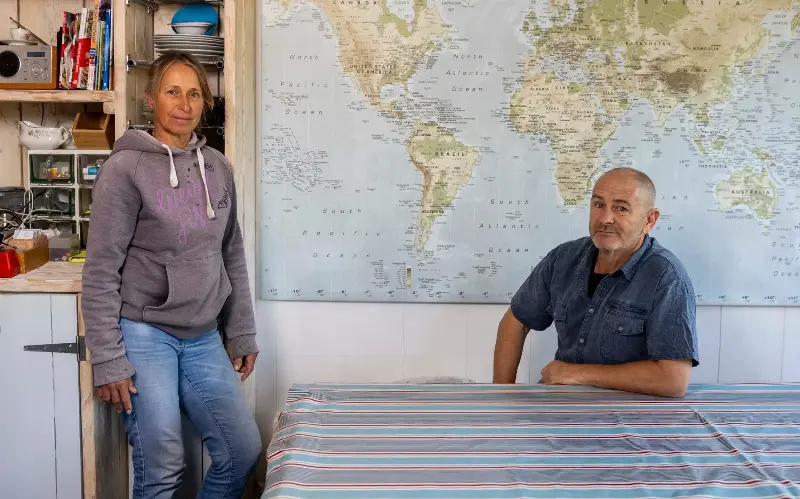
After 23 years together, my wife and I barely see each other, and I blame our house.
We’re not creeping through our converted bungalow avoiding eye contact, listening for the click of a door before venturing downstairs or dashing to the bathroom. We haven’t retreated to separate bedrooms or started communicating through notes left on the kitchen table.
We’re not divorced or separated, but after eight years living together on a boat the same length as a London tube carriage with our three children, we now have an entire house and somehow manage to occupy different bits of it, or the same bits at different times.
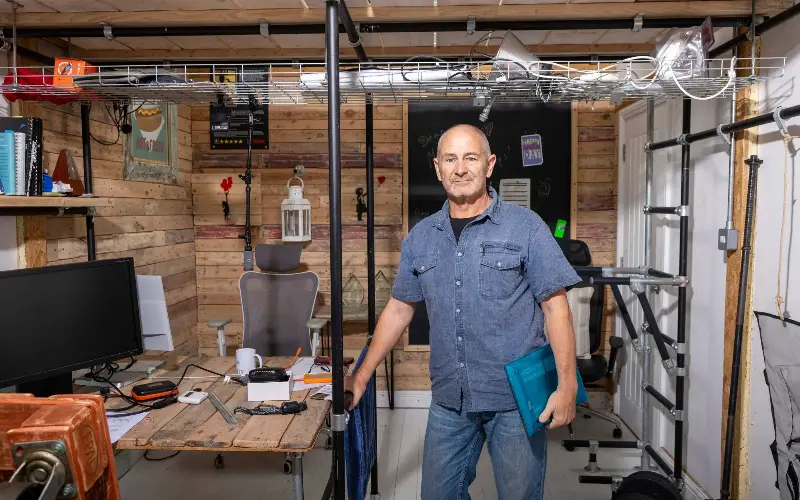
The sad reality is that since returning to Brighton, our days have simply stopped overlapping. I work in an office at the bottom of the garden, while Irenka has two outdoor jobs. She is the main breadwinner and I am the one who mostly unloads the dishwasher, deals with the school and takes the boys to doctors’ appointments. We have become less visible to each other, and worse still, neither of us noticed.
Shamefully, it was our youngest who pointed it out.
Earlier this year, he asked what we were doing for Valentine’s Day. We told him we weren’t doing anything. He looked upset.
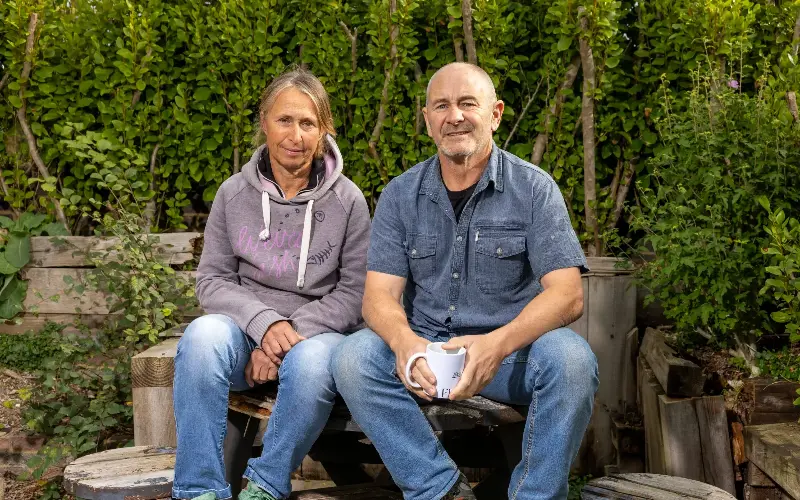
We tried to be more affectionate around the children after that, but even so, a fortnight can slip by without a hug, and telling each other “I love you” can begin to feel a bit performative. We still try to eat together as a family, although coordinating two increasingly independent teenagers around a dinner table without triggering a meltdown is becoming something of a logistical exercise.
I’ve always enjoyed cooking, but I think Irenka sees the kitchen as her territory, perhaps even part of her role as a mother. With me and the boys committed carnivores and her a borderline vegetarian, we’ve found it easier to take turns rather than cook together. Which pretty much sums up our lives ashore: we’ve learnt to work around one another rather than with one another.
We manage a date night every month or two, but conversation inevitably gravitates towards the children, domestic responsibilities and household finances.
To be fair, we’ve never been much good at organised romance. We met in 2005, working as sailing instructors in the Mediterranean. The pay was laughable, the lifestyle perfect, and within months we were sitting on a Croatian beach planning to sail around the world together. Then came an unexpected pregnancy, a move to Brighton and, eventually, two more children.
After more than a decade together, I proposed with a £7.50 Lego ring from Etsy. We married in January 2017, with two witnesses who brought three children between them. With our own three, there were more children than adults at the wedding. Our reception was burgers and chips at a café on Brighton seafront, and the whole thing cost £200.
Neither of us has ever put intimacy in the calendar but give us a house to renovate or a boat to sail around the world in, and our passion for life, for adventure, for one another, is ignited.
The last time I can remember just how well we could work together was May 2025, just weeks before our 40,000-mile sail around the world ended.
We were sailing north through the southern Ionian, following a routine we’d perfected over eight years. At sundown, I’d take the first watch while Irenka cleared away dinner, watched an episode of Downton Abbey on the laptop and went to bed. At midnight, one of the children would take the watch for an hour, followed by Irenka for three, allowing me a few hours’ sleep before taking over again.
It was a system that worked because we trusted one another. There was no need to negotiate who did what. If one of us was exhausted, the other took over. When something broke, I generally fixed it while Irenka kept everything else running. We had become so accustomed to sharing responsibilities that much of it happened without a word.
On arriving in a secluded bay in Zakynthos, Greece, we lowered the kayak from the side of the boat we had called home for the past eight years and headed towards the caves beneath the cliffs.
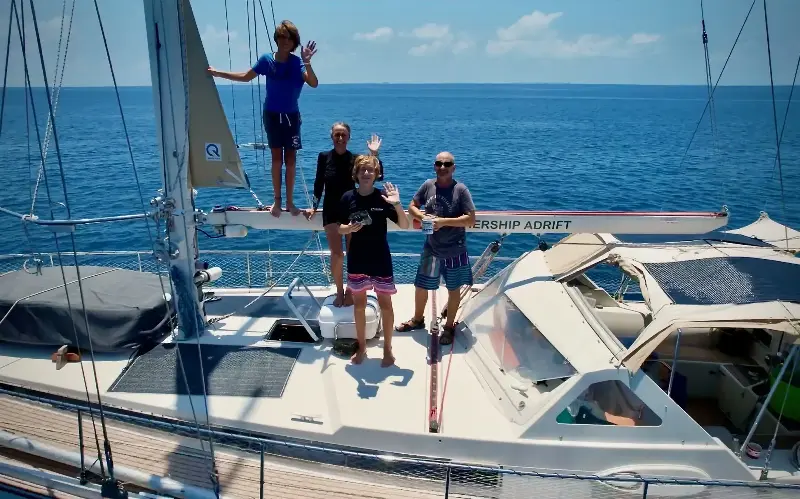
After 20 minutes of smoothly gliding through the azure Greek waters, we paused. Irenka and I sat there in silence, rising and falling in the swell, looking back at Mothership, the 53ft Amel ketch we had just sailed around the world on.
Across the bay, the children shrieked with joy as they played on their paddleboard and did backflips into the sea, enjoying the final days of their unconventional, nomadic childhood. We both knew this era of our life was ending, and somehow that made these moments feel almost unbearably precious.
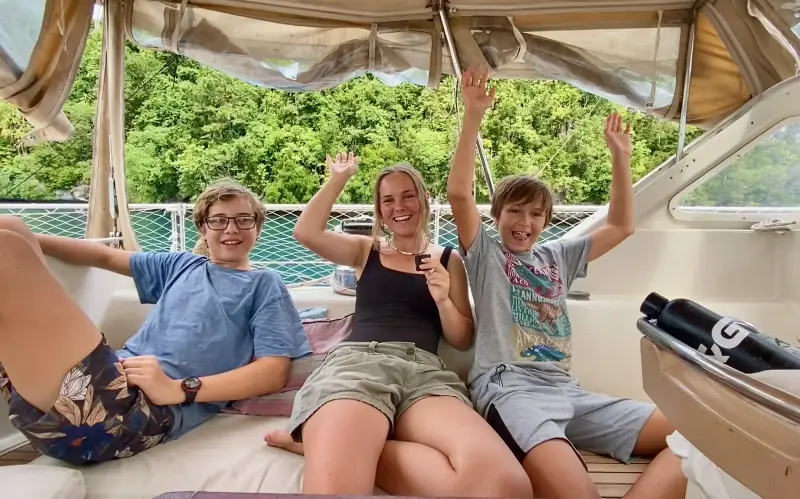
Irenka and I had been paddling together for so long that if one stopped, so did the other. We adjusted our rhythm without discussing it and, during our trip, the same was true when we were out of the water, too.
Later, the boys started throwing backflips from the bow, and I joined them, spending a doomed afternoon mostly demonstrating the principles of gravity rather than any artistic prowess.
Hauling myself back aboard after yet another flat slap onto the Ionian, I caught Irenka’s eye, and we smiled.
Not the circumnavigation. Not the countries or the oceans.
That was us at sea. Romance was a badly executed backflip, a kayak and two people who had become very adept at moving in the same direction.
When Irenka became ill in the Mediterranean, and for still unknown reasons began losing her hair, I carried more. Years later in Colombia, after a battery meltdown under our daughter’s bunk left me exhausted and close to breaking point, she handled it. We were like two interchangeable steering mechanisms.
But had our previous harmony been built upon devotion or dependency?
When you swap a family home for a 25-year-old boat, there is nowhere to disappear to. You can’t storm out when the only exit is a long swim. If you fall out over breakfast and the anchor starts dragging, you’re suddenly cooperating again.
If the weather turned, something broke or one of the children, who were 10, 7 and 5 when we embarked upon our adventure, needed help, it became everyone’s problem.
There were rows, obviously. You cannot put a family of five and a marine toilet into the confined, gyrating space of an old boat for that long and expect serenity. But there was always something larger than the argument waiting over the horizon. Sometimes amazing, sometimes terrifying. Often both.
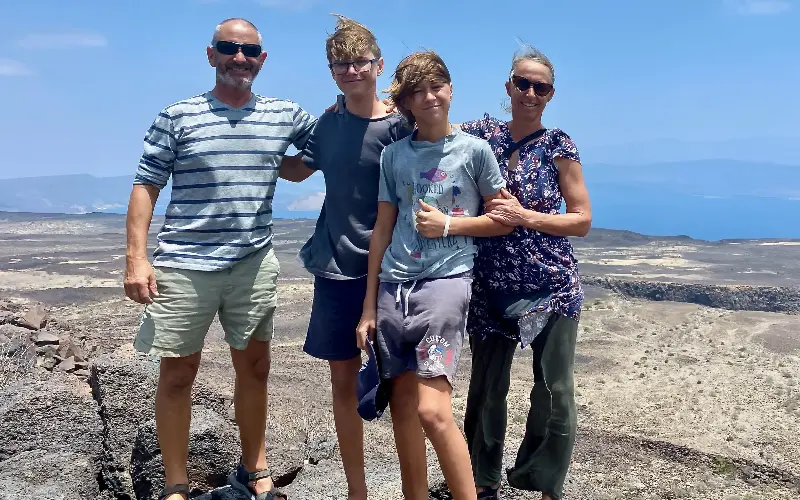
In July 2025, Irenka returned to Britain to prepare the boys for their first taste of “real” school, two months before me. By the time I got back from fixing the boat in a Greek boatyard, still smelling of diesel, covered in fibreglass dust and with fingernails black with dirt, she had income, routine and momentum.
Meanwhile, I had a bag full of hard drives, half an idea for a book and very little money.
Irenka became the main breadwinner. I carried on writing and trying to build something longer term, while gradually taking on more of the household administration and appointments that usually default to the parent who spends most time at home.
I found the change harder than I expected. Part of it was connected to money, and part of it was pride. What was my purpose here?
At sea, usefulness was easy to measure. The engine either started or it didn’t. Things worked because somebody fixed them, usually me. But back at home, the skills that had made me useful at sea felt strangely irrelevant. Nobody cares whether you can fix a toilet pump or repair an anchor windlass with a sardine can.
Instead, earnings become a much more visible measure of who is keeping the show on the road. At one point I tried selling furniture from a market stall in Brighton. I sold one piece before a display stand blew over in a gust of wind and shattered on the wet pavement. I rang Irenka to ask whether she could bring the van and help me clear up. She couldn’t. She was pushing leaflets through doors trying to expand her gardening work.
I wasn’t upset. She was doing exactly what she needed to do. But it struck me that, for the first time in years, we were operating independently. At sea, if one of us needed help, the other was invariably there. Ashore, we each had our own responsibilities, and neither could simply drop everything for the other. It wasn’t anyone’s fault, but it felt like something fundamental had changed.
We also handle pressure differently. I go quiet, retreat into my own space and grind the problem. Irenka talks, gathers options and starts solving. On a boat those differences can be oddly complementary, but on land they threaten to drive us apart.
I’m hopeful that our marriage will survive its landlubber era, and I think having a new shared goal will help. In September, we gave six talks together at the Southampton Boat Show, the first shared project we had worked on for over a year since completing our round-the-world mission.
For two weekends we were back among cruisers, YouTubers and people who understood us and the odd little world we came from. We stood up together and told the same stories of ocean crossings, gunmen, shark encounters and the chaos of family life at sea, each from slightly different angles.
Nothing was magically fixed by those two weekends at Southampton. But for a while, we had a shared purpose and a clear direction again. It felt familiar. Two complementary mechanisms working together again.
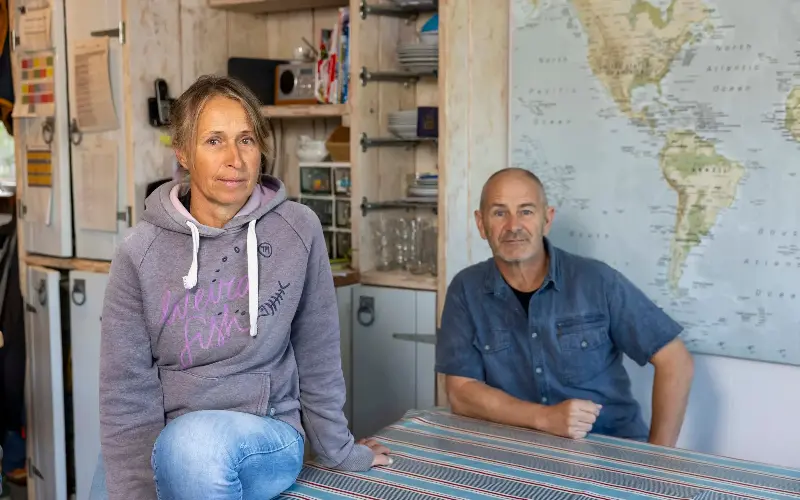
We recently sold Mothership. I was relieved. For Irenka, it was more like grief, although we were both grateful to release the money.
My feelings for Irenka haven’t changed so much as the way I express them. I still love her, admire her independence and know that if we were caught in a storm tomorrow, there’s no one I’d rather have beside me. But I miss the closeness we once had, the easy companionship and the unspoken understanding that whatever happened, we were in it together.
We sailed around the world without losing each other, only to discover that ordinary life can pull you apart as effectively as an ocean.
I miss the water. I miss the adventure. I miss the version of us it brought out even more. Southampton showed us the old crew is still in there somewhere. Perhaps we just need another project.
Or, as our youngest pointed out, simply a card.
Irenka Wood
Back on land after eight years at sea, I felt like an alien.
Our 16-year-old daughter was the first to quit the boat. She wanted more independence and permanent friendships. We were worried that she felt isolated, and – after several years of pleading – we finally agreed that she could move in with her grandmother and study for her GCSEs at a college in London.
A few years later, everyone wanted to be back in a house. Our two boys were fed up with moving all the time. They often found themselves isolated from other “boat kids” and simultaneously not connected to peers on land. My husband, Woody, had had enough of boat maintenance and living on a tight budget and wanted to go back to work.
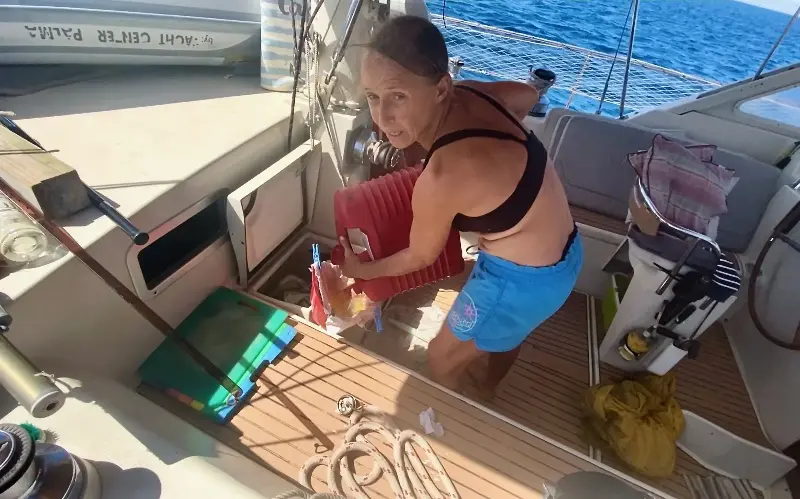
Personally, I did not want to live on the boat indefinitely – and I wanted to be nearer to my daughter – but I did not know how life back on land could ever level up to the kind of life we’d been living aboard our boat, Mothership.
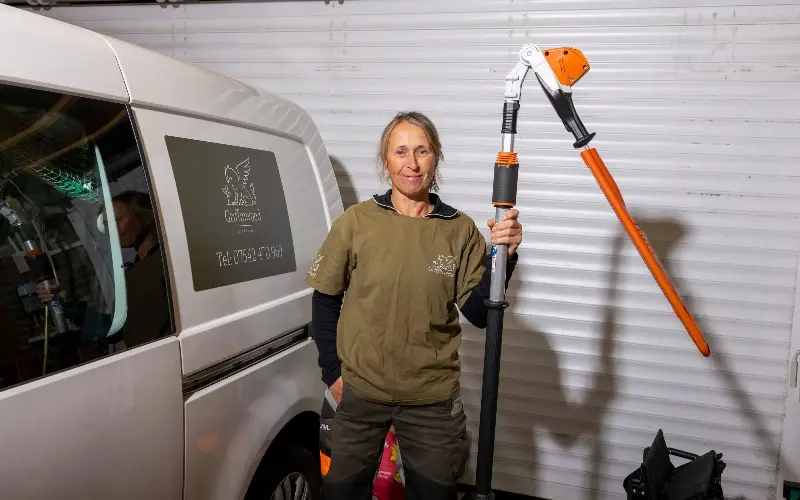
The boys and I came home two months before Woody, which allowed me to settle them into school and to start earning. The good thing was that I managed to get plenty of work, but being the main breadwinner is physically tiring and carries the pressure of knowing I have to keep working, whatever the weather.
When we first returned home to Brighton, I often felt like I was caught in a time slip. My memories of being on land were when the children were young and now they were teenagers. I kept getting flashes of those early memories but had to adjust to their present-day, older, independent, selves. It made me feel a bit lost.
I think the children also miss the closeness we had and the life we enjoyed without any pressure from the outside world. Since returning home, they have adapted and we have got on with life the way that most families do.
Everybody has their own room and clearly marked boundaries as to which space is “theirs”, unlike on a boat where most spaces are shared. I find this new distance in the family very difficult; I can see that the boys have grown older and as parents we probably annoy them now, but on the boat, we generally spent most of the days together.
On Mothership, Woody and I had one objective: to keep the boat moving while enjoying the journey as much as possible. The unknown and the potential adversity we sometimes faced brought us together, but if we disagreed, everyone knew about it. You have to face problems aboard a boat; the space is too intense not to. It is easier to live with each other’s differences on land – you can avoid them.
We mainly argued about the way to do things, where to anchor, when to sail and when to motor, when to reef, and about money. Most of the arguments about how to sail stayed with the boat but we now argue about house stuff, instead. Food disagreements are less frequent now because we have more freedom to pick and choose our meals.
Woody and I think quite differently. As demonstrated when we shared our story at The Boat Show, I am quite spontaneous while he prefers to stick to the script. We can easily annoy each other, but even though we do things very differently, we have managed to find a way to do it together.
I don’t overly worry about our marriage. Even though we may not be romantic, our shared experiences and adventures have naturally built a close bond. I worry more about our children and how they will find their way in the “normal” world after having such a nomadic, exciting childhood.
I will never regret sailing around the world with my husband and our children. But next time, I would get a simpler boat, one that is smaller and easier to look after – it would let us focus on the journey, and have even more of an adventure.
If You Want To Do It. Do It! by Alan “Woody” Wood is out now in paperback and eBook