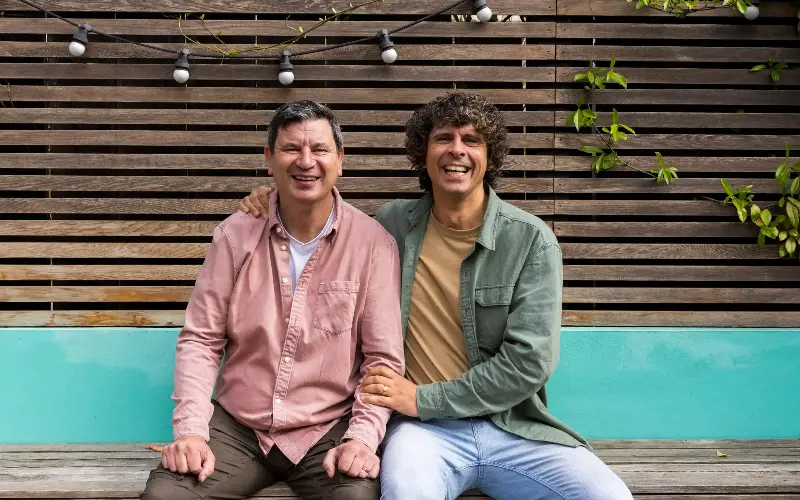

Andy Day: I gave my brother a kidney – having his girls grow up without him was unthinkable
- Andy Day selflessly donated a kidney to his brother Dave, who faced severe kidney disease, highlighting the importance of family support in health crises.
- Dave's kidney disease was discovered unexpectedly at 33 during a routine GP visit, revealing years of undiagnosed health issues due to inadequate prior care.
- Post-surgery, both brothers experienced a swift recovery, with Dave noting surprising changes in taste, further strengthening their emotional bond. Read more
Give to our 2026 Christmas Charity Appeal
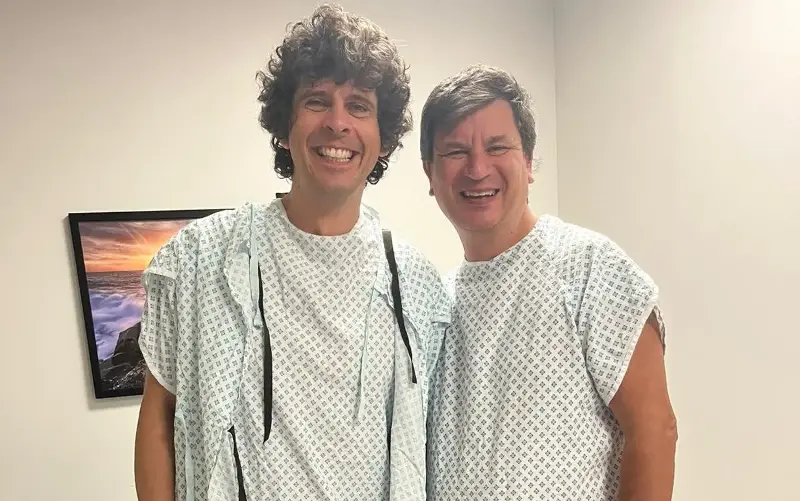
As Andy Day, CBeebies’ longest-serving presenter, was wheeled into surgery to become a living organ donor in October last year, he couldn’t help recall the moment his older brother Dave first broke the news that he had been born with only one kidney – and that it was failing.
“He almost dropped it into conversation casually,” recalls the 45-year-old, who will be a familiar face to anyone with children under 20, thanks to his two-decades-long tenure on preschool entertainment shows such as Andy’s Dinosaur Adventures and Andy and the Band.
“Then Dave added: ‘The doctor says that when I get to about 50 I will probably need a transplant, but I don’t think any of you will have to give me one because by that point they reckon there will be stem-cell treatments and bionic kidneys.’ I remember thinking: ‘I wouldn’t be so hopeful about that…’”
An accidental discovery
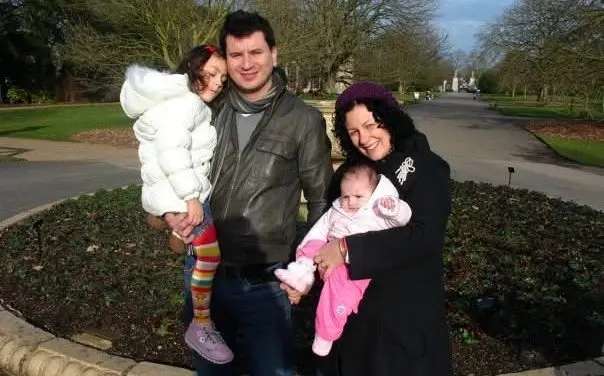
Incredibly, Dave had been 33 when he discovered he was missing an organ. But if he, his wife Claire and their daughters Evie, now 22, and Poppy, now 17, hadn’t moved house in 2008, he might have remained unaware that he was living with serious kidney disease for far longer.
“When we moved to Upminster in East London, we had to register with a new GP surgery,” explains Dave. “As part of the enrolment, I was given a health check and at one point, while asking me some generic health questions, the doctor paused and said: ‘Oh, I see you’ve got stage three kidney disease’. I assumed he was reading someone else’s notes.”
It turned out that Dave, then 31, had an eGFR (estimated glomerular filtration rate) of 30 per cent, meaning he had moderate-to-severe loss of kidney function. “My previous GP, who has since been struck off because clearly he wasn’t treating people properly, had known about my kidney disease, but never told me. The only thing he’d said was that I should drink more water because my creatinine levels [a waste product formed during protein digestion and filtered out of the body through the kidneys] were high.
“Two years later, I was sent for a kidney biopsy so they could check the severity of the issue and as I lay on my side, the guy kept probing and probing with the ultrasound. I asked: ‘Is there a problem?’ He replied: ‘I can’t find your kidney.’”
Not only was Dave missing his right kidney, but his left was smaller than it should have been and severely scarred. “At first I didn’t think much of it, because I didn’t really have any symptoms. It was what it was; I just had to crack on. But they were pretty much bang on about me needing the transplant at 50.”
Time for a transplant
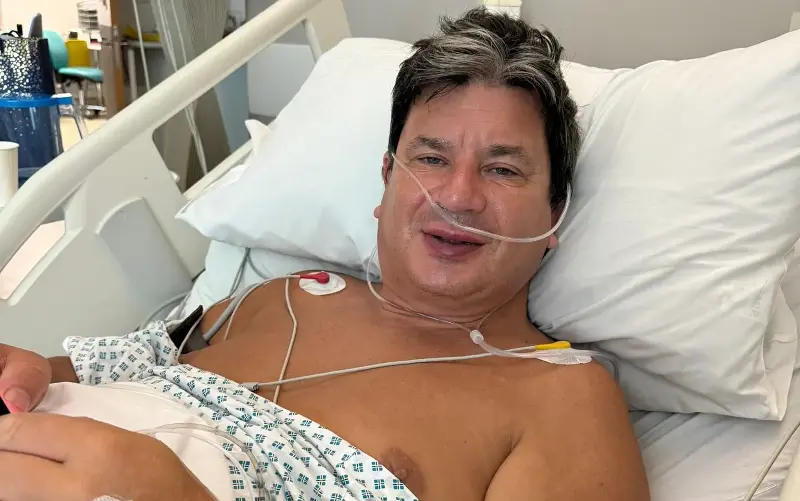
By 2023, Dave’s health had deteriorated significantly. “My kidney function was down to about 15 per cent and by 2pm each day I’d be exhausted and need a nap,” he says. “I was falling asleep constantly and had horrible brain fog. Someone would say something to me and seconds later I wouldn’t be able to recall what had been said.” Finding a donor within the next couple of years was becoming a matter of urgency if he wanted to avoid dialysis.
Still, asking his family to donate wasn’t something Dave took lightly. Andy says: “I remember him being very reluctant to ask us all to get tested to see if we were suitable matches. Dave didn’t want anyone to have to do it – but for our middle brother Adam, Dave’s wife Claire and I, not getting checked out to see if we could be a match wasn’t even a consideration. I love my brother and the idea of his girls growing up without him, or any of us not having more years with him, wasn’t worth thinking about. The most important thing was to keep him alive.”
Tests of their blood, tissue and antibodies suggested that while Claire could potentially donate Dave a kidney, Andy was a closer match and therefore the least likely to be rejected. “I didn’t need to think twice about becoming a living donor,” he says. “I’m naturally someone who likes to help people and get a lot out of fixing problems – it’s in my nature. How many times do you get to save someone’s life? I’d find it harder to live with the guilt of not doing it.”
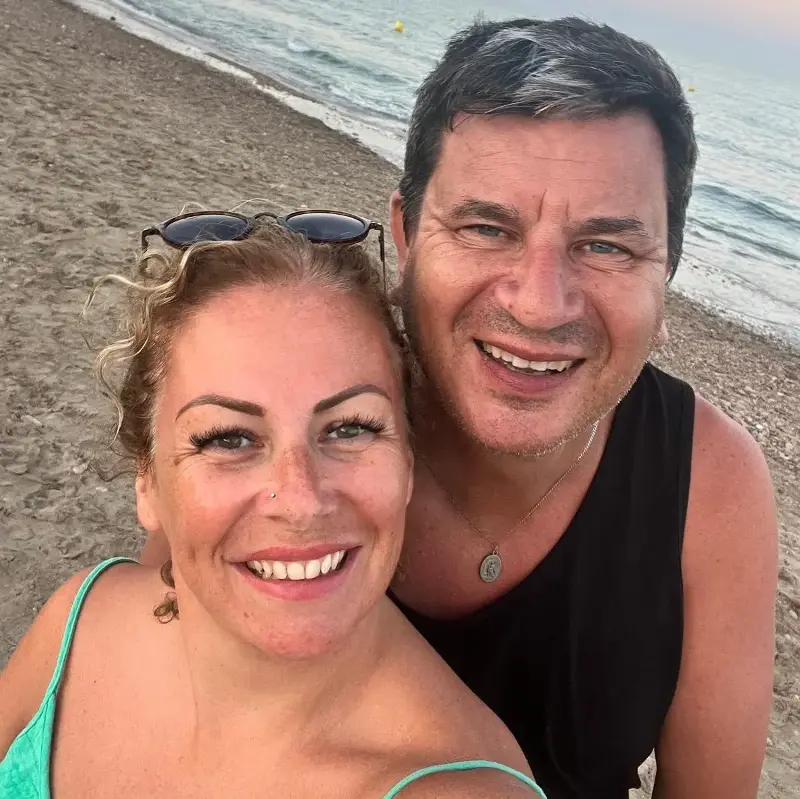
Once the decision was made, Andy had to undergo dozens of physical and psychological tests before the transplant could take place. “Physiologically, they tested me endlessly, but psychologically they had to make sure everything was OK, too,” recalls Andy, who is supporting Kidney Research UK’s Make Your Mark campaign, which offers information and support around living kidney donation.
“They checked that I was mentally stable, and that I wasn’t being paid or made to donate, then laid everything out on the table about the reality of donating, and the recovery. But when you look at the stats, you realise that you can absolutely live well with only one kidney, which actually grows slightly once the other has been removed, to allow it to take on more of the work of filtering waste from our systems. The human body is amazing.”
He adds: “I wasn’t too nervous, I was trusting of the process. A big part of that was because there’s a fantastic Facebook group specifically for living donors in the UK. If I had any questions, I could ask other people who had been through [it], which I found so reassuring.”
With everything in place, and Dave’s kidney function now down to 10 per cent, a date could finally be set: Oct 20, 2025. But while Dave and Andy’s wives and children were all anxious for it to go well, it was their mother, Pippa, now 75, who found it most emotional. “She’s a typical old East End mum who thinks her boys can do no wrong,” says Andy. “When she first heard Dave only had one kidney, she was worried sick, then felt guilty that it was somehow her fault. On the morning of our operations we FaceTimed her from the hospital and she just burst into tears.”
The road to recovery
Today, the brothers pepper their conversation with jokes about Dave harnessing Andy’s organs or “stealing” his kidney, while Andy likes to remind his older brother that the doctors who performed the transplant described the kidney, which was implanted during a three-hour surgery, as “The Rolls Royce of kidneys”.
Dave’s aware he got lucky, but was still surprised to feel the physical impact as quickly as he did. “Sometimes, with deceased donors, it can take three or four days for a kidney to begin working, but with Andy’s it was instant,” he says. “I felt amazing as soon as I woke up from the anaesthetic. I remember sitting up in bed on the ninth floor of The Royal London Hospital, and the view from my window was the whole of the city spread out below me and I felt incredible. My creatinine levels had been 480, and within 24 hours they dropped to 250 and by the next day they were around 120. I could literally feel my brain fog lifting. The effect was unbelievable.”
Within 24 hours, Andy was back on his feet and at his brother’s bedside, and he was back home in Bristol after four days, with Dave leaving the ward two days later. For Andy, whose kidney was removed using keyhole surgery via his belly button, recovery was relatively swift. The process was slightly slower for Dave. “I took things very slowly for the first couple of months, but by January I was feeling great and back at work,” he recalls.
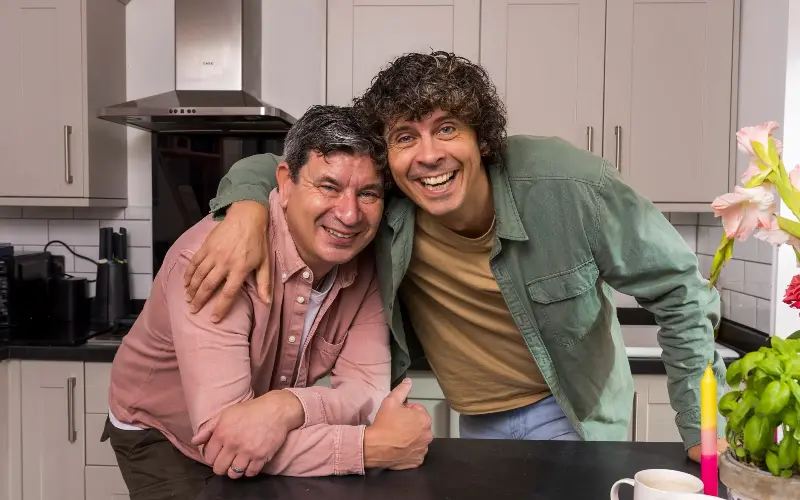
There’s been one interesting change that neither of the brothers could have predicted: Dave’s sense of taste has altered, becoming more aligned with his youngest brother’s. “I couldn’t stand coffee before, whereas Andy’s a massive coffee drinker,” he says. “After the transplant, I had to go out and buy a coffee machine. I absolutely love it now. Also, I always had sugar in my tea, and my favourite drink was elderflower cordial – I drank three bottles of it a week – whereas Andy doesn’t have a sweet tooth or drink many fizzy drinks. But after I had the transplant my wife made me a glass of cordial and I couldn’t stand it any more. It’s very weird. No one can explain it.”
In fact, the whole experience has only deepened the siblings’ relationship. “For the first month, whenever Dave and I spoke to each other, we were in tears,” admits Andy, looking over at his brother who is visibly welling up as he speaks. “We were close before, but it has really bonded us as brothers. It’s one of the most emotional things you can ever go through.”
This year’s Telegraph Christmas Charity Appeal is supporting four charities: Hearing Dogs for Deaf People, Kidney Research UK, Missing People and Little Troopers. To donate, please visit telegraph.co.uk/appeal2026 or call 0151 317 5247