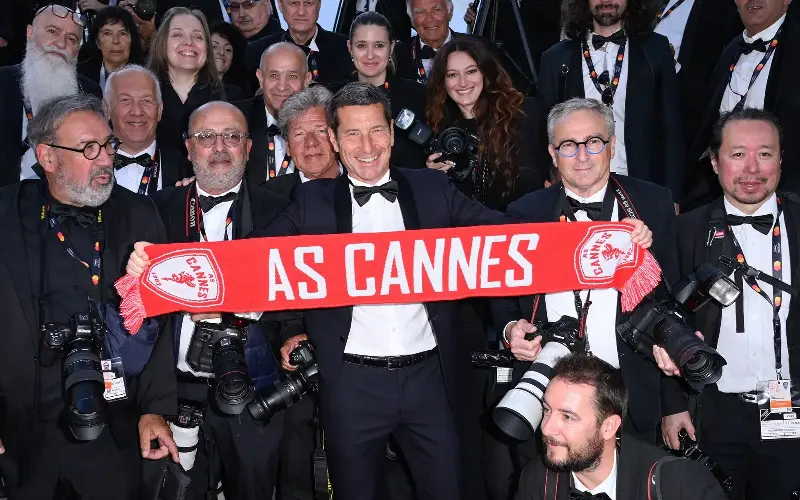

The social media sensation who wants to become French president
- David Lisnard, Cannes mayor, gained popularity in presidential race with radical plans to cut spending and reduce bureaucracy.
- His social media presence skyrocketed, attracting over 650,000 followers, positioning himself against establishment and promoting smaller state.
- Despite rising support, experts warn his Thatcherite policies may clash with France's strong attachment to welfare state. Read more
David Lisnard feeds entire chunks of France’s labour, environmental and urban code into a shredder, to applause and rock music.
The scene, which has become a viral hit on social media, verges on the heretical in the land of bureaucracy, fonctionnaires and dirigisme.
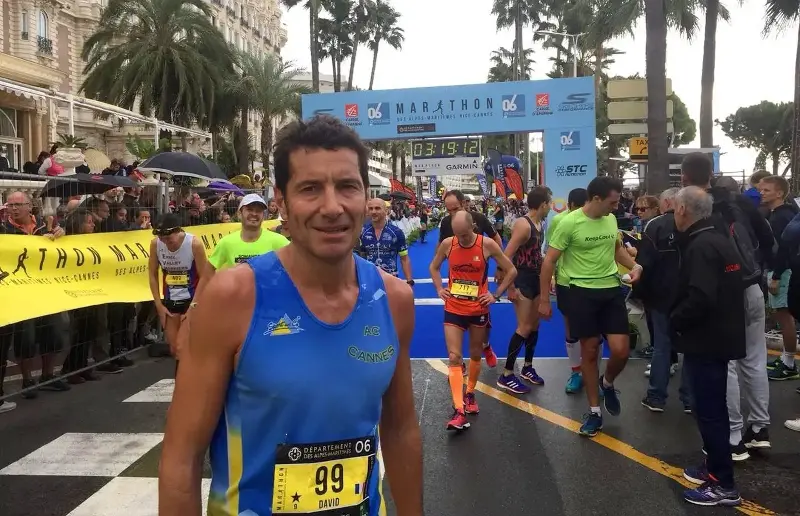
Yet the 57-year-old mayor of Cannes, a Margaret Thatcher fan who has declared the welfare state “dead”, has emerged as the surprise sensation of the French presidential campaign.
Barely known a few months ago, the Right-winger has leapfrogged conservative rivals with a startling plan to cut €200bn (£176bn) a year from France’s public spending and shed 100,000 public-sector posts per year.
This week, the marathon runner overtook Édouard Philippe, Emmanuel Macron’s former prime minister, for the first time in a presidential opinion poll, threatening to upend the crowded race for the French centre-Right.
A YouGov survey published on Wednesday put Mr Lisnard on 9 per cent to Mr Philippe’s 8 per cent. Other polls put him as high as 12 per cent.
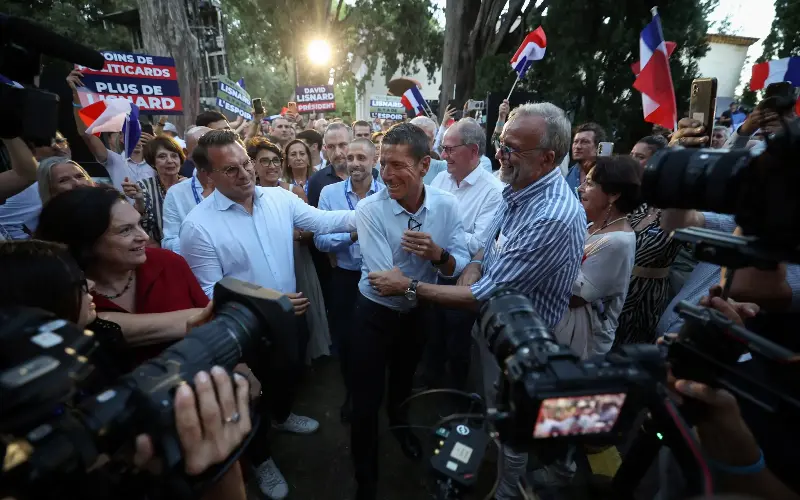
Svelte, sporty and sharply dressed, he has become a canny Instagram star, posting himself railing against bureaucrats, taxes and France’s political establishment while striding through his Riviera stronghold.
His following has surged from 10,000 in August to past 650,000 while his party, Nouvelle Énergie has surpassed the 100,000-mark.
Supporters have circulated AI-generated videos depicting him as a superhero flooring black-bloc Leftists outside a suburban school, and fending off a violent protester wearing a Palestinian keffiyeh.
His manifesto is an ode to a smaller state coupled with a tougher line on crime, immigration and national identity.
It includes pledges to privatise the national broadcaster, introduce funded pensions and abolish school catchment areas. Mr Lisnard wants to scrap compulsory social housing quotas for towns, limit immigration to 80,000 new residence permits a year and sweep away France’s departments and regions, replacing them with new “provinces”.
“There will be fewer bureaucrats and more public servants on the ground,” the AI enthusiast promised this week.
Mr Philippe has called him “a French version” of the chainsaw-wielding Javier Milei. Mr Lisnard has praised the Argentine president’s “radical and cultural break with a bankrupt system”.
He is equally unabashed about his admiration for Thatcher, reminding critics that she “was elected three times by popular vote”.
“She wasn’t such a bad leader,” he told CNews and Europe 1.
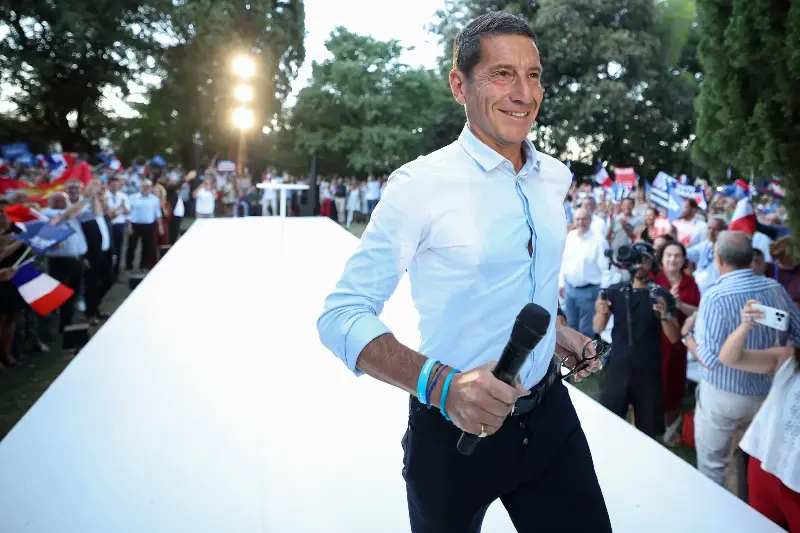
Like the Iron Lady, he is a shopkeeper’s child. The son of a former footballer and a ballet dancer who ran children’s clothing shops, he took over the family business before selling it.
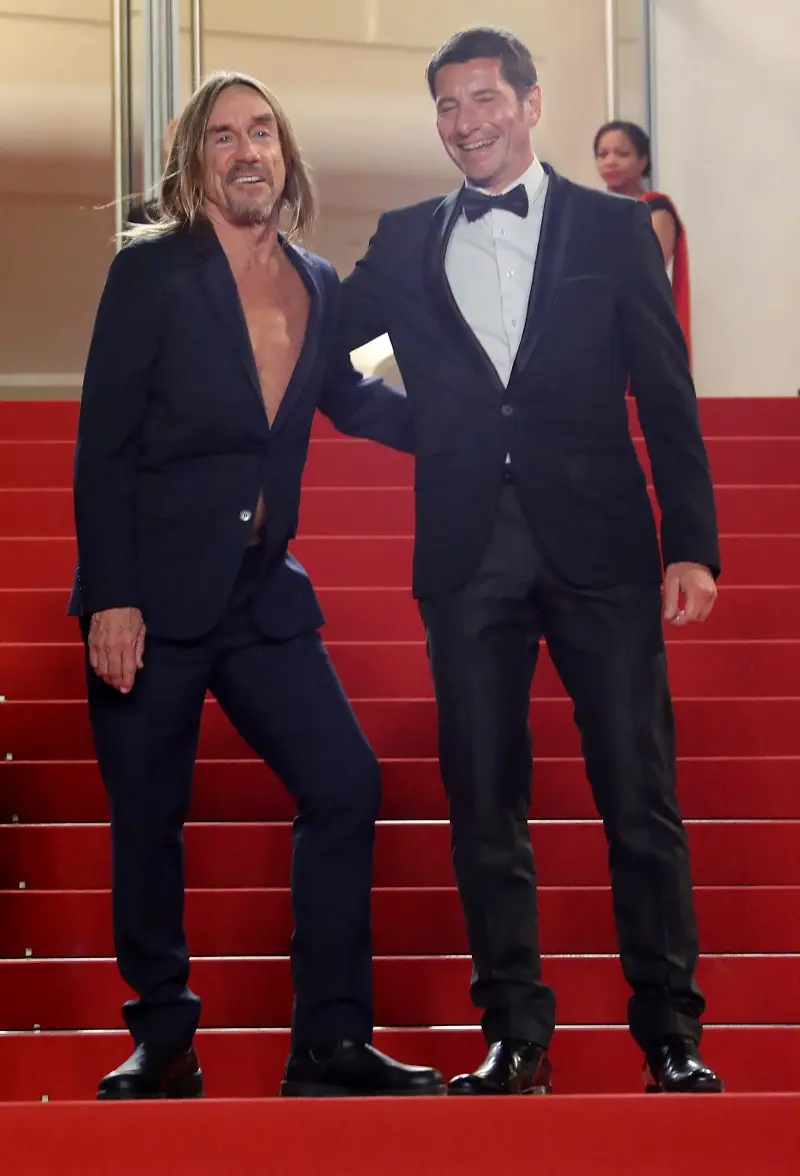
Nor is he an énarque, one of the graduates of France’s elite National School of Administration – the traditional hothouse for future presidents. A keen runner and rock enthusiast, he once displayed a photograph of Iggy Pop in his office rather than portraits of French presidents.
But can a country so fiercely attached to its welfare state stomach a Thatcherite revolution?
Bruno Cautrès, a political scientist at Sciences Po, said the Cannes mayor was attracting predominantly Right-wing voters from affluent professions, as well as tradespeople and shopkeepers.
“They think the state wastes money and makes people’s lives difficult,” he told The Telegraph. “They want to get rid of the administrative layers.”
In that sense, he is tapping into the same exasperation that made The Heist of the Century – a book by Sarah Knafo, the Reconquête MEP calling for France to slash red tape – a national bestseller.
French anger runs deeper than taxes alone, argues Mr Cautrès. Voters still want protection from the state, but increasingly see it as failing them, judging by overwhelmed hospital emergency departments, absent teachers left unreplaced, and overcrowded and understaffed prisons.
“People see an enormous public deficit as proof that the national political elites have led us into a budgetary catastrophe,” he said. “That helps explain the appetite for new faces and new approaches.”
Mr Lisnard can also boast that, unlike Mr Philippe, Gabriel Attal or Bruno Retailleau, he has never served in a Macron government.
Yet he is hardly a political novice. Mayor since 2014 and formerly a spokesman for François Fillon, the former prime minister, he has headed the powerful Association of French Mayors since 2021.
Representing some 34,000 municipalities, the association gives him a powerful network of local elected officials, including the very people whose 500 endorsements presidential candidates require to stand.
It also provides a national platform from which to promote Cannes as proof that public services can be run more efficiently.
His online attacks on Macronism have a comic streak. Borrowing from Hibernatus, the cult Louis de Funès film about a man waking after years in suspended animation, Mr Lisnard imagines someone sleeping through almost a decade of Mr Macron’s presidency.
“What a surprise!” he exclaims, citing €1.4tn (£1.07tn) in additional debt, rocketing crime and crumbling schools. “The whole system has become completely obsolete,” he scoffs.
Alain Duhamel, the veteran political commentator, likens him to Alain Madelin, the free-market candidate who won just 3.91 per cent in 2002, but says Mr Lisnard has a much better instinct for personal contact and the media.
“He is a newcomer among established figures,” he told The Telegraph. “But he is not yet the Right’s new hero.”
Some see parallels with Éric Zemmour’s meteoric rise before the 2022 election. The anti-immigration, anti-Islam polemicist reached 16 to 17 per cent in autumn 2021, only to finish on 7.07 per cent.
Mr Duhamel cautioned that French voting intentions usually only “crystallise” in February and, given his liberalism, he may well hit a ceiling.
For now, Mr Lisnard’s rise is making enemies across the Right.
Jordan Bardella, president of Marine Le Pen’s National Rally, called him a “masked Macronist”.
“Of course, I’m a member of the Red Brigades too,” Mr Lisnard replied sarcastically, calling Mr Bardella the real masked socialist.
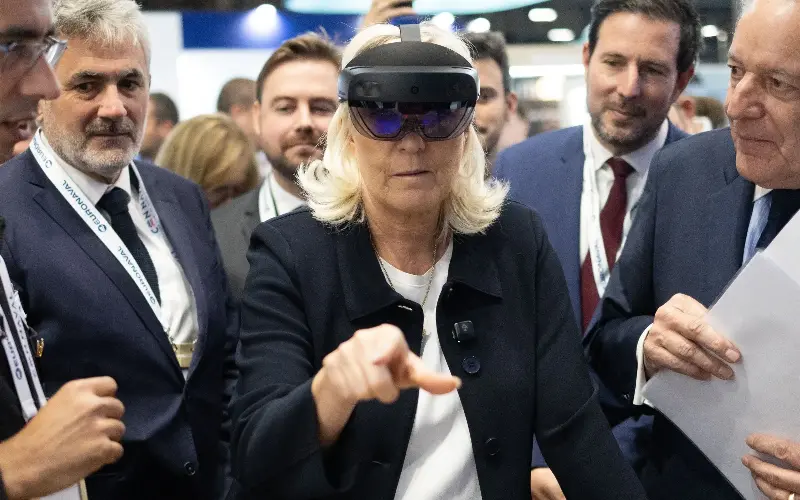
With populist National Rally figurehead Marine Le Pen way out in front and radical Left firebrand Jean-Luc Mélenchon comfortably in second place, many on the Right and centre are calling for a primary to avoid a second-round clash of “the extremes”.
However, Mr Philippe has categorically ruled out joining one, objecting particularly to Mr Lisnard’s willingness to admit Mr Zemmour his proximity to Eric Ciotti, mayor of Nice and a Le Pen ally, who is a close friend.
“That is not my political camp,” Mr Philippe declared on Thursday. “I will not take part.”
Mr Lisnard’s spokesman has since confirmed that he will not participate without Mr Philippe, a move that threatens to derail the very primary he championed. Rivals claim that is his intention.
Mr Duhamel suspects he knows precisely what he is doing.
“He’s no fool. In fact, he’s a real tactician,” he said. “He proposes a primary because he knows Édouard Philippe doesn’t want one. It gives him a good image.”
His leadership of the Association of French Mayors is also under challenge. Next week, its members elect a new president, with critics accusing Mr Lisnard of using a cross-party institution as a springboard for his presidential ambitions, which he denies.
But Mr Cautrès believes the biggest obstacle to his ambitions lies in fielding such a pugnacious programme.
The French may resent bureaucracy, he said, but remain deeply attached to a national welfare state providing the same public services wherever they live.
“In France, the welfare state and the nation-state are too closely bound together,” he said.
The country’s nearly six million public-sector workers, many of whom are fiercely protective of the services they provide, are a force to be reckoned with, scuppering Mr Macron’s attempts at raising the retirement age.
“If David Lisnard were elected, he would find them in his path,” Mr Cautrès warned. “Anyone proposing to transfer education staff to local authorities – I wish them luck.”
He compared the quandary to Andy Burnham reopening Britain’s Brexit debate with all the bad feeling it may reignite.
“Are the French ready for another five years of strikes, demonstrations, tensions and polarisation?” he asked. “I genuinely don’t know.”
Many would argue that this is precisely what they are heading for under a Le Pen or a Mélenchon administration.