DALLAS -- There’s a 20-foot-long slippery tube in your abdomen, and it’s tremendously difficult for doctors to navigate.
A new snake-inspired robotic device could one day help solve that small-intestine problem, according to a study published last month in Science Robotics. Researchers from UT Southwestern, Massachusetts Institute of Technology and Brigham and Women’s Hospital reported that a prototype of the device successfully navigated 2 meters of pig small intestine in 11 minutes during preclinical trials.
According to the study, this device could complement current enteroscopic approaches, which can take several hours, and aid in the diagnosis and treatment of small bowel disorders like inflammatory bowel disease.
A maze in the abdomen
The inside of the small intestine is covered in a slippery mucosal lining, making it one of the most difficult organs to access and navigate, said Binbin Ying, a professor of biomedical engineering and internal medicine at UT Southwestern Medical Center who helped develop the new robot.
One of the main devices used by gastroenterologists to reach the small intestine is a double-balloon endoscope. It consists of a tube within a tube, each with a balloon at the end that can inflate and deflate during the procedure to help steer the enteroscope through the small intestine.
“It's like an inchworm,” said Ying.
While effective, double-balloon enteroscopy is technically challenging, and it can take gastroenterologists hours to reach the deep small intestine using the device, Ying said.
A snake-inspired robot
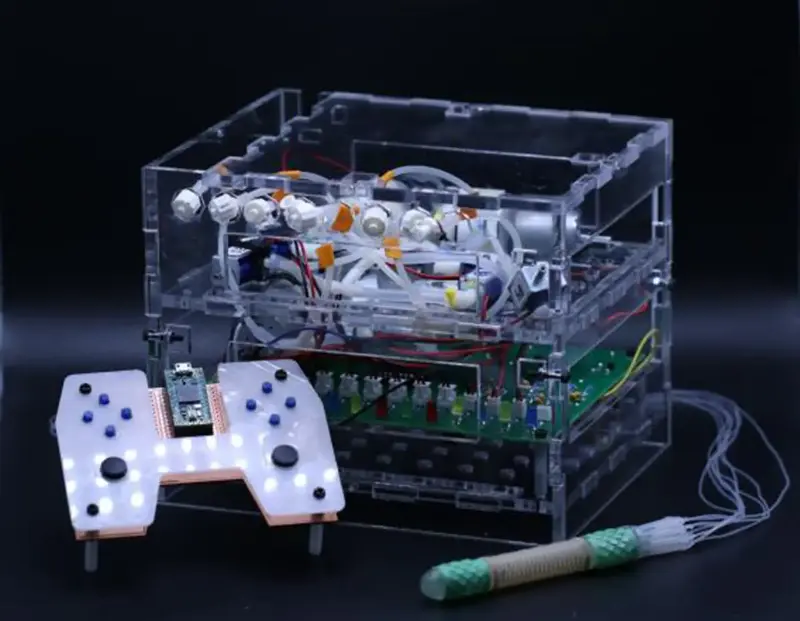
Snakes were the inspiration behind the new robotic device, Biosenter. Snakes move by contracting muscles on one side of the body and relaxing them on the other. Controlled by a wireless joystick, Biosenter moves similarly by using flexible, air-powered segments that expand and bend to steer the device.
According to the study, the hollow, tube-like device also carries tools, which allow it to perform real-time imaging, localized fluid delivery and tissue biopsy, like the removal of small tumors and polyps.
Researchers aim to continue improving Biosenter’s movement and start performing tests in more clinically relevant settings.
Biosenter could one day allow for more effective enteroscopic procedures, the study said, and help gastroenterologists diagnose and treat small intestine disorders like gastrointestinal bleeding, Crohn’s disease and IBD.
____
Niamh Ordner is a science reporting fellow at The Dallas Morning News. Her fellowship is supported by the University of Texas at Dallas. The News makes all editorial decisions.
by The Dallas Morning NewsThis article is provided by the above content partner, authorized for use, and represents solely the author's personal opinions. Please contact us in the event of any potential infringement.