


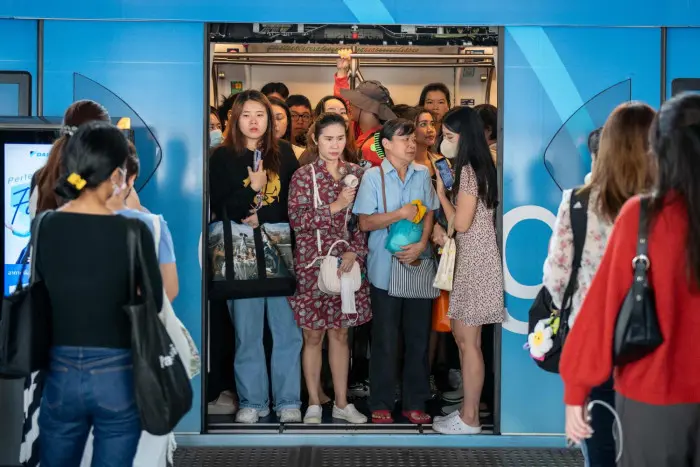
Ask anyone in Bangkok where they would like to live, and one of the first questions is: How far is it from the BTS or MRT? For many families, the answer decides how early they leave home, how much of their pay goes on fares and fuel, and how many hours they get with their children each evening. Getting around shapes who can reach a good job, a hospital or a school, and who cannot. As Thailand's cities grow, it raises a question every city faces: how do we renew the places we already have so that everyone can live with dignity?
Just a few days ago, on Oct 31, we celebrated World Cities Day, under the theme "Regenerating the City: Adequate Housing for All". It was a sobering reminder that up to 3.4 billion people lack adequate housing, secure tenure, basic services or an affordable place to live. Urban regeneration, improving existing urban areas rather than sprawling outwards, offers a way to tackle these problems together. Few places illustrate this opportunity better than Bangkok.
According to the Department of Rail Transport, 279.84 km of electric rail now operates in Bangkok and its neighbouring provinces, about half of the 553.41 kilometres planned across 33 routes. The Orange Line is targeted to open in early 2028 and the Purple Line southern extension around 2030. Each new station is a chance to reshape the neighbourhoods around it.
As Rachel Kyte, the UK's Special Representative for Climate, puts it: "Good public transport is climate action. When cities build homes, jobs and services around transit, they cut emissions and become more resilient and more inclusive. On World Cities Day, we're calling for transport and land-use planning to be at the heart of every city's climate plan."
That is the promise of transit-oriented development, or TOD: neighbourhoods where home, work, school, the market and a shaded park are all a short, safe walk from a station. For a family, that can mean less time in traffic, lower transport costs and cleaner air. It matters for the country too. Transport produces about 20% of Thailand's greenhouse gas emissions, almost all of it from road vehicles. Helping more people live near rail and walk or cycle the last kilometre is one of the most direct routes to Thailand's goals of a 47% cut by 2035 and net zero by 2050.
But a new line can also push people out. Rail raises land values, and research in Bangkok has long shown condominium prices climbing the closer they sit to a station. Around new lines, older homes have given way to condominiums for higher-income buyers. A Mahidol University study of one neighbourhood after a sky train extension found the most vulnerable households feared being displaced, and recommended mandatory low-cost housing. Think of the street vendor, the office cleaner and the motorcycle-taxi rider who keep this city running. If they are priced out to the outskirts, the new line will have made their journeys longer and costlier, not shorter.
So the real question is not whether Bangkok builds TOD, but who it is for.
It is important to design for everyone who walks to the station, women travelling home after dark, older people climbing steep footbridges and wheelchair users facing broken pavements, who meet the steepest barriers in Bangkok. This is the focus of the ACTIVATE Bangkok project, supported by the Thailand–UK PACT programme and delivered with the Bangkok Metropolitan Administration (BMA), UN-Habitat, ICLEI and Thailand Environment Institute. It is identifying priority stations, adding shade, drainage and greenery against heat and flooding, and testing quick, low-cost street improvements so residents can see change and help shape it.
The people most affected say it best. "If we have accessible connectivity to different modes of transport, we will have different choices just like any other person without disabilities," says Supaway Samerpark of Transportation for All. "ACTIVATE Project gives us the opportunity to highlight the importance of universal design and an inclusive approach to any development plan."
Also, cities need to plan each station area as one place, not a patchwork of agencies for rail, roads, land, housing and drainage. ACTIVATE is strengthening a BMA task force as the foundation for a dedicated body to coordinate TOD. In January 2026, the UK and the BMA also signed a Letter of Intent covering TOD and walking and cycling, public transport routing that reduces exposure to PM2.5, and congestion charging and low-emission zones. For daily riders, these pieces add up. As Marut Jantharoj of the Bangkok Bus Club puts it: "When we have a reliable public transport system with accessible information, our cost of living and air pollution will be reduced automatically."
Thailand is investing heavily in accessible transportation this decade. Its success should be measured not only in passengers carried, but in the family that can afford to live near a station, the child who walks safely to school and the grandmother who can reach the clinic on her own.
Nicola Pollitt is the British Ambassador to Thailand. Srinivasa Popuri is the Chief of the UN-Habitat Multi-Country Office, Regional Office for Asia and the Pacific.