open menu

Universe

Astronauts aboard the International Space Station can see flashes of light even with their eyes closed — not from light entering the eye, but from high-energy space particles passing through their body and triggering the retina or visual pathway directly.
Meet The Most Famous Cancer Men: Emotional Powerhouses Redefining Success And Stardom
Earth quietly picks up tiny second moons from time to time, small asteroids briefly caught by our gravity before they wander off again, which means our planet has carried far more moons than the single one most people ever notice.
Stargazing Wonders: A Complete Guide to the Most Spectacular Astronomical Events Happening Throughout the Year
Light takes about 8 minutes to travel from the sun to the Earth, but the energy carried in that sunlight was generated in the sun’s core tens to hundreds of thousands of years ago — bouncing through the sun’s interior for that entire time before finally escaping its surface and making the 8-minute trip across space
The icy surface of Europa is constantly crystallising and reforming in different places at different rates and the James Webb Space Telescope has only just caught it happening
Inside The Heart Of A Cancer Friend: The Magic Of Loyalty, Empathy, And Listening
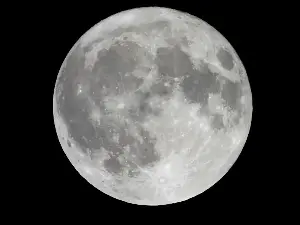
There is no permanently dark side of the Moon. The far side gets sunlight just like the near side — we simply don’t see it from Earth because the Moon is tidally locked, taking about as long to spin once as it does to orbit us once.
How To Photograph The Stars: A Beginner’s Guide To Astrophotography With Basic Equipment
Could the secret to black hole formation be locked away in this record-breaking ancient quasar?
Unlocking Cancer’s Power In The Workplace: Loyalty, Sensitivity, And Team Spirit Unveiled
The first humans on Mars will not just be explorers crossing a red desert. They will be radiation workers, dust-control technicians and weather-watchers on a planet where the danger is less dramatic than constant.
Asteroid to come zooming past Earth – and it will be visible to stargazers!
The Moon is stealing time from the Earth, and it has been getting away with it for billions of years. Our planet spins so much slower than it once did that a single day has stretched from just 19 hours to the 24 we live by, and the Moon is still creeping away from us right now.
The Andromeda galaxy is the most distant thing you can see with the naked eye, and the light reaching your eyes from it tonight left some 2.5 million years ago, long before our own species existed.
In 1972, Apollo 17 carried the only scientist to walk on the Moon into Taurus-Littrow, where a broken rover fender, 741 samples, and orange volcanic glass from 3.64 billion years ago turned the final lunar landing into a geology field trip
The popular claim that space tastes like raspberries and smells like rum, repeated in science articles for over fifteen years, is based on a single 2009 detection of one organic molecule in one specific dust cloud at the centre of the Milky Way, and the actual story behind the finding is more interesting than the version that has been circulating
At its birth, Earth had no Moon. Then something perhaps the size of Mars slammed into the young planet, flinging molten debris into orbit that became the companion world now pulling our tides, steadying our seasons, and perhaps helping make Earth stable enough for life to flourish.
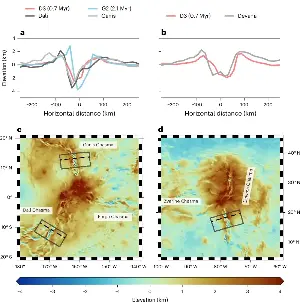
Scientists find huge ‘magma systems’ inside Mars
When Cancer Becomes A Parent: The Zodiac’s Natural Protectors And Heart Of Family Bonds