


The recent discovery of overcrowding, unlicensed operations and mistreatment at care facilities in Kanchanaburi and Nonthaburi has exposed potential weaknesses in the elderly care oversight system, prompting nationwide inspections and calls for tougher enforcement.
The Department of Health Service Support (DHSS) has pledged to inspect about 2,000 elderly care centres within two months while reviewing its licensing and inspection procedures.
The move follows revelations this month of poor sanitation, cage-like beds and alleged abuse at Sothornchai Nursing Home in Kanchanaburi's Tha Muang district, where authorities found the facility had exceeded its licensed capacity and was providing care beyond its authorised scope.
Similar concerns emerged in Nonthaburi on Thursday when officials found two unlicensed facilities and overcrowding at a licensed nursing home, alongside allegations of confinement, chaining and assault.
The cases have raised questions over whether licensing and inspections are sufficient to detect overcrowding, unauthorised services and mistreatment before residents are put at risk.
Questions over inspections
The Kanchanaburi case came to light after an elderly woman alleged on the TV programme Horne Krasae that her son tricked her into entering Sothornchai Nursing Home over two years ago.
She claimed she had been assaulted, threatened and forced to take medication before secretly contacting her sister for help.
A subsequent inspection by the DHSS and Department of Mental Health uncovered serious violations.
DHSS director-general Dr Phuwadej Surakhot said the facility, operating since 2006, was licensed for 50 beds across 1,600 square metres but had expanded to 129 beds over 4,300 sq m.
It was also caring for people with mental health conditions without the required authorisation.
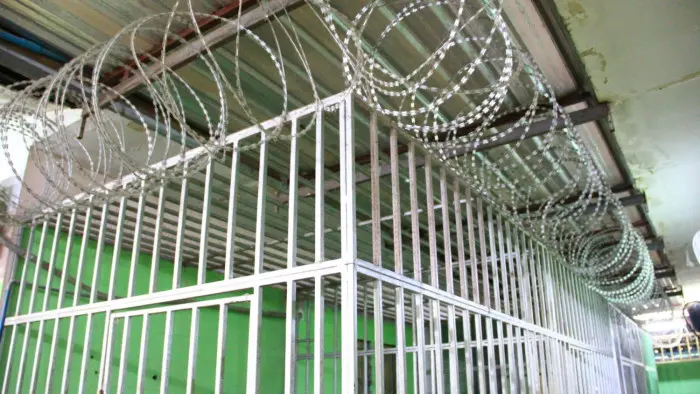
About 90 residents were reported to have such conditions, while inspectors found beds enclosed in metal cages and isolation rooms resembling detention cells.
The DHSS ordered the facility closed for breaches of the Health Establishment Act and the Healthcare Facility Act. All 92 residents were relocated on Wednesday evening after medical assessments.
The case took another turn on Friday when Crime Suppression Division (CSD) agents accompanied the complainant back to the facility to identify locations where the alleged abuse occurred.
The complainant pointed out three rooms: a reception room, a barred room known as Zone 3 and a temporary holding room at the far end of the premises.
The complainant alleged that staff had hidden them in the holding room whenever officials visited, for fear they would report mistreatment.
Agents seized the facility's CCTV server and footage from more than 26 cameras. Police said legal action would follow if evidence of wrongdoing was established.
The concealment allegation has intensified questions about the effectiveness of inspections, although police have yet to establish whether residents were hidden from officials.
Dr Phuwadej said the department conducts annual inspections despite limited personnel. Sothornchai had been due for inspection next month.
He acknowledged, however, that the self-assessment system used in licence renewals required closer scrutiny to ensure operators continued to meet standards.
As the department now inspects all 2,000 elderly care centres nationwide over the next two months, it says facilities found in breach will be ordered to improve, with licences revoked if operators fail to comply.
Beyond Kanchanaburi
Concerns widened on Thursday when officials inspected nursing homes in Nonthaburi's Muang district.
At a nursing home in Soi Rewadee 22, inspectors found 11 residents despite the facility being licensed for nine beds.
A nearby building owned by the same operator was unlicensed and housed 14 teenagers and two elderly women.
Another facility about 200 metres away was also operating without a licence and housed 58 residents in a three-storey building.
Authorities coordinated the relocation of residents from the unlicensed premises and assessed whether they could return to their families or required placement in suitable care facilities, including psychiatric institutions.
During the inspection, some residents shouted for help through windows, alleging assault, confinement and chaining.
One said he had been chained but not assaulted, while another alleged he had been chained and kicked near the eye. Reporters observed bruising around his eyes.
However, Department of Mental Health spokesman Dr Varoth Chotpitayasunondh said preliminary assessments found no evidence of physical abuse or chaining equipment.
The findings nevertheless reinforced concerns over unlicensed care, overcrowding and whether facilities were suitable for residents with different needs.
Under scrutiny
Police are also examining whether other care facilities may be linked to the Kanchanaburi centre.
CSD commander Pol Maj Gen Pattanasak Bupphasuwan said the case was assigned to CSD Sub-Division 5, which is gathering evidence, questioning witnesses and conducting further inspections.
Investigators have also been instructed to determine whether other healthcare facilities operate within the same network.
Pol Maj Gen Pattanasak said the DHSS is the main authority responsible for identifying operators and determining whether facilities are properly licensed under the Health Facility Act.
Operators must apply directly to the DHSS for licences. If the department identifies suspected violations, it can file a complaint with police.
Consumer Protection Police Division commander Pol Maj Gen Kritsadaporn Panprong said CPPD officers had joined the CSD inspection to determine whether the facility's operations involved consumer-protection offences.
He said the CPPD regularly works with the DHSS on complaints involving healthcare facilities, pharmacies and illegal clinics.
Complaints are usually submitted first to the DHSS before the Public Health Ministry coordinates with police on inspections and possible legal action.
Stronger regulation
The Foundation for Consumers warned the problems could worsen as Thailand's elderly population grows if enforcement and penalties remain inadequate.
Foundation deputy director Narumon Mekborisut urged immediate nationwide inspections.
She said protecting residents required effective enforcement, not simply issuing licences and relying on operators to comply.
The foundation also raised concerns about home-based elderly care, where weak supervision and regulatory gaps could expose consumers to substandard services and fraud.
Ms Narumon said some providers employed migrant workers to cut costs without ensuring they had received proper caregiving training.
She also warned of cases in which workers were recruited as housekeepers but later required to care for elderly people without having agreed to those duties.
Such arrangements could leave both workers and families vulnerable when providers failed to meet contractual obligations.
The foundation receives about 20 complaints a year involving home-based care services, she said.
Ms Narumon urged local administrative organisations to play a stronger role in supervising and registering home-care providers, citing the lack of clear regulations governing service standards.
She also called on the Office of the Consumer Protection Board to strengthen safeguards in service contracts and protect consumers from unfair terms and financial losses.
The DHSS, local officials and the consumer protection agency should work towards a unified regulatory mechanism to close loopholes and strengthen enforcement, she said.
For the DHSS, the immediate task is to complete its nationwide inspection drive and determine whether facilities are operating within their licences and providing appropriate care.
But the Kanchanaburi and Nonthaburi cases raise a deeper question: whether Thailand's licensing and inspection system can detect overcrowding, unauthorised services and possible mistreatment before vulnerable residents are put at risk.
The nationwide inspections and ensuing enforcement will determine if the response addresses oversight system weaknesses beyond just closing individual facilities.