



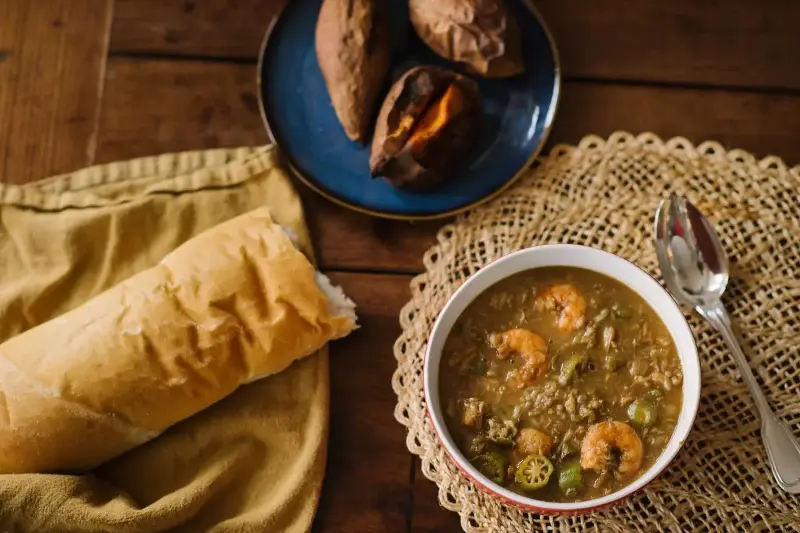
Heat the oil in the hot pot, then gradually stir in flour to create a roux. Cook that roux until it reaches a rich, chocolate-brown colour. Then comes the “Louisiana Holy Trinity” – onions, bell peppers, and celery – which adds another layer of flavour. Finally, add the protein: chicken, hot sausage balls, andouille sausage, or possibly blue crab, shrimp, and crawfish.
This is how you make gumbo, Louisiana’s signature dish. But Chef Dee LaVigne, who is sharing this recipe for a “true New Orleans Creole gumbo” with me, adds that it’s about more than the ingredients and how you put them together.
She says: “A great gumbo isn’t just about what’s in the pot. It’s about the history, patience, and love that go into making it. Gumbo is one of the greatest representations of Louisiana’s cultural identity. When you look into a pot of gumbo, you’re looking at generations of history, migration, survival, creativity, and tradition.”
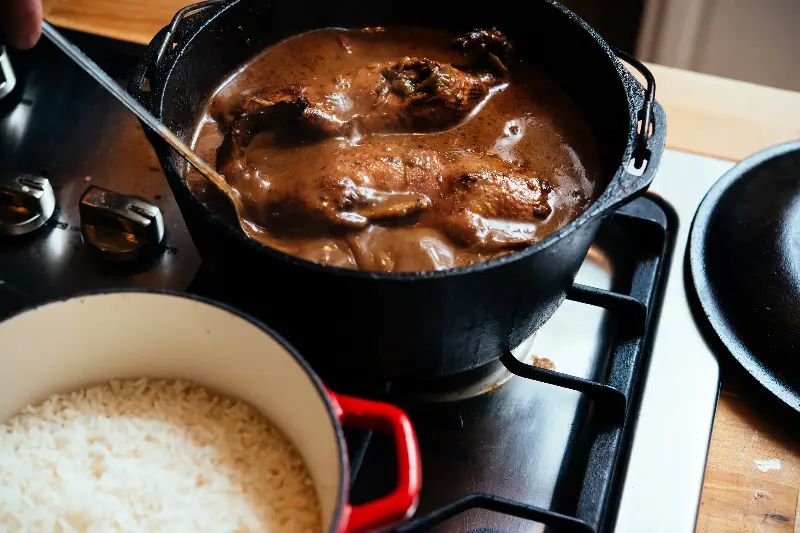
“It’s a dish that brings together African, Native American, French, Spanish, and other cultural influences that helped shape Louisiana.”
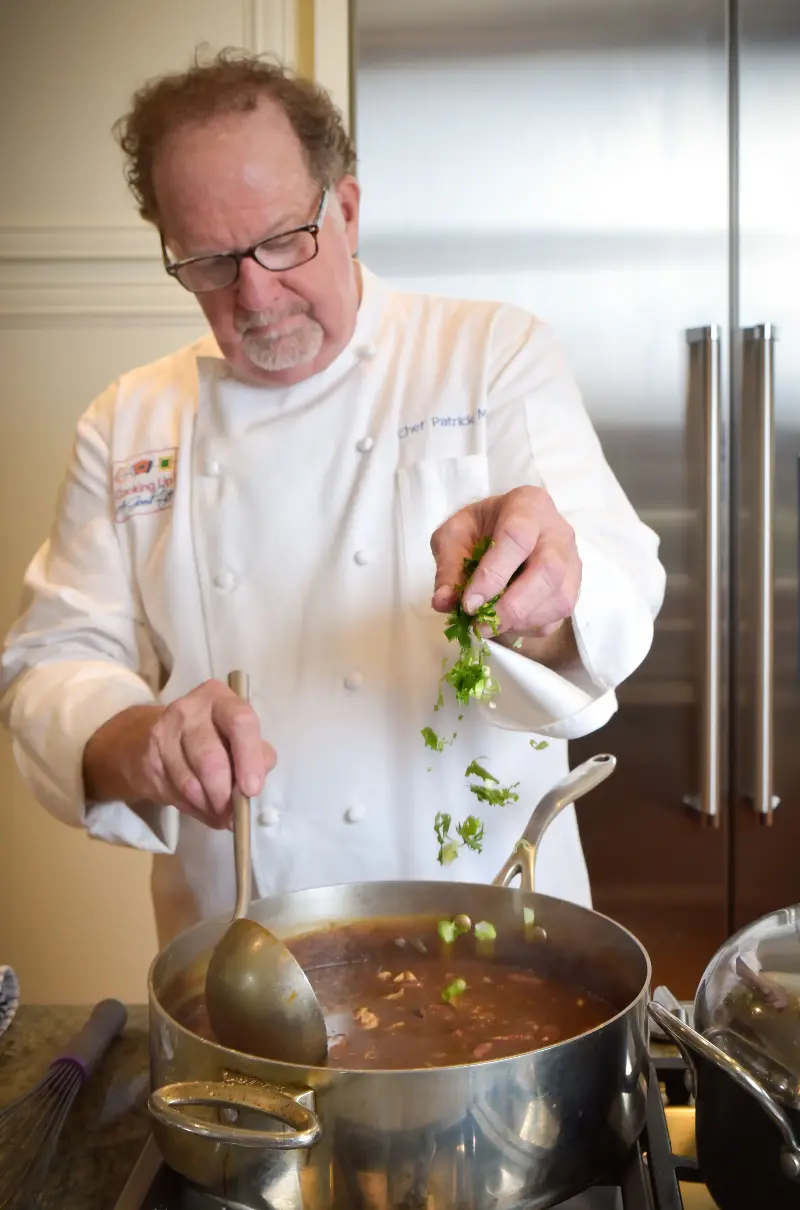
I’m told a similar message from Patrick Mould, a chef from Lafayette, a city roughly 135 miles (217 km) west of New Orleans. Gumbo from this region is slightly different (in fact, you’ll find variations across the state), but the one thing I hear from whoever I talk to, wherever they’re from, and however they cook the dish, is that it should be made with heart and soul.
“It represents who we are: a fusion of all these different cultures – like a fusion of all the different ingredients,” Chef Mould tells me.
Gumbo is a one-pot dish akin to a thick stew. Its origins can be traced to West Africa – it is thought that the name “gumbo” comes from gombo, a regional African word for okra – brought to the southern states of America by enslaved Africans in the 19th century.
“Gumbo wasn't created by one person or in one kitchen,” Chef Dee, who owns the Deelightful Roux School of Cooking in New Orleans, explains. “It evolved over generations through cultural exchange, adaptation, and the knowledge of people who understood how to transform available ingredients into something nourishing and extraordinary.”
Nestled in the US South between Mississippi and Texas, with Arkansas to the north, Louisiana’s cuisine is shaped by both its location and its people’s culture. This includes the people who have lived on the land for millennia and those who migrated, both by choice and by force. The Gulf of Mexico coastline, along with the swamps, prairies and bayous that make up Louisiana’s landscape, provides the wide variety of seafood and produce that make up dishes like gumbo, as well as jambalaya, crawfish étouffée, muffuletta, boudin and po’boys.
The techniques, ingredient choices, and flavour combinations that go into creating gumbo draw on influences ranging from the state’s indigenous roots to Acadian French settlers who sailed from Nova Scotia, Spanish colonial settlers, and enslaved people brought over from West Africa. More recently, German, Irish, Italian and even Vietnamese communities have added their own flavours to the pot. The result is a dish that defies a single recipe.
“I believe understanding the history of gumbo is just as important as knowing how to prepare it,” says Chef Dee.
“Native Americans, particularly the Choctaw people, contributed filé powder, made from dried and ground sassafras leaves,” she explains. “French culinary traditions contributed the roux, while the diverse communities of Louisiana helped develop the seasonings, techniques, and combinations we recognise today.
She adds: “Something I always emphasise is the tremendous contribution of enslaved Africans and their descendants. Black cooks were instrumental in developing and preserving Louisiana's culinary traditions, often without receiving the recognition they deserved.”
In New Orleans, gumbo likely has strong Creole influences, while in Lafayette and Lake Charles it will probably reflect Cajun culture (though you’ll likely get a touch of Creole in there too).
In Lake Charles, southwest Louisiana, residents have told me their gumbo is usually made with a dark brown roux base, served over rice with a side of potato salad and white saltine crackers.
Typically, New Orleans gumbo contains tomatoes, while Cajun country gumbo (including Lafayette and Lake Charles) does not, but there are no hard-and-fast rules.
Ched Dee adds: “If you ask ten Louisiana cooks how to make gumbo, you might get ten different answers – and every one of them will probably tell you theirs is the best.”
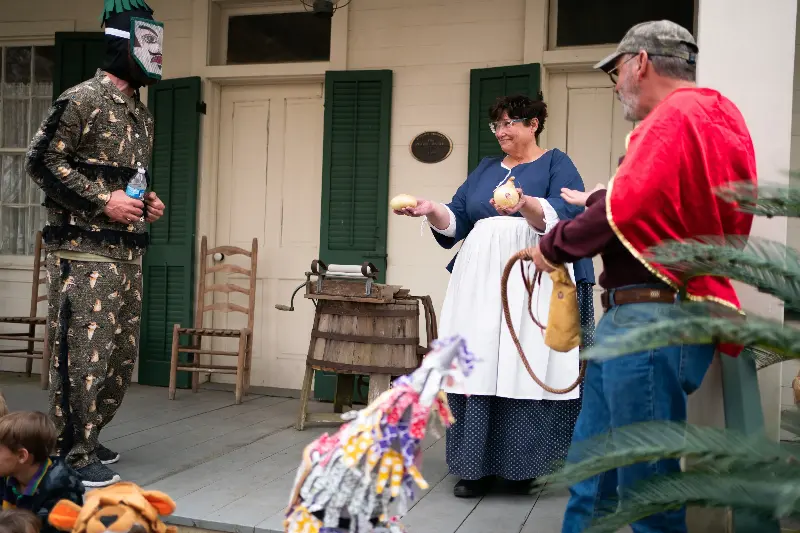
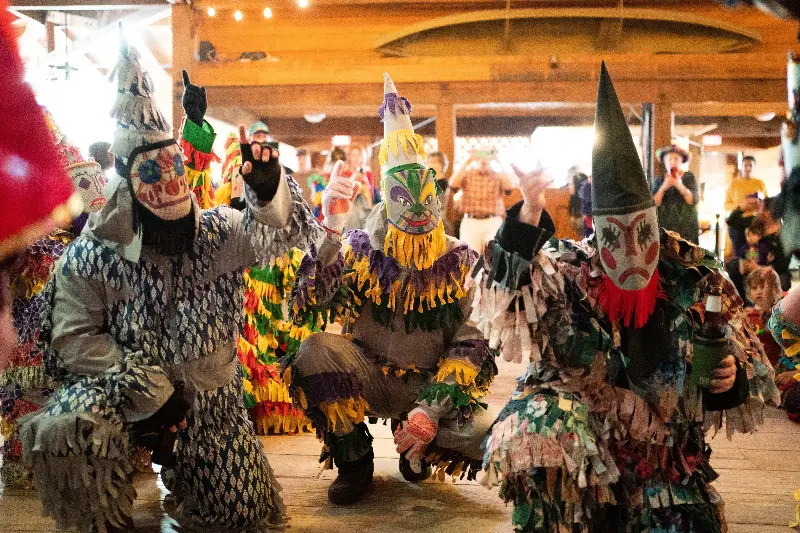
Chef Patrick, who owns Louisiana Culinary Enterprises, tells me about his signature gumbo, made with smoked duck. He also describes the Mardi Gras Cajun tradition of Courir de Mardi in Lafayette, when costumed horse riders go door to door to collect ingredients for a giant gumbo that the community then shares. This often includes chasing a chicken, which provides the protein for the gumbo.
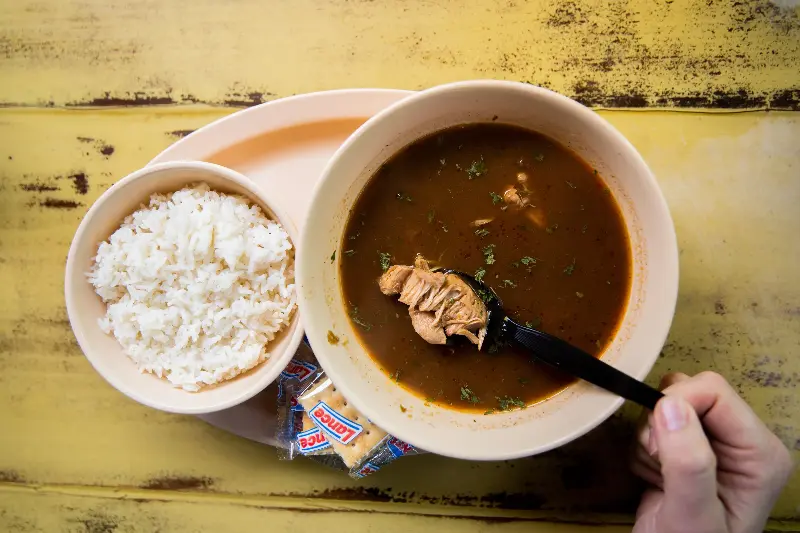
Like regional variations, the gumbo you are served in a Louisiana kitchen will also likely reflect family heritage. Gumbo is personal, Chef Dee explains. “Growing up in New Orleans, food was never just about eating. It was about family, gathering, celebrating, and creating memories. Gumbo represents all of those things.”
The best gumbo you’ll ever have? “The one your momma made,” Chef Patrick laughs.
“That's what makes gumbo so special,” Chef Dee adds. “It reflects where you’re from, what your family taught you, and the traditions you’ve chosen to carry forward. There are generations of Louisiana gumbo traditions, and each one has a story worth telling.”