



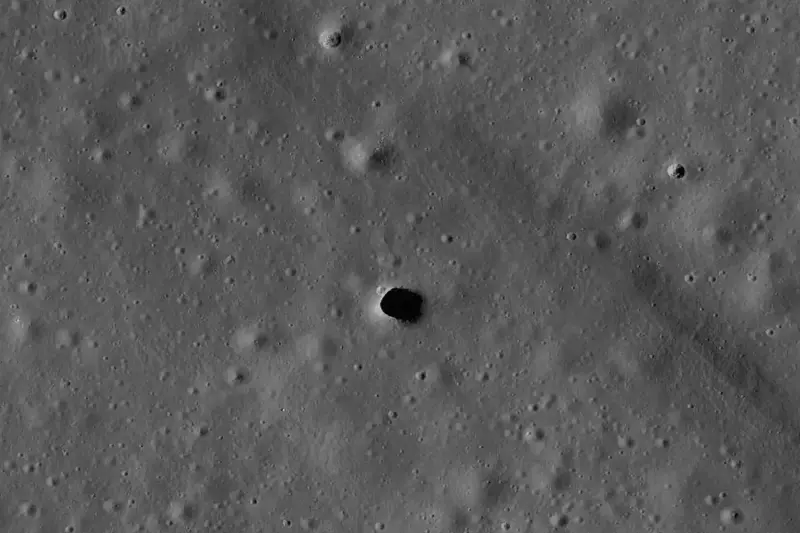
Nasa has selected a project to investigate whether a strange hole on the moon opens into a vast underground cave network and if it could provide shelter for future astronauts.
The project proposed by the Planetary Science Institute would send a lander and rover packed with scientific instruments to probe the Marius Hills Pit (MHP) on the lunar nearside facing the Earth.
Studies have shown that there could be caves and lava tubes hidden beneath the moon’s surface.
Such caves could eventually offer astronauts natural protection from cosmic radiation, micrometeorites, and the dramatic temperature changes experienced on the lunar surface.
Researchers hope to specifically focus on MHP, known to be about 34 to 45m deep and roughly 65 by 90m across.
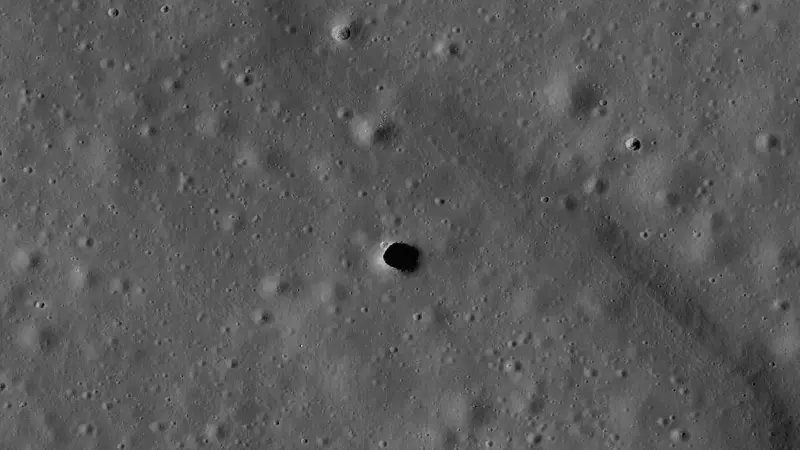
Scientists suspect the MHP could provide an entrance into underground structures created by ancient volcanic activity on the moon about 3.8 to three billion years ago.
They plan to conduct seismic surveys on the moon and also use ground-penetrating radar and make gravity measurements.
PSI is working with the Blue Origin company Honeybee Robotics and the Norwegian space agency to construct much of the mission's equipment, including ground-penetrating radar, seismic sensors, and a gravimeter.
“These methods together will allow us to get a much better understanding of subsurface properties – including the anticipated detection of a lava tube extending away from the Marius Hills pit,” project senior scientist Than Putzig said.
Researchers hope to gain new clues about the pit's origin as well as the geology and volcanic history of the wider region using the new instruments.
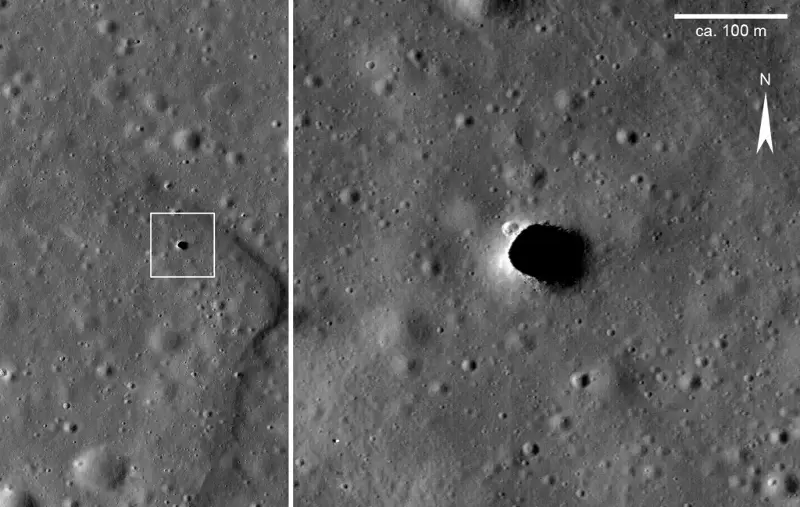
Cameras on the rover and lander will also photograph the lunar surface and the exposed walls of the pit.
The surrounding area of the pit is known to have experienced a long history of volcanic activity.
MHP exposed the region to layers of regolith and lava flows that normally remain buried.
Researchers hope that examining these layers could reveal how lava once moved across and beneath the lunar landscape.
This could help better understand the volcanic processes that helped shape the moon.
If Gimli confirms the presence of an underground cave system connected to MHP, it could inform follow-up missions to explore the cave’s interior using robotic probes, scientists say.
"Confirming a substantial lava tube would give us an insight into how volcanism operated on the moon,” said Gareth Morgan, another scientist on the programme.
"Lava tubes are a common feature of basaltic volcanism on Earth, so identifying them on the moon means we could use knowledge of such terrestrial caves to better understand lunar history,” he said.