



A hard workout can leave you feeling strong, sweaty, and ready to take on the day. Yet what happens in those vital first few minutes afterward often shapes how your body feels tomorrow. Stretching is frequently skipped because it seems optional, especially when time is short. However, a thoughtful post-workout routine supports mobility, body awareness, and a calmer transition from intense effort to total recovery.
The difference between thriving and frustrated exercisers rarely comes down to one dramatic secret. More often, it rests on small, consistent habits. Taking five to ten minutes to slow down, breathe, and move stiff muscles through comfortable ranges can make your training feel far more sustainable over weeks and months.
What Stretching Really Does
Stretching after exercise helps muscles return gradually from a shortened, highly active state to their usual resting length. During running, cycling, lifting, or court sports, specific muscle groups work repeatedly and can feel temporarily tight. Gentle static stretching reduces that immediate stiffness and restores a comfortable range of motion.
- Static Stretching: Holding a position without bouncing (e.g., pulling one heel toward the glutes to stretch the front of the thigh).
- The Sensation: The goal is mild tension, never sharp pain.
- The Reality of DOMS: Stretching does not reliably prevent delayed onset muscle soreness (DOMS). That soreness stems from microscopic tissue repair, but stretching still leaves you feeling looser and more comfortable.
Why Timing Matters
Dynamic movements like leg swings, walking lunges, and arm circles belong before exercise to raise body temperature. After training, the situation changes entirely. Your body is warm, blood flow is elevated, and your muscles are prime for slow, controlled stretches.
This post-workout window creates a natural pause before rushing into work, driving, or sitting for long periods. The key is not to force extreme flexibility when your body is fatigued. Ease into each position and stop well before discomfort. Stretching should feel like a gentle, satisfying pull, not a test of toughness.
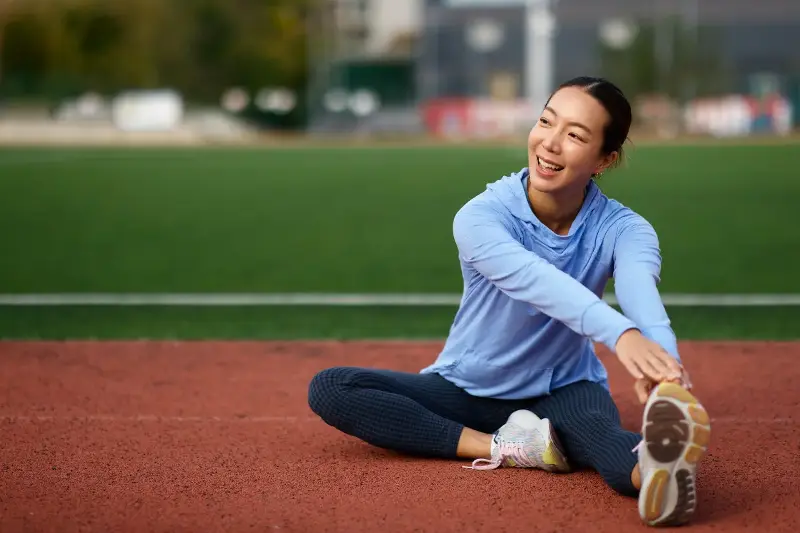
A Simple Routine That Works
A great post-workout routine does not need to be long or complex. Choose the muscles that worked hardest and target them directly:
- Duration: Hold each stretch for 15 to 30 seconds, repeating two to four times. Aim for roughly 60 seconds total per major muscle group.
- Lower-Body Focus: Prioritize calves, hamstrings, quadriceps, hip flexors, and glutes.
- Upper-Body Focus: Target the chest, shoulders, upper back, forearms, and lats.
- Breathing Technique: Inhale slowly through the nose, then exhale longer than you inhale to help muscles relax without guarding.
For example, after a ride, combine a standing quad stretch with a seated hamstring hold. After lifting, add a doorway chest stretch. The best routine is simply the one you can perform consistently.
Mobility Versus Flexibility
Flexibility is the passive ability of a muscle to lengthen, while mobility is your active control over a joint's full range of motion. Both matter, but they are not identical.
Post-workout stretching supports flexibility, yet it represents just one part of the broader recovery picture. Strength training through a comfortable range of motion maintains real mobility. Meanwhile, high-quality sleep, proper hydration, balanced nutrition, and sensible workout volume do the heavy lifting for muscle repair. Think of stretching as a helpful tool rather than the entire recovery toolbox.
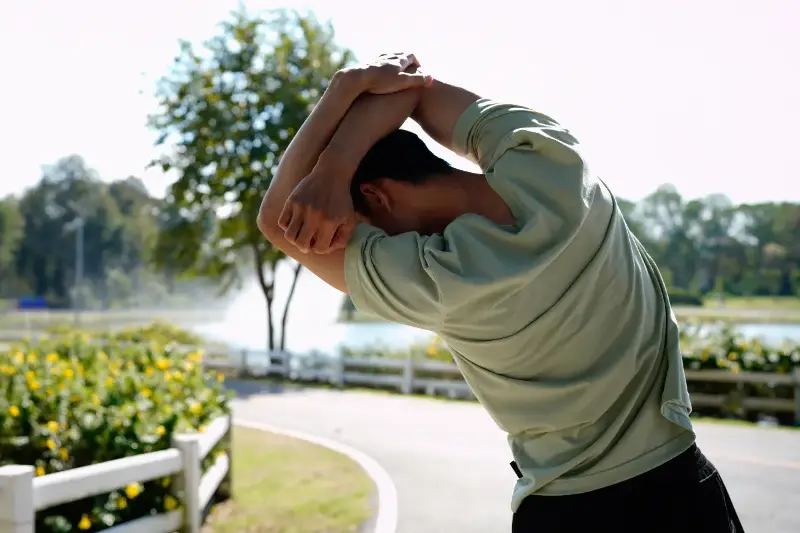
The Habit That Keeps Training Enjoyable
The greatest advantage of stretching may ultimately be psychological—it gives your exercise session a clear, satisfying finish line. Instead of stopping abruptly, you gain a quiet moment to listen to your body and notice where tension accumulates.
Consistency matters far more than intensity. You do not need extreme flexibility or a complicated sequence to reap the benefits. Start with three simple stretches after your next session, breathe deeply, and allow your body to recover. Over time, this small habit transforms exercise from a punishing task into a rewarding daily practice.