


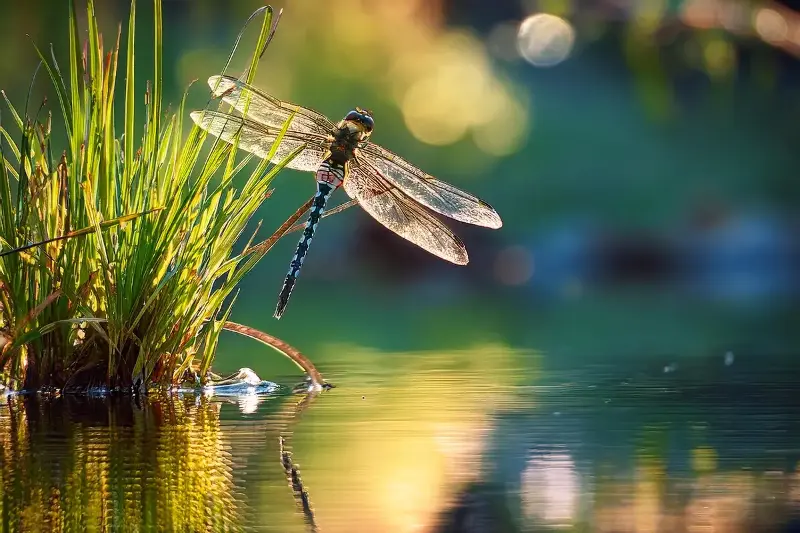
Dragonflies are among the most eye-catching residents of a healthy wetland. Their brilliant metallic colors, rapid aerial flight, and remarkable ability to hover make them easy to admire, but their true ecological value is far deeper. A dragonfly patrolling above a pond is not simply a striking insect; it is an active indicator of clean water, abundant native plants, and a thriving aquatic food web.
Scientists treat dragonflies and their damselfly relatives as bioindicators—living organisms whose population shifts provide early warnings about environmental health. Because they spend the vast majority of their lives submerged underwater, dragonflies offer a clear window into hidden ecosystem dynamics long before taking flight as agile adults.
Life Between Water and Air
A dragonfly begins its journey as an egg deposited in or near water. Females lay eggs inside plant stems, scatter them across open water, or nestle them into damp mud. These hatch into aquatic larvae, also known as nymphs, which reside below the surface for months or even years.
Nymphs are formidable underwater predators. They hunt mosquito larvae, small aquatic insects, tadpoles, and tiny fish using a specialized, extendable lower jaw that strikes with impressive speed.
Because nymphs live continuously submerged, they remain highly sensitive to subtle environmental shifts:
- Water Quality: Depleted oxygen levels quickly disrupt nymph development.
- Chemical Runoff: Pesticides and toxic elements severely impact survival rates.
- Habitat Loss: Excessive sediment and missing underwater vegetation reduce hunting grounds and shelter.
A wetland supporting a diverse array of dragonfly larvae demonstrates that healthy aquatic conditions have been sustained over long periods.
Why Diversity Matters
Seeing a single adaptable dragonfly species does not guarantee a pristine environment. Certain resilient species survive in drainage ditches or artificial garden ponds. However, a rich, diverse dragonfly community reveals far more comprehensive ecological information.
Different species require distinct microhabitats:
- Sunlit Ponds: Favored by species that rely on abundant emergent vegetation.
- Cool Streams: Required by river-dwelling species needing gravelly beds and flowing water.
- Seasonal Bogs: Essential for specialized species adapted to acidic or temporary pools.
Wetlands filled with native reeds, sedges, and rushes offer vital perching spots for adults and safe climbing pathways for emerging nymphs. When a nymph reaches maturity, it climbs a plant stem to shed its skin. Finding these empty shed skins, called exuviae, offers definitive proof that dragonflies are successfully reproducing within that specific habitat.
A Warning System for Environmental Change
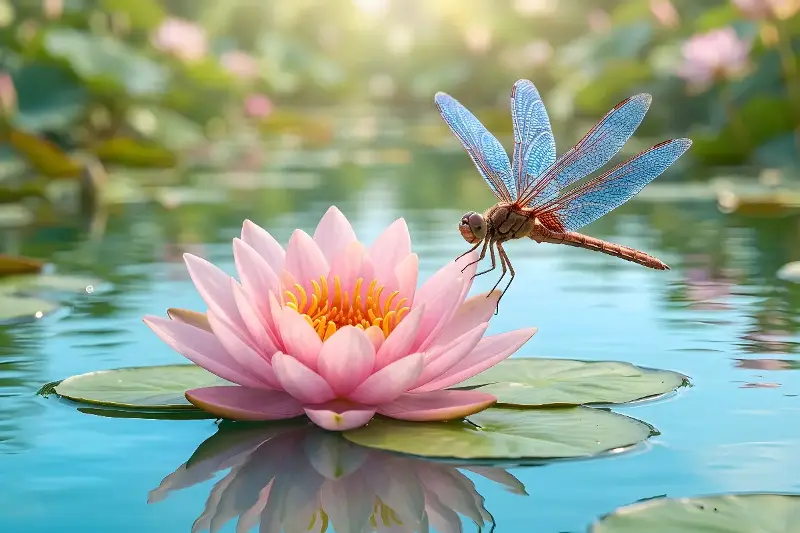
Dragonflies function as a natural alarm system for habitat degradation. A sudden decline in species richness often signals that a wetland is accumulating pollutants, drying out prematurely, or losing essential plant cover.
Excessive agricultural nutrient runoff can trigger massive algal blooms. When this algae decomposes, oxygen levels plunge, threatening nymphs and other aquatic life. Additionally, changing climate patterns and severe droughts risk drying shallow marshes before nymphs complete their metamorphosis.
Predators That Support the Food Web
Beyond their role as indicators, dragonflies are essential regulators of insect populations. Adult dragonflies are master aerial hunters, utilizing panoramic compound eyes to calculate prey trajectories midflight. They capture high volumes of mosquitoes, midges, and pest flies daily.
Simultaneously, dragonflies serve as a vital food source within the larger ecosystem:
- Nymphs feed fish, aquatic beetles, and larger water species.
- Adults nourish insect-eating birds, frogs, spiders, and bats.
A pond buzzing with dragonfly activity indicates a balanced ecosystem that likely supports pollinators, amphibians, and migratory water birds.
Helping Dragonflies Thrive
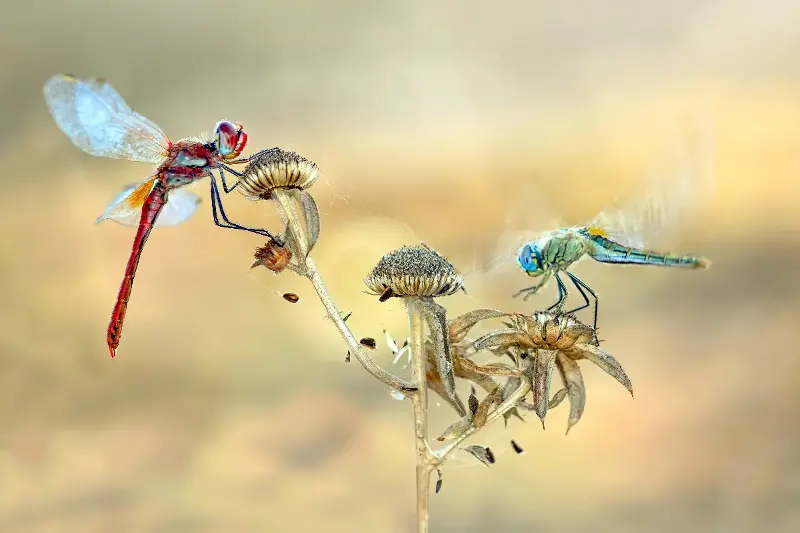
Protecting natural wetlands and building wildlife-friendly backyard ponds directly supports dragonfly populations. Ideal habitats include shallow edges, sunlit areas, native plants, and unpolluted water.
Avoiding chemical pesticides protects both aerial adults and underwater nymphs. By preserving these vital aquatic habitats, we ensure that the flashing wings of dragonflies continue to signify healthy, vibrant ecosystems for generations to come.