


Bridges do far more than carry travelers across water, valleys, and city streets. At their best, they become dramatic architectural destinations in their own right, seamlessly combining daring engineering with unforgettable panoramic views. Some soar majestically between mountain peaks, others glow above vibrant harbors, and a few seem to float through sea mist. These remarkable structures prove that practical, functional design can also be deeply beautiful.
Golden Gate Bridge, United States
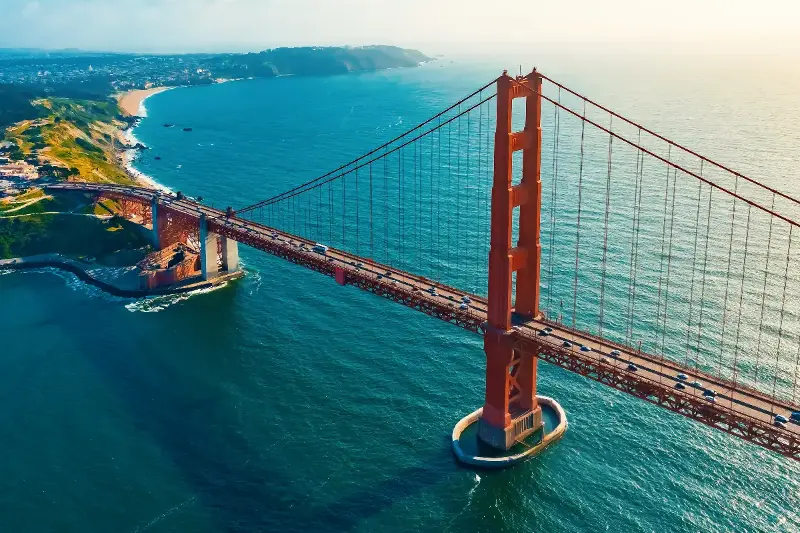
Few landmarks across the globe are as instantly recognizable as San Francisco's Golden Gate Bridge. Opened in 1937, its iconic International Orange towers rise 227 meters above the turbulent waters of the Golden Gate Strait.
-
Distinctive Color: The orange shade was originally intended as a mere primer, but it became permanent because it stands out brilliantly against the bay's frequent, rolling fog.
-
Engineering Record: Featuring a main span of 1,280 meters, it held the record as the world’s longest suspension bridge span when first completed.
-
Visitor Experience: Walking or cycling across offers sweeping vistas of San Francisco Bay, Alcatraz Island, and the open Pacific Ocean. On misty mornings, the towers appear to emerge directly from the clouds.
Millau Viaduct, France
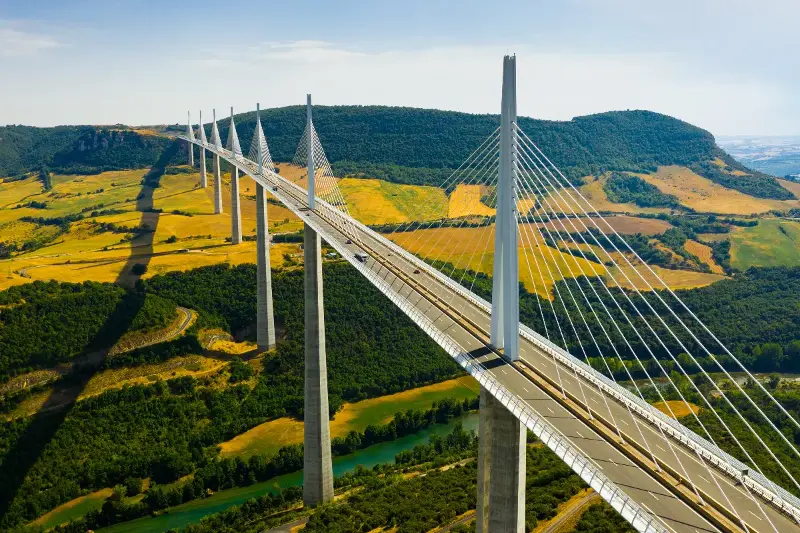
The Millau Viaduct resembles a series of slender, white sails floating gracefully above southern France. Carrying the A75 motorway across the serene Tarn Valley, this modern marvel was designed by architect Norman Foster and structural engineer Michel Virlogeux, opening to the public in 2004.
-
Record-Breaking Height: Its tallest mast reaches a staggering 343 meters, making it taller than the Eiffel Tower.
-
Sky-High Travel: The roadway sits up to 270 meters above the valley floor, allowing motorists to travel smoothly high above the rolling landscape.
-
Cloud Ocean Effect: On crisp mornings, low clouds blanket the valley floor below, leaving only the white cable-stayed pylon masts visible above the sea of fog.
Forth Bridge, Scotland
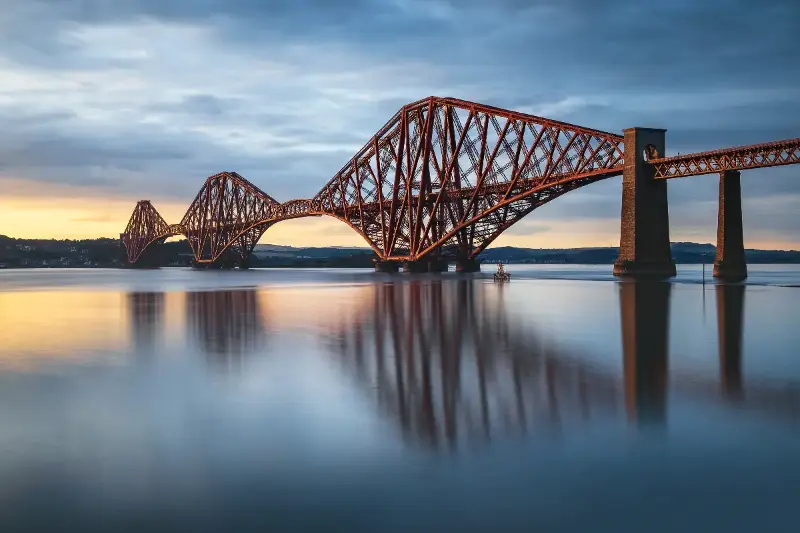
Spanning the Firth of Forth near Edinburgh, the Forth Bridge stands as a powerful, enduring symbol of Victorian heavy engineering. Completed in 1890, it carries railway lines over the estuary and is celebrated worldwide for its massive, crimson-red cantilever structure.
-
Exceptional Strength: Constructed using roughly 54,000 tonnes of heavy steel, engineers built an exceptionally robust structure following the tragic collapse of an earlier regional railway crossing during a storm.
-
Global Recognition: In 2015, the landmark was designated a prestigious UNESCO World Heritage Site in honor of its 19th-century innovation.
-
Unrivaled Views: Train passengers crossing the structural diamond-shaped towers enjoy expansive, uninterrupted views of coastal wildlife, green islands, and the Scottish coastline.
Charles Bridge, Czech Republic
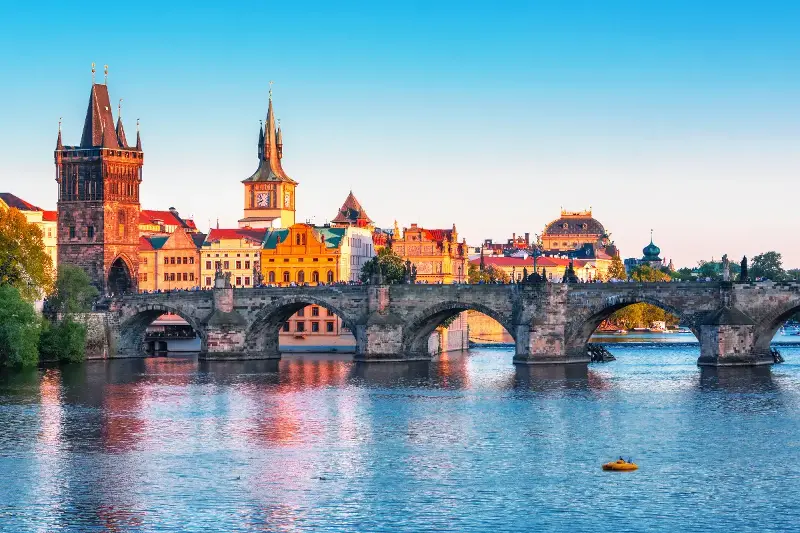
In historic Prague, the Charles Bridge offers an enchanting, romantic route across the Vltava River. Commissioned by King Charles IV in 1357, this medieval stone arch bridge replaces towering steel cables with exquisite Gothic craftsmanship.
-
Sculptural Gallery: The bridge pathway is lined with 30 historic statues depicting revered saints and dramatic historical scenes.
-
Local Traditions: Visitors frequently touch the famous bronze relief of St. John of Nepomuk, a tradition believed to bring good fortune and ensure a return trip to Prague.
-
Magical Atmosphere: At dawn, as sunlight warms the nearby spires, street musicians, local artisans, and distant castle outlines create an unforgettable open-air gallery experience.
Akashi Kaikyo Bridge, Japan
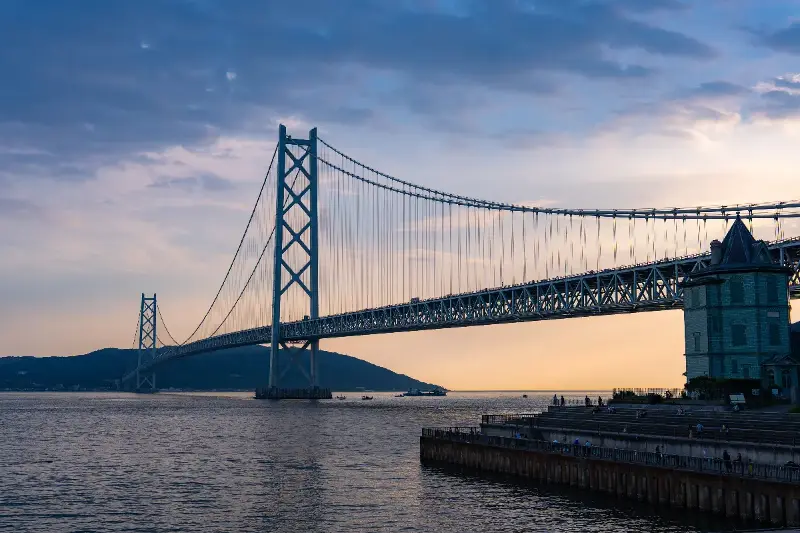
Japan's Akashi Kaikyo Bridge is a masterclass in structural resilience, built to withstand some of the planet's harshest natural elements. Spanning the busy Akashi Strait, it links the vibrant city of Kobe with Awaji Island.
-
Massive Proportions: Opened in 1998 with a central span reaching 1,991 meters, it set the global benchmark for suspension bridge length for over two decades.
-
Resilient Engineering: Designed to endure harsh sea currents and earthquakes, the structure survived the powerful 1995 Great Hanshin Earthquake mid-construction with zero structural damage.
-
Nighttime Illumination: Thousands of computer-controlled lights transform the cables into dynamic, changing light shows, earning it the affectionate nickname Rainbow Bridge.
Ponte Vecchio, Italy
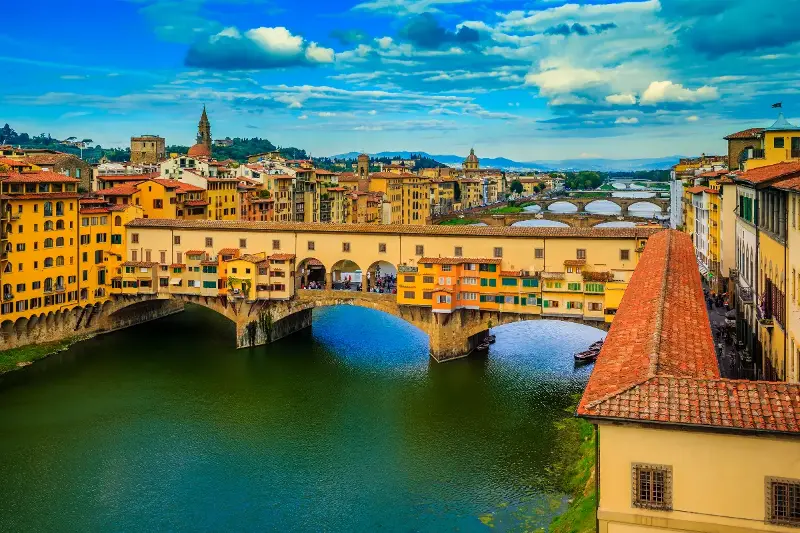
Arching over the Arno River in Florence, the Ponte Vecchio ranks among the most charming historic crossings in Europe. Dating from 1345, it is famous for the quaint, pastel-colored artisan shops built directly along its stone perimeter.
-
Artisan Legacy: In 1593, local rulers decreed that only goldsmiths and fine jewelers could occupy the shopfronts—a vibrant tradition that continues to flourish today.
-
Historical Survival: It stands as the only medieval bridge in Florence to survive intact through the devastating conflicts of the mid-20th century.
-
Timeless Beauty: Its warm stone arches, glittering display windows, and picturesque reflections along the river make it a quintessential Italian highlight.
A Journey Worth Crossing
The world's most beautiful bridges offer far more than a simple path from one side to another. They reveal the endless imagination of their creators, the rich heritage of their host cities, and the natural beauty of the surrounding landscapes. Whether standing beneath glowing steel towers or watching the sunset reflect across ancient stone arches, travelers quickly discover that the crossing itself is often the true highlight of the journey.