


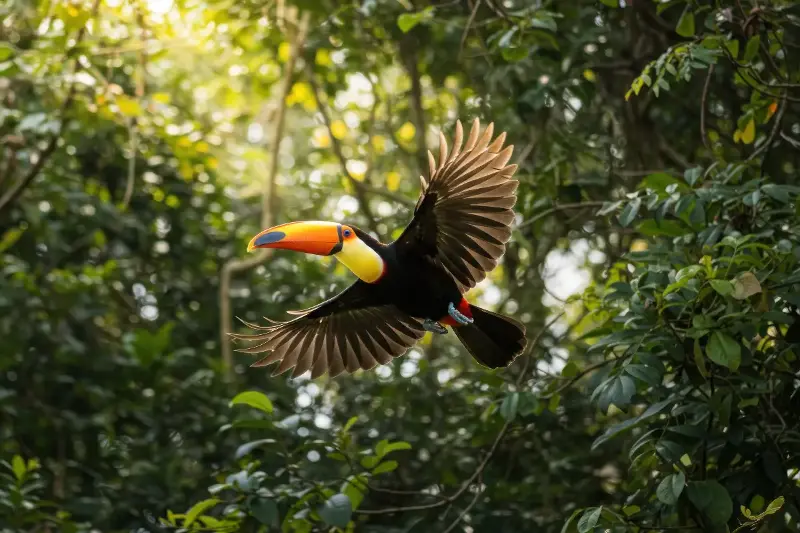
In the upper layers of tropical forests, toucans do far more than add brilliant color and sound to the landscape. These large-billed birds serve as some of the rainforest's most critical seed dispersers, actively planting the next generation of trees across the canopy as they search for fruit. By consuming fruits, flying between feeding sites, and depositing seeds away from parent plants, toucans enable forests to regenerate, expand, and flourish.
Their ecological role is invaluable in tropical ecosystems where many tree species depend on animals rather than wind or water to transport their seeds. A toucan traveling between a fruiting fig tree and a distant palm perches high above the ground and leaves behind viable seeds. For a seed, this journey marks the crucial difference between crowding beneath its parent tree and finding fresh soil to grow.
Built for Fruit in the Canopy
Toucans belong to the family Ramphastidae and inhabit Central and South American tropical forests. Their most striking feature—the oversized bill—is surprisingly light because it is constructed from a honeycomb-like structure of bone covered with keratin. This unique bill allows a toucan to reach fruits on outer branches that cannot support its body weight.
Different toucan species specialize in varied habitats and food sources across the canopy:
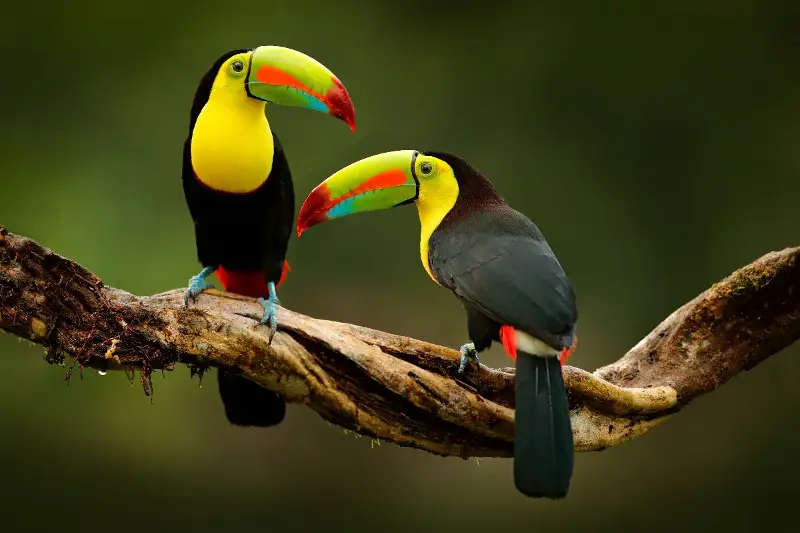
- Keel-Billed Toucan: Found from southern Mexico to Colombia, feeding on wide varieties of fruit, insects, and small forest organisms.
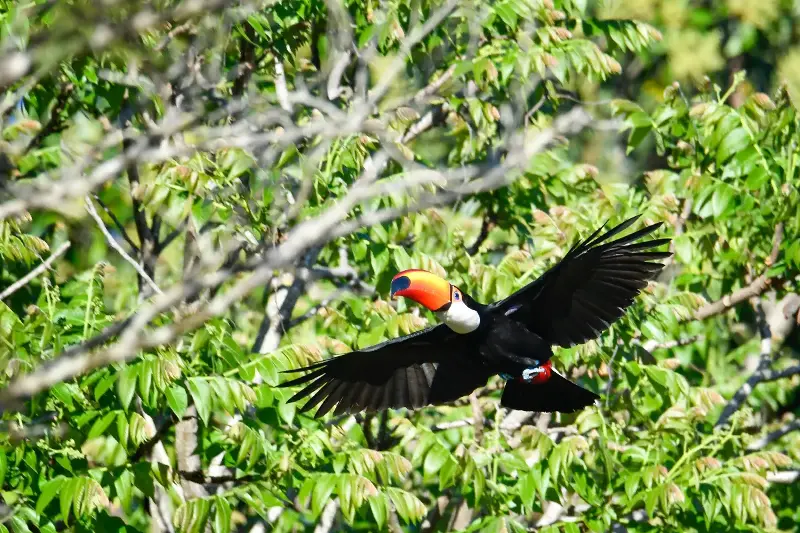
- Toco Toucan: The largest toucan species, inhabiting woodlands and open forest edges across South America.
- Channel-Billed Toucan: Operates across the Amazon Basin, foraging through forest canopies for figs, palms, and laurels.
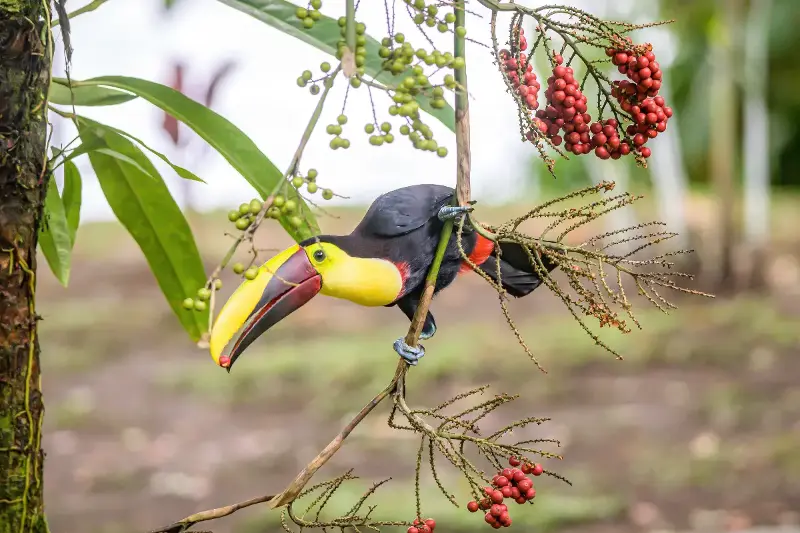
Fruit serves as the primary energy source in a toucan's diet. Toucans pluck a fruit, toss it upward with the tip of their bill, and swallow it whole. This simple feeding behavior carries major ecological benefits, as intact seeds survive the journey to be planted far from where they originated.
A Flying Network for Seeds
Seed dispersal allows young plants to escape the hazards of growing directly beneath their parents, where they face intense competition for light, water, and nutrients. Beneath a mature tree, seeds are also easily targeted by seed-eating insects and plant pathogens.
Toucans are remarkably effective dispersers because they are mobile, wide-ranging, and capable of handling large fruits. While smaller birds consume tiny seeds, toucans swallow fruits that are too large for most canopy wildlife, connecting large-seeded plant species to new growing sites.
Toucans assist forest growth through two primary mechanisms:
- Gut Pass-Through: Seeds pass through the digestive tract and are deposited in nutrient-rich droppings, stripping away pulp that might otherwise attract mold.
- Regurgitation: Birds cleanly regurgitate larger seeds after eating the pulp, dropping them ready for rain and sunlight.
Rather than scattering seeds randomly, toucan movements track the forest's changing fruit calendar. As one tree species finishes fruiting, toucans move to another, connecting distant vegetation patches. Over time, this aerial network maintains genetic diversity across plant populations and accelerates forest recovery after natural disturbances.
Partners in a Diverse Forest
The relationship between toucans and fruiting plants represents a vital ecological partnership. The bird gains energy-rich food, while the plant secures reliable transport for its offspring.
Large-seeded trees are particularly vulnerable when fruit-eating animals decline. While ground mammals disperse seeds across the forest floor, toucans provide a essential aerial route through the treetops. Together, these animals build a comprehensive dispersal network that sustains extraordinary plant diversity, preventing a few common tree species from dominating the landscape.
Why Toucan Conservation Helps Forests
When forests become fragmented by roads, agriculture, or urban expansion, toucans lose essential nesting cavities, feeding trees, and safe flight corridors. Protecting these birds requires preserving mature, interconnected rainforests filled with old-growth trees. Toucans rely on natural tree cavities for nesting, making forest continuity vital for their survival.
Toucans are celebrated ambassadors for rainforest conservation. Beyond their iconic appearance, their real importance lies in their daily work as canopy gardeners. Every fruit swallowed and every seed carried across the treetops helps ensure tomorrow’s rainforest remains resilient, vibrant, and full of life.