



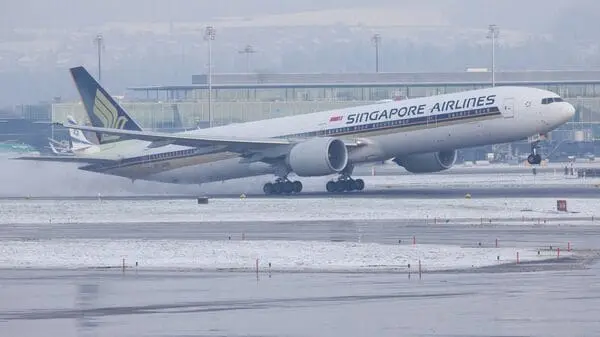
The Goods and Services Tax Appellate Tribunal (GSTAT) has ruled that airlines can claim a refund of GST paid on cancelled tickets if they have returned both the fare and the tax amount to passengers, and can substantiate the same with supporting documents, PTI reported.
In the case of Singapore Airlines Ltd. vs Commissioner of CGST & Central Excise, Kochi, the Ernakulam bench of the GSTAT held that the airline had provided sufficient evidence to establish that refunds for cancelled tickets had reached the respective passengers directly, with no incidence of tax being passed on to them.
The tribunal directed the revenue department to process the airline's refund claim within two weeks and pay the amount along with applicable interest.
Singapore Airlines' ₹45.92 lakh refund claim
The case concerns eight GST refund claims totalling ₹45,92,528 filed by Singapore Airlines for the period between October 2019 and March 2021.
During this period, the airline cancelled flights because of the Covid-19 pandemic and refunded passengers both their ticket fares and the GST charged on them. However, the airline was unable to adjust the credit notes against its output tax liability.
The GST Joint Commissioner had rejected the refund claims, prompting Singapore Airlines to approach the tribunal.
Setting aside the earlier order, the GSTAT, in its ruling dated 16 October, held that the airline was eligible for a refund of the GST collected from passengers and deposited with the department, but subsequently returned in full along with the ticket fares following flight cancellations during the pandemic, in accordance with a Supreme Court order.
Tribunal finds no unjust enrichment
The tribunal concluded that the airline had furnished sufficient evidence to establish that the refunds had reached the respective passengers directly and that there was no passing on of the incidence of tax.
The finding addresses the principle of unjust enrichment under GST law, which generally prevents a taxpayer from retaining a refund if the tax burden has been passed on to another party.
What tax experts say
Rahul Shekhar, partner – indirect tax at Nangia Global, told PTI that the ruling was a positive development for the aviation industry, as GST should not become a cost when a transaction is cancelled and the tax collected has been fully refunded to customers.
He said the ruling underscored the need for tax authorities to assess all supporting documents collectively rather than reject genuine refund claims on technical grounds.
However, taxpayers must maintain robust documentation to satisfy the test of unjust enrichment when seeking refunds, Shekhar added.
Rajat Mohan, managing partner at AMRG Global, said the tribunal had allowed a refund as an excess payment of tax in a case where a business had repaid customers but had no outward tax liability against which to adjust the credit notes, leaving the tax with the government, according to PTI.
Mohan said the outcome hinged on the evidence submitted by the airline. Passenger-level records linking invoices, credit notes and refunds, along with settlement data, demonstrated that the airline had not retained the tax.
Taxpayers who cannot establish a similar documentary trail, particularly in cases involving tickets sold through agents, should not assume that their refund claims will receive the same treatment, he added.
With inputs from PTI