



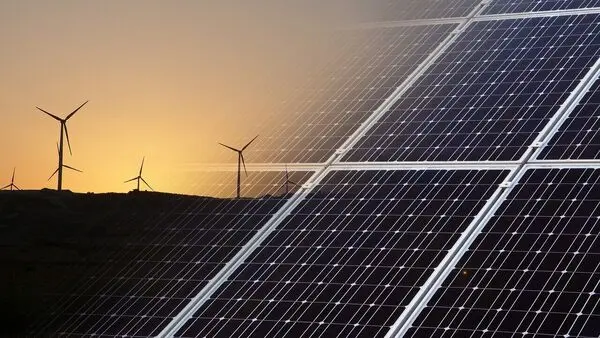
India will need to scale up battery storage and modernise its power grid alongside renewable energy generation to meet its target of 500 GW of non-fossil fuel capacity by 2030 while ensuring a reliable electricity supply, experts said at an industry event, according to The Times of India.
India had installed 300.50 GW of non-fossil fuel electricity generation capacity as of July 31, 2026, crossing 60% of its 2030 target of 500 GW.
However, expanding generation capacity alone will not be enough. Integrating more renewable power into the electricity grid will require greater investment in energy storage, domestic manufacturing and research, said Jai Asundi, executive director of the Centre for Study of Science, Technology and Policy (CSTEP), as reported by TOI.
The discussions took place at the Renewable Energy India Expo, held alongside The Battery Show India and the Energy Storage Summit India in Greater Noida.
Why does India need to expand battery storage?
As India's renewable energy capacity grows, storing electricity and supplying it when generation falls will become increasingly important.
Yogesh Mudras, managing director of Informa Markets in India, said renewable energy generation and grid storage must expand in tandem as the country's clean energy sector grows.
“We have reached an execution phase where generation and grid storage must scale in tandem,” he said, according to the report.
India's renewable energy market is projected to reach 486 GW by 2030, while its battery storage sector is expected to exceed $8.5 billion by 2031, Mudras said.
Solar and wind power output fluctuates with weather conditions and the time of day, making battery storage and grid upgrades essential to managing variations in supply and demand.
India and Germany could deepen cooperation on battery technology
Anandi Iyer, director of the Fraunhofer Office in India, highlighted the pace of growth in renewable energy and battery storage worldwide, according to the report.
The world added around 800 GW of renewable energy capacity in 2025, while global battery storage deployment reached 108 GW, up 40% from the previous year, according to Iyer.
Iyer said India and Germany could strengthen cooperation in battery research, power electronics and advanced engineering to support the clean energy transition.
Australia offers opportunities in critical minerals
Australia's high commissioner to India, Philip Green, said the two countries could combine Australia's critical mineral resources and solar technology with India's manufacturing capabilities to strengthen clean energy supply chains.
Australia produces more than half of the world's lithium, he said.
The mineral is a key raw material for many rechargeable batteries, including those used in electricity storage systems.
Scotland First Minister John Swinney also highlighted opportunities for collaboration, saying Scotland's expertise and innovation could complement India's manufacturing scale and market potential in the clean energy sector, as per the report.