



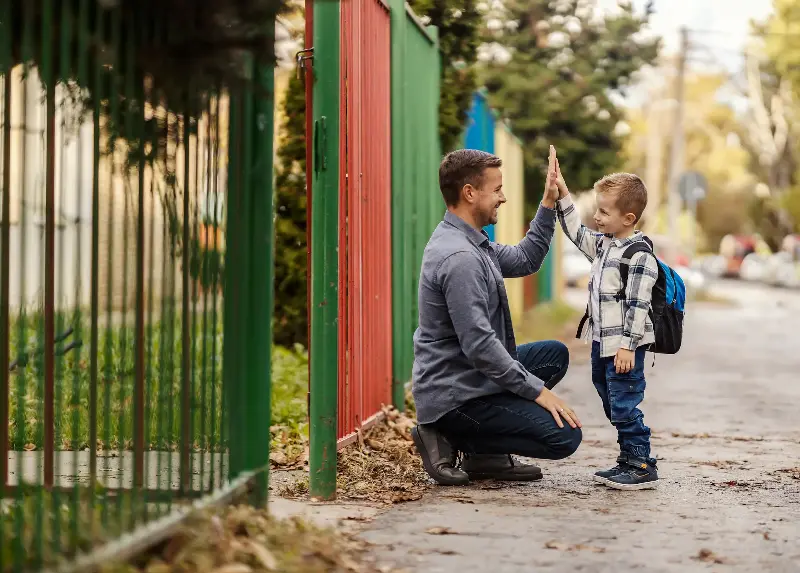
Parents often worry about how their children will cope when life gets difficult, but resilience is not something that appears overnight.
A 2019 study, published in Health Affairs, suggests children are more likely to thrive when they have strong support systems and positive family relationships, even in the face of challenges.
Speaking to Newsweek, Manhattan-based psychotherapist Katie Rose shared four ways parents can help raise resilient children.
1. Limit Your Child’s Choices
Rose said giving children too much responsibility too early can leave them feeling overwhelmed rather than confident.
“Resilient children develop confidence in their ability to solve problems over time,” she said.
Rose’s advice:
- For children ages 0-6, reduce unnecessary choices around toys, clothes and activities to avoid overwhelm and build trust in caregivers.
- For children ages 6-12, offer limited options and support them in making thoughtful decisions.
- For teens, shift into a consultant role, providing guidance while allowing them to take increasing ownership of their choices.
- Gradually increase responsibility as children develop confidence and decision-making skills.
2. Protect and Revere Childhood
“Children develop resilience when they feel fundamentally safe,” she said.
She explained that a calm nervous system supports curiosity, creativity, emotional regulation and healthy risk-taking, while children burdened with adult concerns can experience unnecessary stress.
Rose’s advice:
- Shield children from adult worries, constant news exposure and complex issues they are not developmentally ready to process.
- Keep communication honest, clear and age-appropriate.
- Listen more and avoid over-explaining or lecturing. Rose recommends remembering the acronym WAIT: “Why Am I Talking?”
- Reduce overscheduled routines and excessive extracurricular activities.
- Leave time for rest, boredom and unstructured play.
3. Connect Before You Correct
Rose said children are better able to handle challenges when they know their feelings will be accepted rather than dismissed.
“We want our children to learn that difficult emotions are manageable, mistakes are repairable, and setbacks are part of growth,” she said.
Rose’s advice:
- Create a safe and supportive home environment where children feel secure enough to take healthy risks.
- Acknowledge and name children’s emotions before offering solutions or corrections.
- Focus on helping children feel understood during difficult moments.
- Wait until emotions have settled before offering guidance or feedback.
4. Model Healthy Coping
Rose believes children learn resilience by watching how the adults around them respond to challenges.
“Children learn far more from what we model than what we tell them,” she said. “When they consistently see healthy coping, flexible thinking, and self-compassion, they begin to internalize those same skills and carry them into their own lives.”
Rose’s advice:
- Ask open-ended questions such as, “What do you think we could do next?” rather than solving problems immediately.
- Praise effort, persistence and learning instead of focusing only on results.
- Demonstrate healthy ways of managing stress, including deep breathing and thoughtful problem-solving.
- Show children that mistakes can be acknowledged and repaired by apologizing when necessary.
- Model flexibility and self-compassion during difficult situations.