



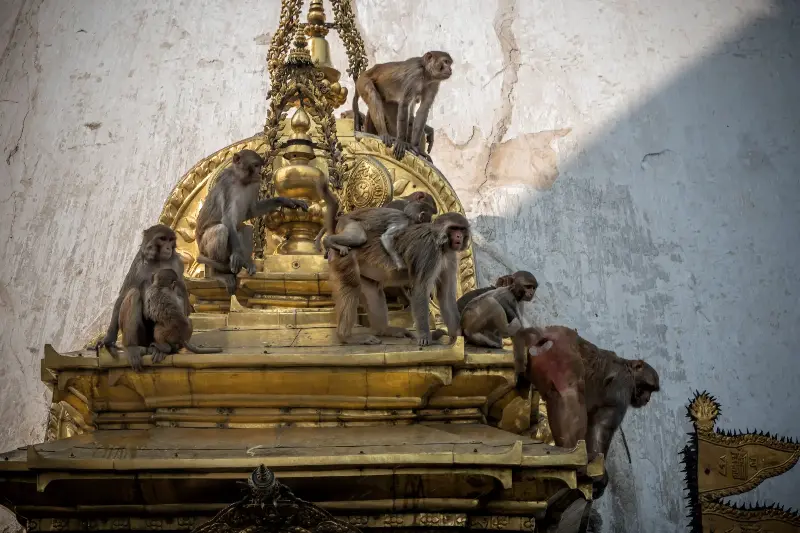
Dozens of residents of Nepalgunj, Nepal, have been hospitalized as a gang of monkeys terrorizes the city.
There have been multiple reports of the animals entering homes and shops, attacking locals as monkey-related incidents cause panic in the area. Forty people have sought medical treatment at Bheri Hospital over the past six weeks after being bitten by monkeys, according to the Nepal News.
The rise in incidents of monkeys attacking people is a concerning trend, Dr. Badri Chapagain told the outlet.
Pravez Khan, a local resident, also spoke to the outlet and said that a group of monkeys had entered his home and attacked three of his family members.
The local government is reportedly seeking to develop a plan to protect residents.
Newsweek has contacted Nepal’s health ministry for comment via email.
A driving factor behind clashes between humans and wildlife is changes to the climate.
A study published in 2023 in the journal Biological Conservation found that “Climate change can increase wildlife-induced physical harm to people.”
Driving factors include increased resource competition, animals expanding their range due to higher average temperatures and displacement of wildlife due to extreme weather events.
News of the monkey attacks comes after devastating flash floods swept Nepal in August, and as a major river flooded in Nepal on Monday, sweeping away houses, bridges and damaging a part of a hydropower station.
What to Do If You Are Bitten by a Monkey?
Anyone bitten by a monkey should immediately seek medical attention. Even if the bite does not look severe, it is important to seek medical attention because of the risk of exposure to infectious diseases, like rabies.
According to a 2016 study in the Journal of Travel Medicine, some 55,000 people die each year because of rabies worldwide, primarily in Africa and Asia. The site of the wound should be cleaned immediately.
The macaque monkey can carry the B Virus. The Centers for Disease Control and Prevention (CDC) advises that if someone has been exposed to a macaque monkey, first aid should be administered, and the person should be reviewed for antiviral therapy.
The CDC said bites or scratches that break the skin are considered to be higher risk than superficial wounds. Wounds to the head, torso and neck are even higher risk.
How Common Are Instances of Monkeys Attacking Humans?
Though they are relatively rare, there have been documented instances of monkeys attacking humans.
In 2022, more than 50 people were attacked over a three-week period by a group of roaming macaque monkeys in and around the southern Japanese city of Yamaguchi.
Masato Saito, a city official, told the Associated Press at the time: “They are so smart, and they tend to sneak up and attack from behind, often grabbing at your legs. I have never seen anything like this my entire life.”
And it’s not just monkeys.
Earlier this year, a wild elephant killed at least 20 people over a nine-day rampage in the forests of Jharkhand in India.
There have been reports of human and elephant conflicts over the years, with estimates of the number of people killed by elephants reaching as high as 500.
Researchers have also linked the clashes to elephants losing their habitats. Shrinking forest coverage and an increase in human activity are also contributing factors.
Contact Newsweek editors on this story: Ben Kelly and Dave Siminoff.