



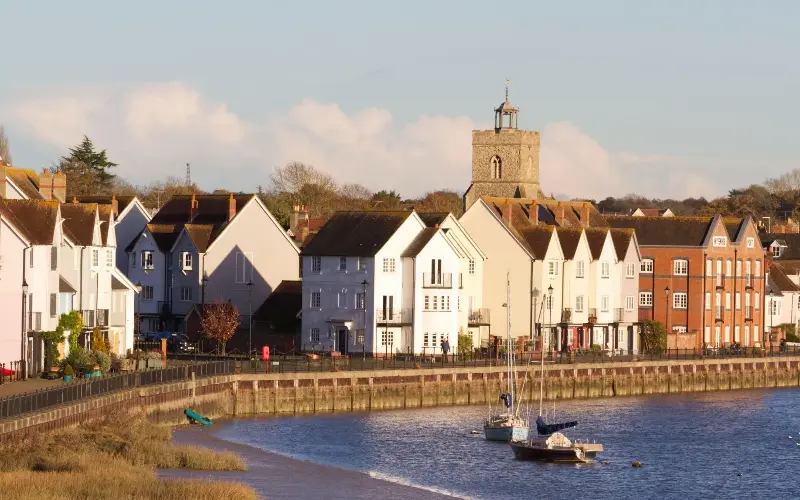
On the old sea wall, I stood and listened to the plaintive shriek of gulls and trained my binoculars on a passing speedboat. Steel rigging clattered against the masts of dinghies at the sailing club, and a yacht called Misty D bobbed at anchor offshore. It could have been Lymington, Poole Harbour or Cowes, but in fact I was seven miles inland near Colchester, Essex, in the heart of London’s commuter country.
This maritime feel is the first surprise when you arrive in Wivenhoe – mentioned in the Domesday Book, and home over the years to a cast of characters including painter Francis Bacon; actor Joan Hickson (Miss Marple in TV adaptations of Agatha Christie’s novels); Peregrine Worsthorne (former editor of the Sunday Telegraph); and adventurer Harry Bensley, said to have won a wager by walking around the world – beginning with 169 British towns and cities – wearing an iron mask and pushing a pram. Like many stories in Wivenhoe, it sounds implausible and may be pure whimsy...
What is certain is that Wivenhoe, with its sleepy village vibe, was a major port from Roman times until the late 19th century, serving Colchester and accommodating large ships that had made their way from the coast up the eerily bewitching Colne Estuary and river. The town had two shipyards, the bare bones of which survive, and functioned as a port into the 1980s. It had a viable fishing industry (sprats and oysters) and a community of smugglers (alcohol and tobacco). The Black Buoy Inn, where I stayed, is rumoured to have a smugglers’ tunnel leading from its cellar.
From the “sea wall”, as the riverfront is universally known, you might glimpse the occasional harbour seal, plus the old dry dock which floods during exceptionally high tides. Beyond are the tower and cupola of 13th-century St Mary’s Church, damaged by the Great English Earthquake of 1884 – who knew? On the far side of town, the Colne Barrier – a pair of 100-ton steel gates, closed about 20 times a year to protect Wivenhoe from tidal surges – is a little-known feat of large-scale engineering.
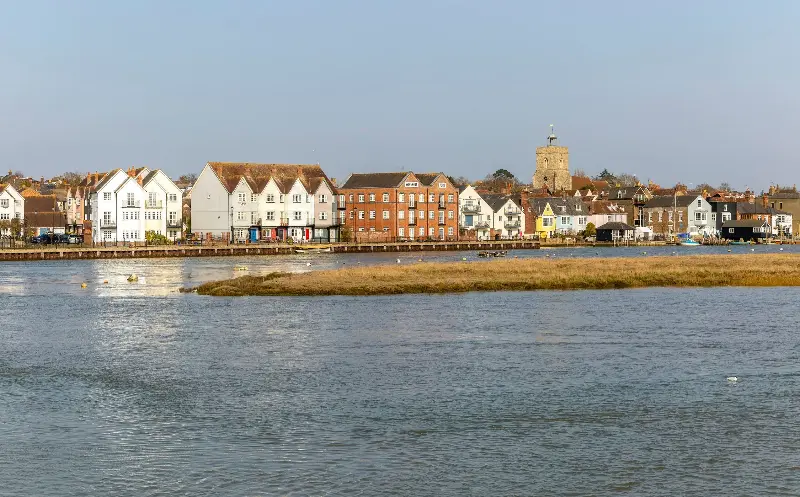
The biggest surprise, though, is that this surreally charming town is as little as one hour, five minutes direct by train from London’s Liverpool Street, on the Sunshine Coast Line linking Colchester to the seaside towns of Walton-on-the-Naze and Clacton-on-Sea. Once there, it is a five-minute walk to the centre with its narrow streets, cafés, pubs, deli, patisserie, bookshop and art gallery, making it ideal for a car-free break from the capital.
That was just what I arranged in August, joining a walk organised by wildlife operator Naturetrek, led by loquacious local guide Chris Gibson. From the railway station, we dawdled in the direction of Ferry Marsh, a Site of Special Scientific Interest (SSSI), where salt-marsh sheep once grazed and a small ferry conveyed locals to and from the village of Rowhedge on the opposite side of the River Colne. Though a weekend service is said to operate still from a different site from April to October, it is somewhat sporadic.
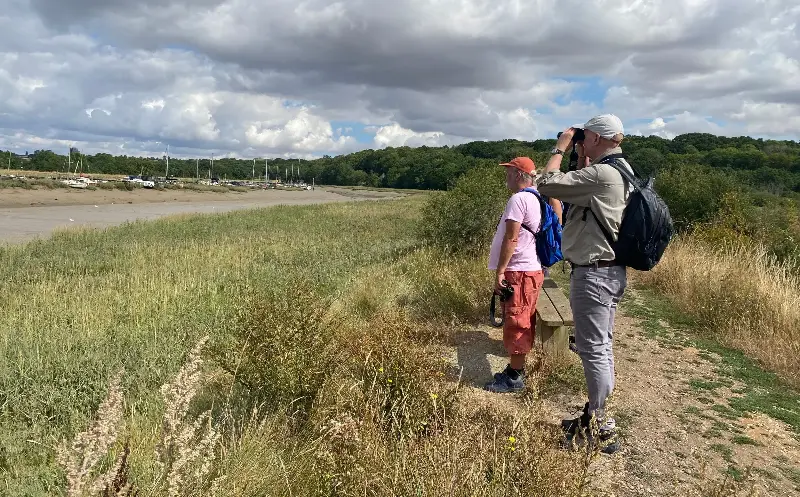
Emerging onto the marsh, where edible sea beet, sea purslane and samphire grow, we spotted some distinctly maritime birds – black-headed and great black-backed gulls – followed by a little egret, then waders including redshank, curlew, lapwing, black-tailed godwit and avocet, a foretaste of what was to come: perhaps 200 godwits foraging in the estuary mud on one side of the sea wall and, on the other, buzzards, soaring red kites and a kestrel standing sentry in a dead tree.
Most of our small group were birdwatchers and this was the reason they had come. For generalists like me, Chris also pointed out rare insects (firebugs, a harlequin ladybird and a hummingbird hawk-moth, its inch-long proboscis harvesting nectar from a buddleia shrub as it hovered), fungi, lichens and salt-adapted plants. At one point, we heard the bark of a muntjac deer rutting in the ancient oak forest.

Whatever wildlife you see or don’t see on the salt marshes, or in the forests, meadows and nature reserves around Wivenhoe, walking is the draw. In the riverine light, every photo you take looks like an oil painting, and the sunsets were sublime.
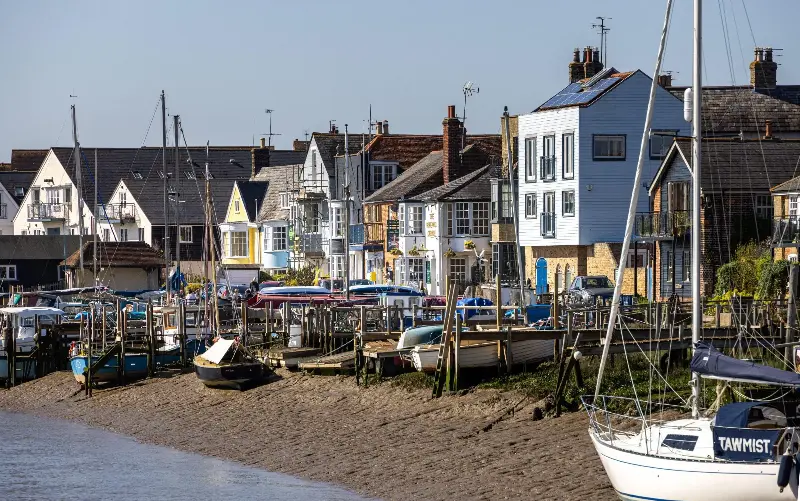
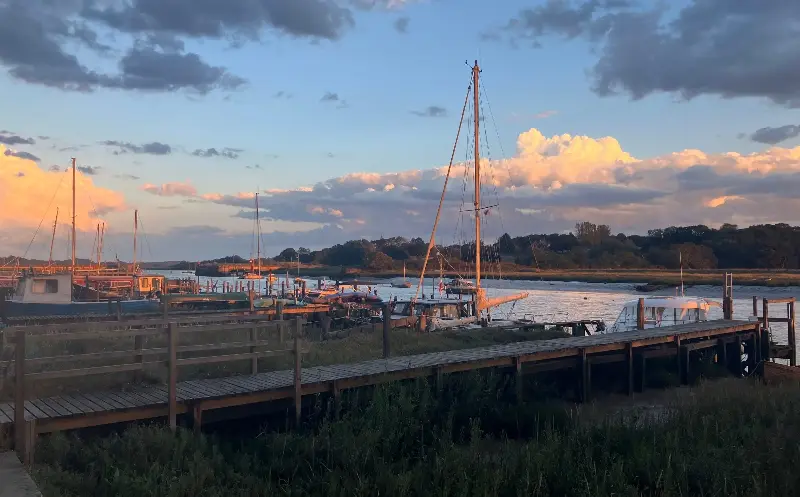
By the old quayside, romantically decaying boats, fishing nets, lanterns and upturned kayaks on the marsh grass evoke maritime New England, while clapperboard houses and other dwellings in what Chris calls “the vernacular style of Essex architecture” speak – deceptively – of the past. In fact, the buildings along the waterfront are a façade, preserving a nautical look, while behind them is a modern development of commuter homes – just another example of Wivenhoe whimsy.
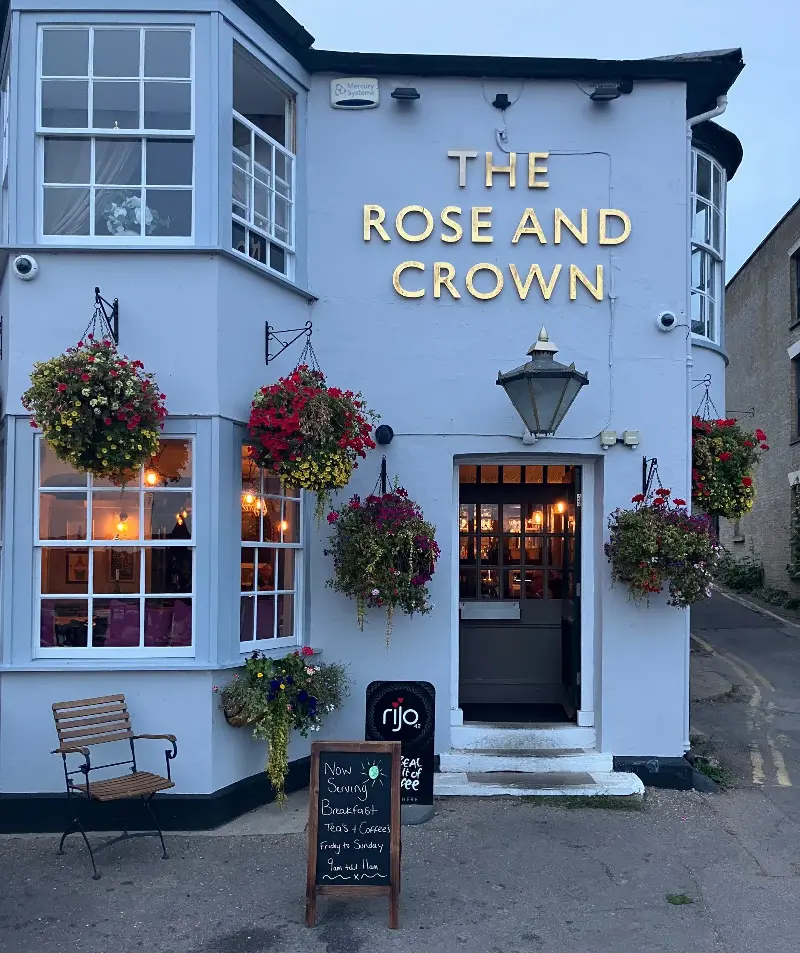
Among the landmarks was the Rose and Crown pub, with outdoor seating among the moored boats, jetties and wooden walkways, and an outdoor annex at the back where I savoured fresh sardines with samphire and discovered the Essex huffer: a delightfully doughy triangular filled bap. There are four more pubs in the town, plus Wivenhoe Deli (like a children’s sweet shop for grown-up gourmands); Trinity Patisserie (for a hearty breakfast); Wivenhoe Café and Gallery (local art and river views, plus everything from pancakes to Polish meatballs); and Barrells of Wivenhoe, a tasteful boutique-cum-café where even the flat whites are served in a giant teacup.
Despite all this, the town was pretty much deserted in summer, perhaps because there was only one property remotely like a hotel: the Black Buoy Inn, with minimalist, white-painted rooms, yards from the waterfront. Of the few cottages and B&Bs, some are central, others a short Uber ride away. If you come by train, the good news is that buses run frequently so University of Essex students can travel from digs in Wivenhoe to the campus just outside it – which also has modest rooms for rent.
Essentials
Rail fares from London Liverpool Street to Wivenhoe cost from £28.99 return. The Black Buoy Inn has two ensuite double rooms, from £110 per night. Naturetrek’s day trip The Wild Side of Essex: The Colne Estuary costs from £60.