



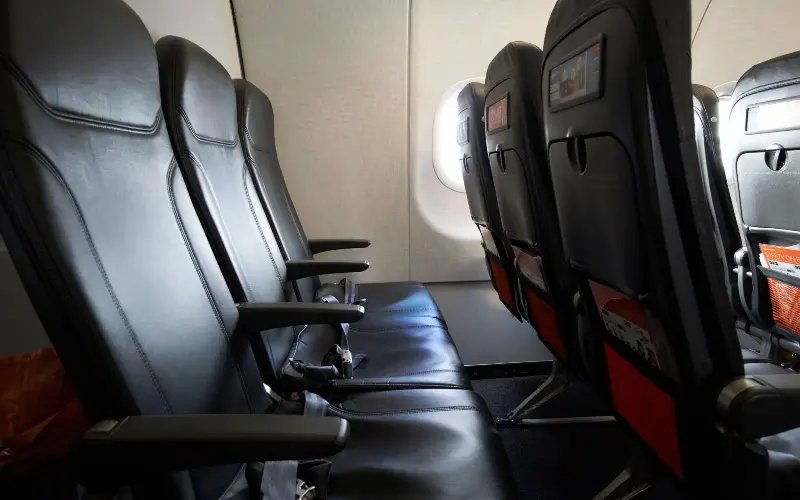
Two US airlines, United and Delta, are embroiled in lawsuits brought against them by passengers who claim to have been swindled out of their window seat. They say they paid extra for seat selection when booking their flights, only to find themselves assigned a seat with mere wall panelling instead of a window.
They were far from the first passengers to have been surprised in this way, as anyone who closely follows Ryanair’s social media account will know. Many customers of the Irish low-cost airline have complained bitterly in recent years after similarly discovering that their assigned seat lacks a window. Ryanair will typically respond in far from sympathetic fashion, while pointing out that its windowless window seats are clearly signposted during the booking process.

Those who prefer the aisle need not concern themselves with this issue, of course, but for anyone who likes to enjoy the view from 35,000ft, we’ve pinpointed the seats to avoid on your next flight.
Why some ‘window seats’ have no window
But first, an explanation. Planes are manufactured by the likes of Boeing and Airbus with windows at regular intervals in the fuselage. However, airlines will then customise the cabin interior to suit their requirements. Low-cost carriers, for example, will typically offer less space between rows than full-service airlines, allowing them to squeeze in more flyers. This means that the seats they install may not perfectly align with the windows.
As well as seat layout, customisations such as air-conditioning duct routing, partitions between classes and the positioning of toilets and galleys can affect whether or not you find yourself with an in-flight view. And to further complicate matters, most airlines will have a fleet made up of a few different models of aircraft, so window spacing can vary between different planes even if you regularly fly with the same carrier.
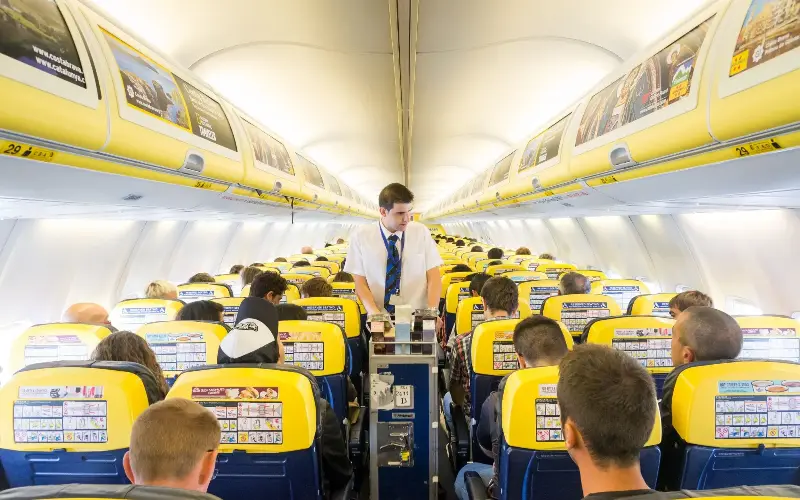
Telegraph Travel contacted the world’s two largest aircraft manufacturers, Airbus and Boeing, to ask whether they had any control over whether all the window seats had windows.
Airbus said that it’s down to the airlines as they “are the ones with seating maps for their specific cabin products”, while Boeing added that each carrier kits out their own planes and that is where “the decision on interior layout is made”.
A matter of transparency
United’s (rejected) defence argued that the word “window” identified the position of a seat in relation to the cabin wall and therefore “cannot reasonably be interpreted as a promise that the seat will have an exterior window view.”
But other airlines are more transparent about such matters. Like Ryanair, Alaska and American Airlines do show warnings during the online seat-selection process.
However, discounts are not given for these arguably sub-par seats. Ryanair, for example, tends to price seats according to how much legroom they offer and how close they are to the front of the aircraft. Choosing random seat allocation is one way passengers can avoid paying an extra sum for an unenviable spot on the plane, but one which always comes with the risk of being assigned the dreaded middle seat.
A number of websites publish airline seat maps, showing the layout on a range of aircraft models. They include SeatCompare, AeroLOPA and SeatMaps. These are useful resources for flyers who want to ensure they end up with a window seat that actually has a window.
So which are the windowless seats to avoid?
Ryanair
The Irish airline’s fleet consists of 647 aircraft, with a mixture of Boeing 737-800s and Boeing 737 Max 8-200s. The “window seats” which lack windows differ between the two models.
Boeing 737-800: 11A, 12A, 12F
Boeing 737 Max 8-200: 12A, 14A, 14F
Jet2
Jet2 has more than 100 Airbus planes on order, but as it stands, the backbone of its fleet of 135 aircraft is the Boeing 737. Below are the “window seats” which have no window.
Boeing 737-800: 11A, 12A, 12F, 16A, 16F
easyJet
Priding itself on operating one of the youngest fleets in the industry, easyJet exclusively uses Airbus planes, mostly A319s and A320-200s. These are the seats to steer clear of:
Airbus A319: 26A, 26F
Airbus A320-200: 31A, 31F

British Airways
BA has a highly varied fleet. Most are Airbus aircraft, but the carrier operates plenty of Boeing planes too. Its most-used Boeing plane, the 777-200ER, also has two possible cabin configurations (with or without first class), with the first-class version being most common. Avoid these seats:
Airbus A320-200: 30A, 30F
Boeing 777-200ER (with first class): 26A, 26K
Airbus A320neo: 30A, 30F
Virgin Atlantic
The Boeing 787-900 accounts for 40 per cent of Virgin Atlantic’s aircraft, making up the biggest proportion of the fleet. Avoid the following seats if you can:
Boeing 787-900: 53A, 53K, 65A, 65K
American Airlines
Since June, American Airlines has possessed the world’s second-largest commercial fleet, after United. Its mixed fleet of 1,030 aircraft mainly operates domestic routes, but two types of Boeing plane are used most frequently on transatlantic flights.
Boeing 777-300ER (with first class): 16A, 16L, 31A, 31L
Boeing 787-900 (smaller business class): 24A, 24L
Wizz
Wizz also runs an Airbus-only fleet, with more than 200 planes from models in the A320 family. Almost all of these are A321neos, which lack windows in two seats.
Airbus A321neo: 29A, 29F