



Although high-concept and distinctive small cars are much loved by owners, their manufacturers are unlikely to make money without sharing the upfront development costs. Innovative designs such as the Toyota iQ and the Honda e, along with the original Audi A2 and BMW i3, are excellent examples.
The first, all-aluminium A2 of late 1999 to 2005 was developed after the VW Group chairman, Ferdinand Piëch, committed to create a car capable of using only three litres of fuel per 100km (94.2mpg), which his engineers achieved thanks to lightweight construction, aerodynamics and a 1.2-litre turbodiesel engine. Despite a wider choice of engines the A2 didn’t catch on, and only 176,377 were produced.
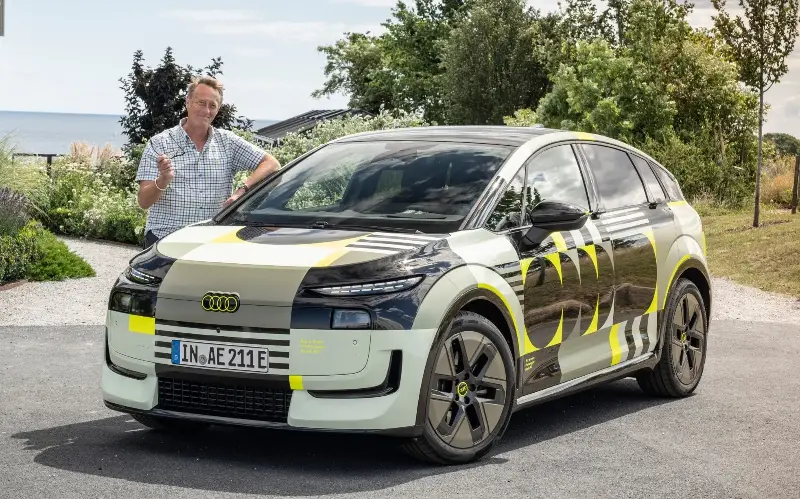
So how do you replace such a well-remembered car but make money doing it? That was my first question to Audi’s chief executive, Gernot Döllner, sitting alongside in a prototype of the new A2, which doesn’t use any fuel at all.
Serious setbacks
Since he joined from Porsche he has seen Audi peak in September 2023. He nods as I list the series of setbacks: the collapse of the Chinese markets on which Audi had set so much store, along with a fierce rivalry in Europe, where the Chinese brands have entered the market with more advanced batteries, better software and more integrated electronic control.
Then the United States, where President Donald Trump’s 25 per cent tariff on European cars has cost Audi dearly, as it lacks a US production plant. And buyers have voted with their wallets: the Q8 e-tron, Audi’s flagship EV, achieved only 10 per cent of its forecast US sales. As a result, Döllner has closed Audi’s EV factory in Brussels and forced through 3,000 layoffs, with another 1,500 planned before 2029.
While such issues have also affected its archrivals BMW and Mercedes-Benz, Audi has been by far the worst hit. What’s more, its once vaunted interior design had declined, along with quality.
What next?
A raft of new models is spearheaded by this new A2. Forget the (expensive) all-aluminium construction of the original; this all-electric model is based on the VW Group MEB+ architecture used in the VW ID.3 Neo, the Cupra Born, the Skoda Elroq and the Ford Capri with the same synchronous AC, permanently excited electric motor rated at about 187bhp and rear-wheel drive via a single-gear transaxle.
The Audi, however, has lithium-iron phosphate (LFP) battery cells, which are less energy dense than lithium ion but tougher and longer-lived than the lithium-ion nickel manganese cobalt items of the aforementioned four cars.
It’s a liquid-cooled 61kWh gross, 58kWh net unit, with the cells mounted straight into the pack, which reduces weight and size. Peak charging is 105kW DC, which can charge to 80 per cent from 10 per cent in 26 minutes. You can also tap the battery’s energy to run external devices and even to act as a backup power source for your house.
At about 4.2m in length, this is not a small car (for reference, the original A2 measured only 3.83m). The new car’s profile, however, is reminiscent of the original with its bluff nose and split rear tailgate.
Efficient airflow
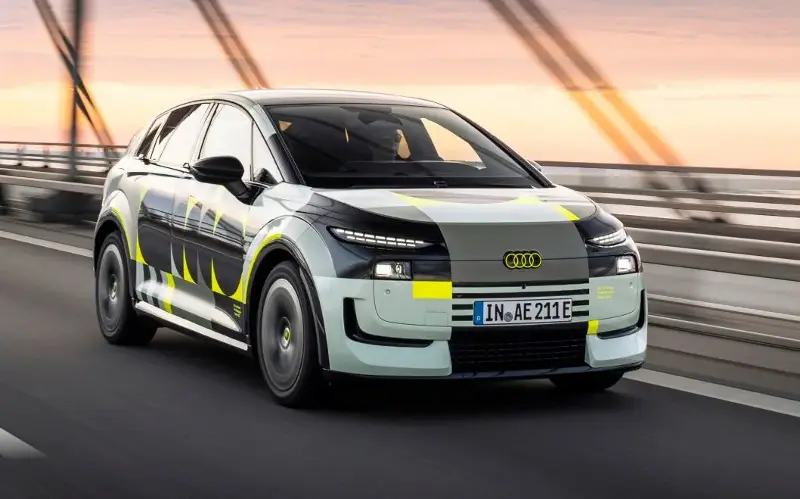
Aerodynamics are the key to the A2’s efficiency, with moveable cooling shutters under the front bumper and aero gains on the sides, wheel arches and headlight covers. The ride height is low, while a finessed underbody reduces drag. Special wheels and 19in tyres reduce the turbulence between the wheel and tyre. Audi claims the enhanced aero reduces electricity consumption by as much as 0.9 kWh per 100km.
It weighs an estimated 1.8 tonnes, which is light for an LFP-powered EV but massively heavier than the 830kg original.
The interior of this prototype was disguised to prevent spy photographers getting a clear look, but I can distinguish a greater number of physical switches and greater clarity on the centre screen and instrument binnacle.
“Note the new steering wheel switches,” says Döllner, leaning over and clicking the knurled volume dial that replaces the previous horrible haptic panels used by VW/Audi. “This was one of the first things I did,” he says with pride.
Under Döllner and VW boss Thomas Schäfer, there’s a new sense of purpose and better design at both companies; the cars appear to be benefitting.
On the road
The driving position is highly adjustable for different sizes, and outward views to the front and the sides are good. The rear seats are spacious and comfortable, with ample leg and head space. This is a family car, so the boot is large as well.
To drive it feels weirdly like the original, although without the stiff ride. Despite the ubiquitous VW electric-car platform, the new A2 feels special, the direct steering allowing good feedback from the road surface. Confidence-inspiring handling with excellent damping of the body movement is also evident.
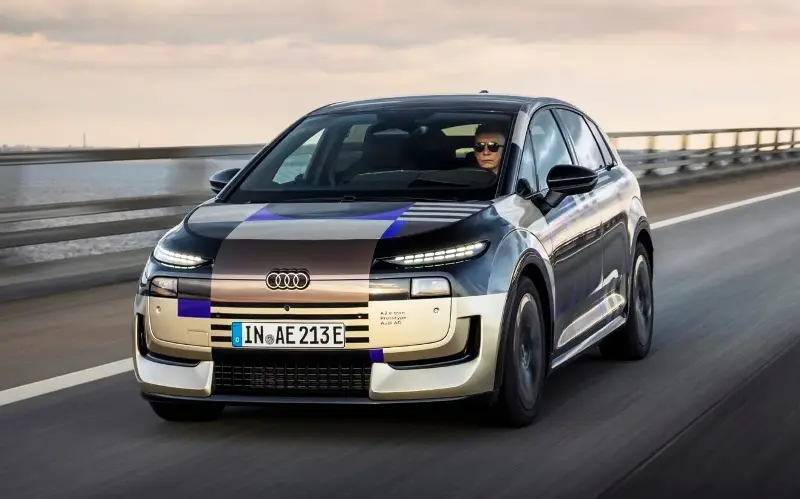
The ride on excellent Swedish roads isn’t bad, although on the UK’s dreadful road surfaces it could become borderline uncomfortable.
With 187bhp from the electric motor and unstated (but more than adequate) torque, it’s brisk, even sprightly, but the aerodynamics dominate the driving experience; this car just rolls and rolls. You can dial in extra retardation braking, but without it you travel in a different dynamic space from the rest of the traffic. Lift off and the A2 seems to continue on as if driven by a zephyr. See brake lights ahead and you need to brake quickly, as the A2 will simply roll, speed undiminished, to the hold-up.
You quickly start to begrudge that lost momentum, as the motor gleans only a small proportion of it in regeneration.
The Telegraph verdict
I achieved an on-the-road electricity consumption of 10.8kWh/100km (5.75m/kWh), which is really very good, indicating a range of 322 to 333 miles during gentle driving.
“This is more than our modelling suggested,” observed the A2 programme manager Michael Schurr, an indication that the WLTP combined figure will be closer to 300 miles.
I had expected this prototype to be filled with new technology and rather weird to drive before it could be properly honed, but instead I found the new A2 to be the epitome of skilled titivation rather than a high concept.
That means it should make money for Audi, especially if the predicted annual UK sales of about 10,000 materialise, which would make it the firm’s fourth best-selling model in this country. On this early evidence, it deserves to be.
The facts
On test: Audi A2 e-tron
Body style: five-door family hatchback
On sale: autumn
How much? from about £33,000 OTR
How fast? 99mph, 0-62mph in 8sec (both approximate)
How efficient? not quoted / 5.75 miles/kWh on test
Powertrain: 61kWh gross, 58kWh net lithium-iron phosphate battery, permanent-magnet AC motor with a step-down gearing, rear-wheel drive
Range: about 300 miles (WLTP), 330 miles on test
Charging: up to 105kW DC, 10 per cent to 80 per cent in 26min
Maximum power/torque: 187bhp / not quoted
CO2 emissions: 0g/km (tailpipe)
Vehicle Excise Duty (VED): £10 first year, then £200
Warranty: three years/60,000 miles; eight years/100,000 miles on the battery
The rivals
Volkswagen ID.3 Neo
From £31,000 to £46,000
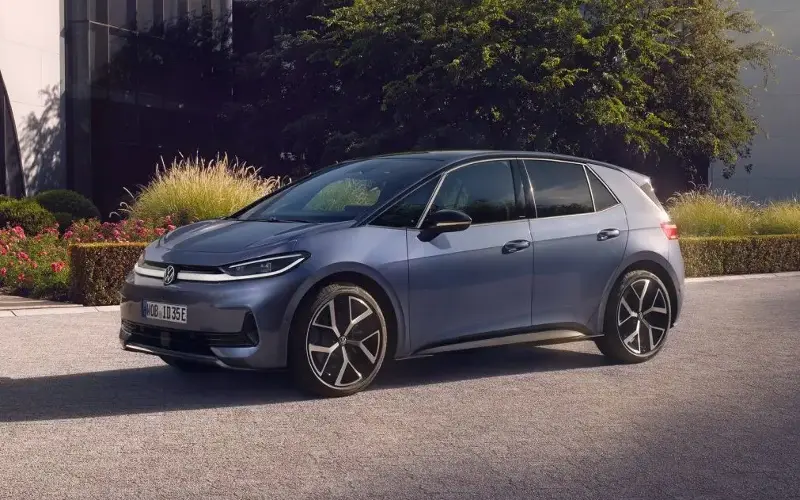
Arriving this autumn, the overhauled ID.3 is a big step forward, with greater range and more attractive trim options. Lithium-ion batteries are available between 50 and 79kWh, motor outputs of 168bhp to 228bhp and ranges of 258 to 390 miles.
Jaecoo 5
From £27,505 to £30,505
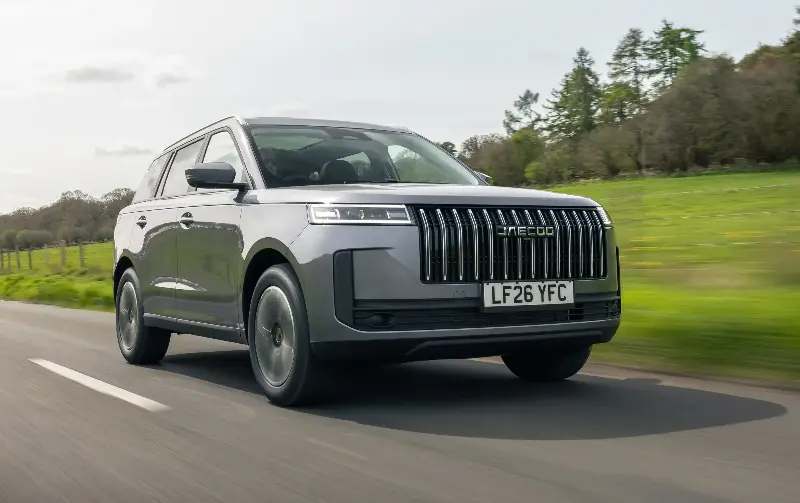
The starter Jaecoo provides a range of 248 miles from a 61kWh battery. Its styling follows the larger 7, which is Range Rover inspired. The ride and handling aren’t up to much, it’s noisy and residual values are a bit of a mystery at the moment, but it’s cheap.