



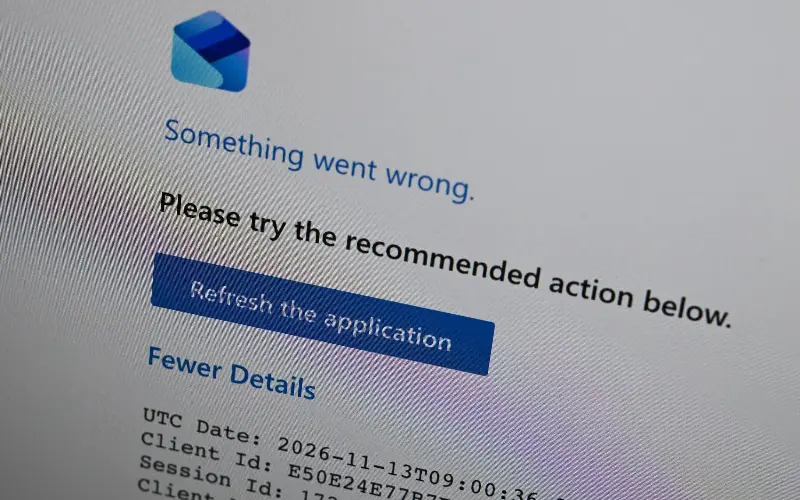
Britain ground to a halt on Friday after a global Microsoft tech blackout forced services across the country to ditch computers and return to pen and paper.
Businesses across the country were unable to access their emails and other programs in a worldwide software failure that sent parts of the NHS, police forces, the court system and Whitehall back to the pre-digital age.
The 20-hour blackout began at about 6pm on Thursday, bringing down packages including Microsoft 365, email software Outlook and Teams, a group-messaging platform.
A total of 74 countries were affected, according to website tracker DownDetector.
Microsoft scrambled to fix the glitch, which it blamed on an “elevated load” on its infrastructure after servers unexpectedly became unavailable, putting more pressure on its remaining systems.
Bosses insisted there was “no indication” that the company had been hit by a cyber attack.
In Britain, the National Grid operator resorted to using fax machines to keep power flowing, while police forces and NHS trusts reverted to pen and paper. Other services including schools, banks and AI chatbots were also affected.
An NHS spokesman said: “With the global Microsoft issue inevitably having a disruptive impact for staff, local NHS services are enacting long-standing measures to manage IT outages and ensure critical services and appointments can continue for patients today – including using other IT systems or paper records where possible.
“Patients should continue to use 999 in an emergency, and otherwise use 111, 111 online, or their local pharmacy, and come forward for appointments unless told otherwise.”
Downing Street said a number of Whitehall departments had been forced to introduce backup plans to keep their “essential services” running.
The Prime Minister’s official deputy spokesman said: “There are parts of government which use Microsoft so some have been impacted by this but contingency arrangements are in place across government.”
He said Andy Burnham was “being kept updated throughout the day”.
The blackout disrupted GP surgeries, pharmacies and 999 services, having a “serious impact” on ambulances and NHS trusts, according to the GMB Union.
Rachel Harrison, the union’s national secretary, said: “Those who work in 111 and 999 services are unable to refer patient details in the normal way, which is creating a massive backlog and has the potential for chaos.”
Ms Harrison said emergency and life-threatening call-outs appeared to be unaffected by the failure.
About two-thirds of hospital trusts and many GP practices use Microsoft for email, as well as for meetings.
Several GP surgeries warned that they were unable to access emails, online inquiries or patient records, urging patients to telephone surgeries instead.
A National Pharmacy Association spokesman said the outage was affecting pharmacies’ ability to communicate with GP practices and some patients, so “waits may be longer than normal and there may be delays to some prescriptions”.
Police forces in England and Wales, including the Met Police, Greater Manchester Police and Police Scotland, said they were unable to receive crime reports online and urged people to call either 101 or 999.
One Met officer told LBC that some control rooms had reverted to writing on pen and paper and using handheld radios for dispatches.
Elsewhere, councils said services were affected, while National Rail said the outage may be affecting customers’ ability to access their train tickets via email.
Court services hit
Britain’s judicial service also ground to a halt after the digital Common Platform case management system went offline, leaving magistrates’ courts and prosecutors temporarily unable to access digital files.
Baroness Lloyd of Effra, the government’s cyber minister, said the blackout mainly affected back-office functions but acknowledged there had been “limited reports of impact on frontline service delivery” and the incident had been “inconvenient and disruptive”.
She said she had spoken to Darren Hardman, Microsoft UK’s chief executive, about their plans for a full return to normal services “as soon as possible”.
Luke Pollard, a defence minister, said the blackout showed the need for Britain to become more resilient in the face of major disruptions.
He told BBC Radio 4’s Today programme: “For me, this reinforces the need for greater resilience … We need to make sure there’s backup systems in place to provide that resilience.”
Consumers were warned that hackers might use the Microsoft disruption as a cover to send fake “verify your account” and “reset your password” messages.
Simon Horswell of IT security company Entrust said: “Fraudsters are quick to take advantage of situations like this, using service disruption as an opportunity to catch people off guard.”
Microsoft bosses said on Friday afternoon there were “sustained improvements in service availability as recovery progresses”.
While improvements were being made to email access, the tech giant said “some users may continue to experience intermittent issues”.
It stressed it was working with “urgency” to find a full fix for the issue.