



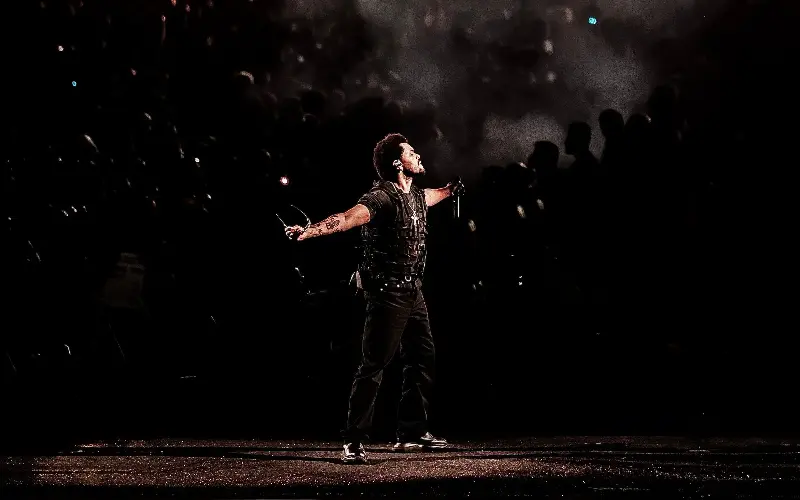
The Weeknd started in London with a bang. Well, quite a lot of bangs, actually, with towering jets of flame constantly erupting before a climax of spectacular fireworks lit up the night sky.
This was the first of five nights at Wembley Stadium by The Weeknd (the dropped “e” is pronounced), possibly not ideal for our tinderbox times. The sound of tens of thousands of phone alerts going off simultaneously in Wembley may have added to the frisson of excitement, the Government’s national text alert about wildfires creating such noise that most fans seemed to think it was part of the show.
Under his misspelt alter ego, Abel Tesfaye has become one of the biggest pop stars of our time, with the highest streaming song ever: 2020’s Blinding Lights currently has over 5.5 billion Spotify streams, with five other hits in the all-time top 100. On the face of it, he’s much more popular than Taylor Swift or Harry Styles, yet he doesn’t have the same kind of cultural ubiquity. His audience at Wembley was mainly young and female, inspiring outbursts of queasy “this one’s for all the beautiful London ladeez” patter that I thought went out of date several decades ago.
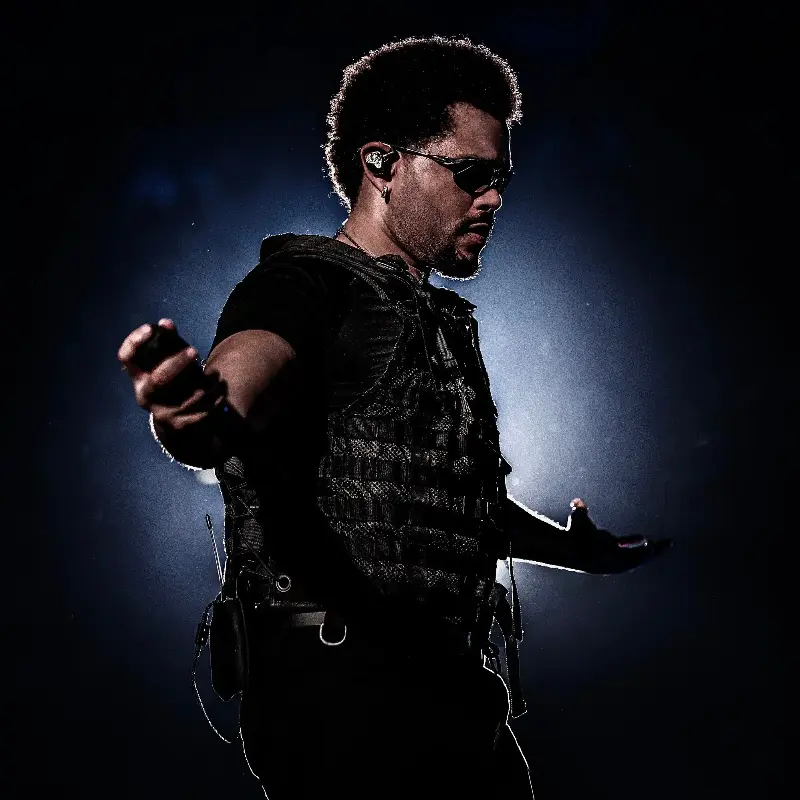
His persona has the slight awkwardness of an introspective, solipsistic backroom computer nerd who has emerged into the spotlight to find himself the belle of the ball. His self-produced music is dazzlingly brilliant, a moodily luxurious weave of synth pop with RnB club elements, featuring big melodies and damaged, introspective lyrics dwelling on weird sex, drugs, paranoia, jealousy, existential crises, abusive relationships and fear of death. Tesfaye’s superpower is his high, tremulous, beautifully controlled voice, which sounds a bit like Michael Jackson in a permanent state of rapture. With tight editing, he crammed almost 40 songs into an artful, flowing set.
The set design was spectacular if unfathomable, referencing some kind of apocalyptic destruction and rebirth in a ruined city overlooked by a giant statue of a naked woman, amidst a constant barrage of smoke, lights, pyro, lasers and even a parade from a cult-like assembly in red robes. Tesfaye wore a sinister mask for the first third of his two-hour show, before removing it to reveal a grinning face and a persona much friendlier than all the mystique might suggest.
The solipsism of his music, however, remained awkwardly tangible in the show’s relentless focus on the star himself. Musicians were hidden in the set’s ruins, and I couldn’t even work out how many there actually were. The star’s arms-outstretched posture was one of receiving adoration, a sense of rampant egotism and idolatry emphasised by that anonymity of the band and dancers.
The atmosphere was a huge contrast with the recent Wembley residency of the arguably less talented but conspicuously more emotionally generous Harry Styles. Not that his audience, busy filming themselves watching him on their phones, could have cared less. The Weeknd, creating an immense spectacle of his own ego, may be the perfect superstar for the selfie generation.
The Weeknd plays London until Aug 19; tickets: www.theweeknd.com/tour/