



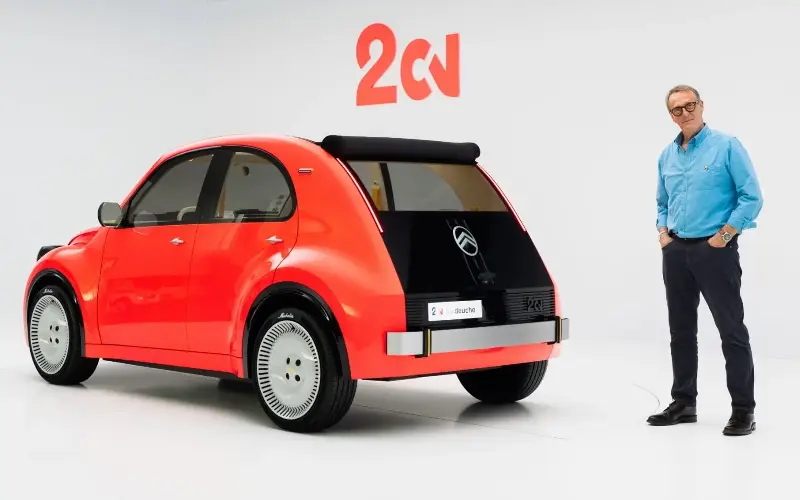
One of the most recognisable, if not the most famous, cars in the world was launched at the Paris motor show 79 years ago. It was the Citroën 2CV, dubbed the “tin snail”.
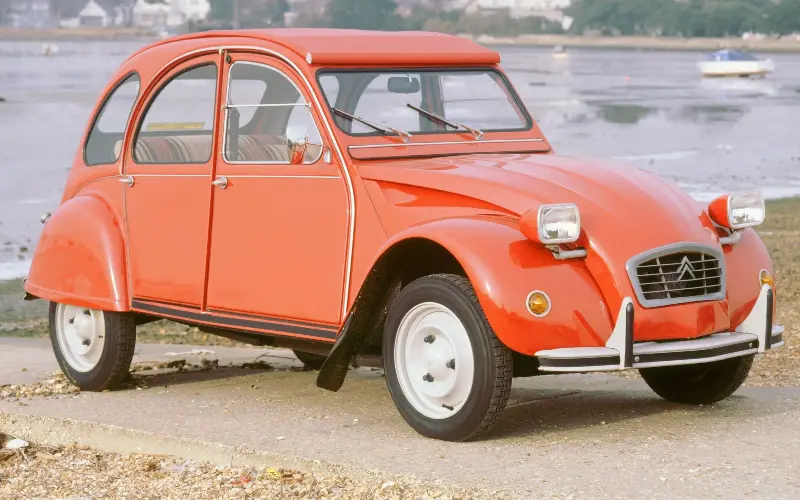
The quintessence of utilitarian motoring, the 2CV was developed before and during the Second World War and launched in 1948, based on a surprisingly specific brief from Citroën’s then vice president, Pierre Boulanger. To replace the traditional horse and cart of France’s agrarian economy, it should be capable of carrying 50kg of farm produce or a cask of wine, be able to cross a ploughed field without breaking the eggs in a basket and be tall enough to accommodate four adults in their “church hats”. Yet Boulanger’s design brief was also enigmatic: it should should look like a “four-wheeled umbrella”.
This new, battery-powered 2CV (officially still a concept) was launched on the eve of this week’s Paris show after having been long-rumoured and much-anticipated in the motoring press.
In this age of cars growing exponentially larger, the new 2CV is mercifully small. In fact, at 3.76m in length it is shorter than the original 2CV. And, for those of you confounded by the eye-watering prices of some new electric cars, it is incredibly cheap, with a mooted price of £12,820 for the eventual production model when it goes on sale in 2028.
Gorgeous execution
And it’s gorgeous, garnering the best of Citroën’s design bureau at Vélizy, south of Paris, which is almost panting to escape its drudgery of designing dull-but-worthy family saloons and hatchbacks.
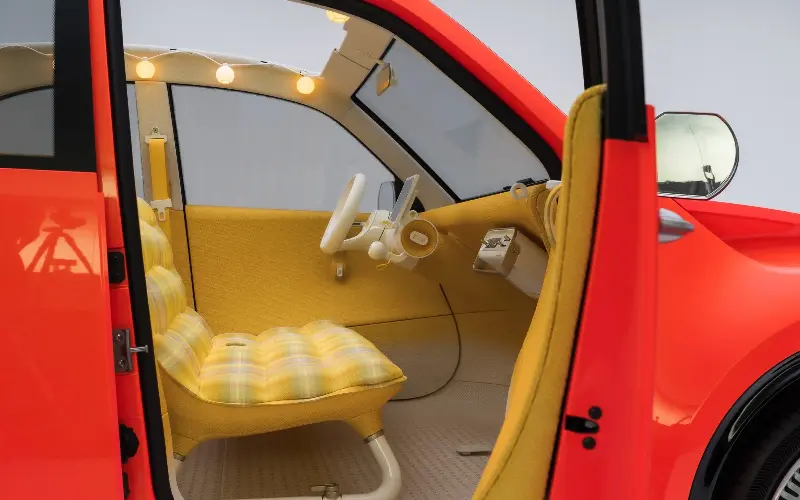
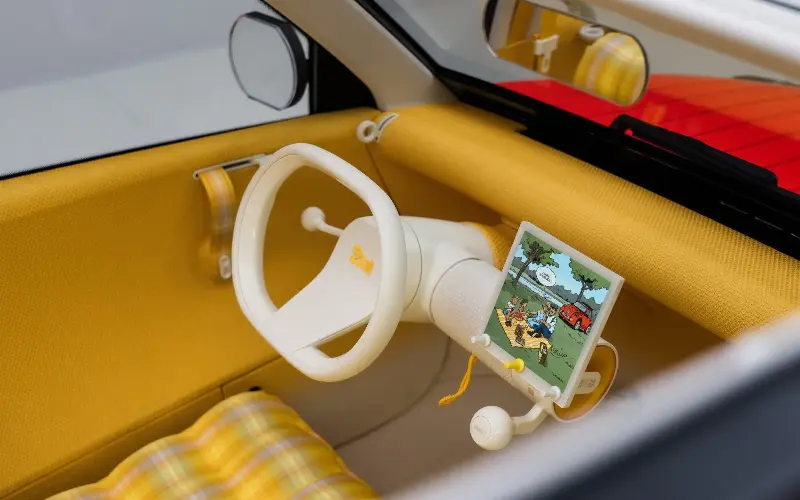
My first thoughts were how right the design looked, from the perfect reproduction of the 2CV’s distinctive rear pillar and rolled-up fabric roof, as well as the fresh air flaps under the screen, the Chesterfield-style upholstery for the bench seats, that charming removable wireless set and the wonderful Bakelite-style cream single-spoke steering wheel, all evoking the original. It is all so, well, perfect.
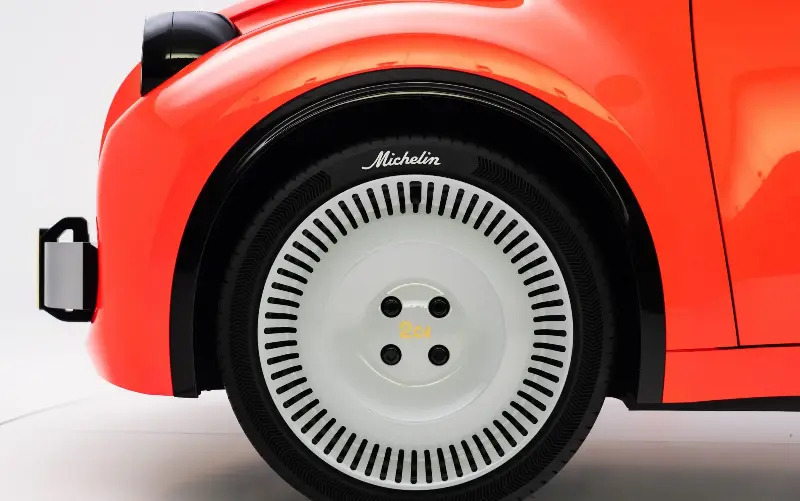
Wonderful proportions, too, all achieved with knowing love and a sense of style and history. The frogeye headlights, umbrella-handle gear lever and Michelin (which at one time owned Citroën) tyres with vintage script on the sidewalls all reference the original.
The first 2CV’s distinctive corrugated bonnet is also present and correct. It is claimed that this method of strengthening thin metal panels was copied from the Junkers JU52 aircraft used by the Germans during their occupation of France.
Even though it’s an EV, there’s a synthetic start-up noise which emulates the flat-twin petrol engine of its predecessor, while the horn sounds identical to the old one.
Modern car designers use the term “Easter eggs” to describe flourishes and stand-out details, but for the 2CV concept Citroën has pushed Easter-egg design treats to superlative heights. The door pockets have indentations for half a dozen eggs as if you were about to take off across the fields, as per the design brief, while the accelerator and brake pedals are respectively marked with a hare and a tortoise. The numbers etched to the windscreen – 48/90/26 – refer to 1948, when the original was launched; 1990, when official production ended (although sales continued for a couple more years); and 2026, the unveiling of this concept. And it’s all utterly, gloriously and crazily conceptual. Look underneath and there’s flat steel plate, hand welding, rattle-tin paint and fast fabrication work.
Don’t lose the details
However, how much of the charm will survive the following two years of development into a series-production car? Some of the beautiful details look expensive and problematic to replicate (the ventilation flaps under the screen will leak, the lift-out radio will go missing, the seats will collect grot and be difficult to clean). Even the generous interior space might be an issue, as airbags will need to be in closer proximity to passengers than the expansive facia design will allow. Even senior Citroën insiders admit that not everything on the concept would make it into production.
For it’s a tricky journey from the design offices to the factory. When Porsche launched the Boxster concept at Detroit in 1993 it, too, was just about perfect in size, proportion and detail. Then reality bit, leaving the company nearly bust and a lot of the charming detailing went into the bin along with the proportions as the production Boxster was forced to share the doors and front end with the 996-series Porsche 911.
Under the skin
The new 2CV will be based on future E-car regulations, a proposal for a European-wide sub-category for small electric passenger cars which will be limited in size (possibly to under 4.2m), power and performance. Known as the M1E category, these machines would not be required to be fitted with the expensive impact-safety and ADAS driver-assistance systems which are currently mandated for all cars (and the absence of which permits a much lower purchase price).
E-cars would have to be built in Europe and manufacturers would receive “super credits” for selling such vehicles, meaning that for every E-car sold they would be permitted to sell 1.3 internal combustion-engined cars.
There’s precious little solid information about these regulations even though they are due next year and will be fixed for the next decade. Some reports suggest that manufacturers might gain additional incentives for building their own batteries in Europe, while customers would benefit from cheaper parking and tax incentives. All this would suit Citroën and Fiat just fine, the French with this and the Italian firm with its proposal for a similarly E-car-based Multipla model.
There’s also the question of precisely how the UK would regard such a European category and whether car makers would get dispensation from the dreaded ZEV mandate which in 2027 requires 38 per cent of car sales to be EVs, with fines of up to £15,000 for each non-compliant car sold. While the UK undertook to adopt wholesale the EU’s vehicle standards, the reality is that how we interpret those standards and legislation may vary.
The Telegraph verdict
All of these issues – and more – will determine just how much of this charming concept will make it into production and whether buyers will like it.
Cars such as Renault’s R5 have proved that retro has appeal in the small EV market, but while there’s lots of eulogising online about this 2CV you should remember that this is not a production car, just a dream of how that car could be.
So will Citroën make it? Judging by the excited reaction so far, it can’t afford not to.