



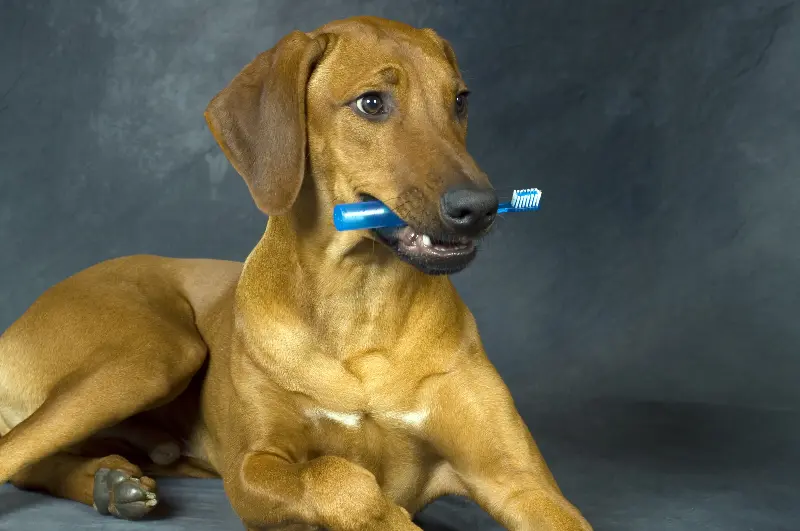
Your dog’s dental hygiene is an important part of responsible dog ownership and your pup’s overall health and well-being.
Brushing your dog’s teeth should be a regular practice to keep their teeth, gums and mouth in good condition. Sometimes, the dental care your dog requires may go beyond your capacity. To help keep your dog and their smile healthy, the American Kennel Club recommends looking out for the following signs that your pup may need a trip to the dentist.
Bad breath. Some people may think it’s natural for a dog to have bad breath, that it’s just a dog thing. This, however, is not the case. Plaque and tartar can build up on a dog’s teeth, just like it might in our own mouths. If your dog’s teeth aren’t brushed regularly, bacteria can get caught below the gum line, resulting in bad breath. This could be a sign of periodontal disease.
Loose teeth. Your dog’s teeth should never move or shift in their gums. If they do, it could be a warning sign for a variety of things, including a fractured root, or on a deeper level, a disease causing poor bone support. Whatever the cause might be, a trip to the veterinary dentist is a good idea.
Broken teeth. Many dogs love to chew because it satisfies their predatory instincts. Always be mindful of what your pup gets their mouth on, as some items can break their teeth. When a tooth breaks, it exposes a nerve, which can be very painful. Avoid extra hard toys, like bones or antlers, as these can lead to dental fractures.
Difficulty eating or chewing. Maybe you notice that your dog has trouble chewing or looks like they are having difficulty eating their food. This is another potential indicator that your dog needs a visit to the vet dentist.
Teach toothbrushing. Most dogs learn to tolerate and even enjoy toothbrushing. Dog toothpaste (human toothpaste contains xylitol and is toxic to dogs) comes in several canine-friendly flavors, like peanut butter and chicken, and both child-sized toothbrushes with soft bristles or finger brushes are appropriate to use when cleaning your dog’s teeth at home. While they are not a substitute for brushing and regular cleanings, dog chew toys can help keep your dog’s teeth clean. Talk to your veterinarian about the best ones for your canine companion.
For more information on responsible dog ownership, visit the AKC website at www.akc.org.