


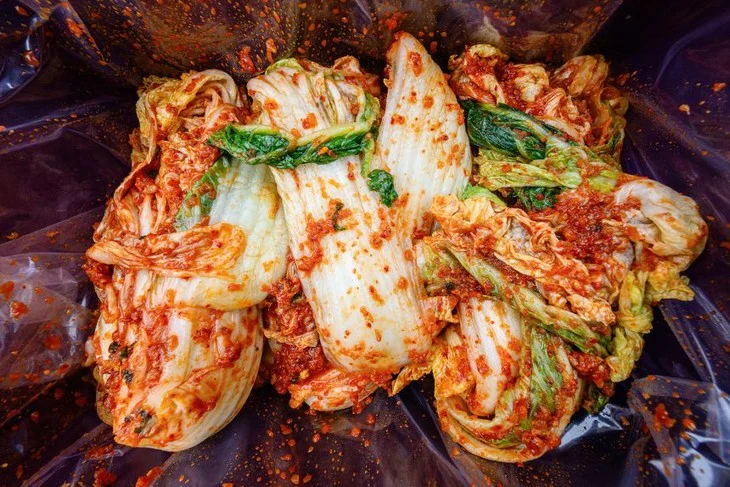
Kimchi is a traditional Korean dish made from pickled cabbage and radishes - Photo: AFP
According to the Korea Times , a new study shows that the percentage of South Koreans who don't eat kimchi in a day has nearly doubled, from 11.7% in 2010 to 22.7% in 2024.
The study was conducted by researchers from Chung-Ang University, Jeju National University, and the World Kimchi Institute, based on data from the Korean National Health and Nutrition Survey from 2010-2024.
Specifically, this trend was observed in both men and women. The percentage of men who had not eaten kimchi in the 24 hours prior to the survey increased from 10.2% to 20.6%, while in women it increased from 13.1% to 24.8%.
Consumption of kimchi as a side dish also decreased in most age groups (except for children under 10), with the 20-39 age group showing the most significant decline, from 82% in 2010 to 66% in 2024.
Specifically, the study also found differences in consumption levels between groups with different economic conditions, with the lowest-income group having a higher rate of kimchi consumption than the highest-income group.
The research team concluded that this change reflects shifts in the meal structure and eating habits of Koreans. According to the team, more and more people are using kimchi as an ingredient to prepare other dishes instead of eating it directly, such as kimchi stew (kimchi jjigae).
This suggests that the way kimchi is consumed is changing, rather than simply disappearing from meals.
Therefore, experts suggest that future public health policies should not focus solely on encouraging people to eat more kimchi.
Instead, the goal should be to encourage a more balanced and varied diet, in line with current changes in lifestyle and eating habits.